





The Sahara Desert is the world’s largest hot desert (I say hot desert because Antarctica is a desert and much larger than the Sahara). As a result, it has an unparalleled impact on the entire world ever since it formed thousands of years ago. However, you may be surprised to learn that the largest part of its impact has been caused not by the desert itself, but by the dust that gets blown off of it.
Every year, usually between late spring and early fall, massive clouds of dust totaling in the many millions of tons are blown across the Atlantic Ocean or into the other parts of the world, changing weather patterns across the globe, inducing immense blooms of plankton that can sometimes stretch for thousands of square miles, and fertilizing entire oceans and millions of square miles of critical rainforest. Saharan dust truly plays a pivotal role.
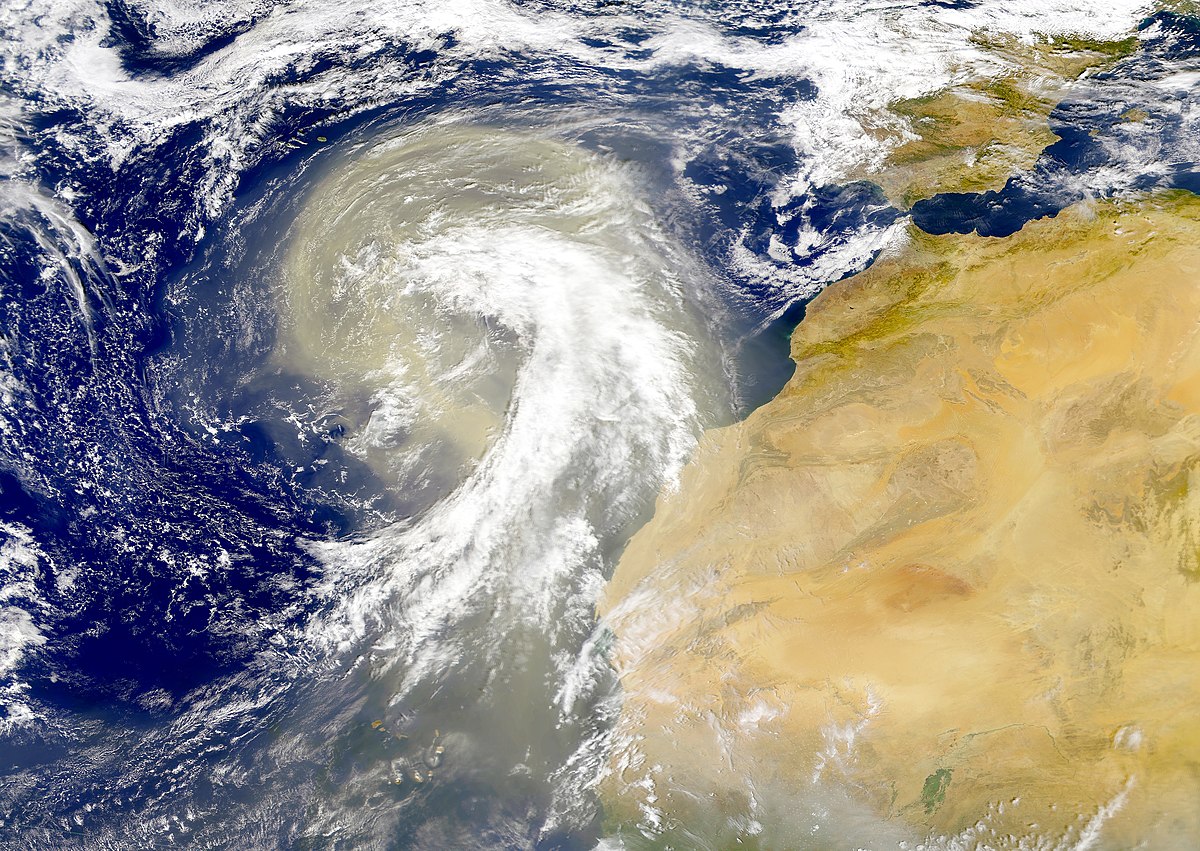
Image Credit: SeaWiFS Project from Wikimedia Commons
Let us slide into your dms 🥰
Get notified of top trending articles like this one every week! (we won't spam you)Where is All of This Dust Going Anyway?
How does this dust even do all of these things? The answer to that begins with an explanation of how it gets off of the continent in the first place. The African Easterly jet plays the primary role in getting the dust up into the air. From there, other atmospheric conditions such as the North Atlantic subtropical high, which transports the dust to the other side of the Atlantic, and the Caribbean Low-level jet serve to spread the dust to its various destinations. Some dust is also blown in the other direction and transported into East Asia. The reason that the dust can travel so far is because cooler air masses originating from the ocean force the dust high into the atmosphere where it can float for days, if not weeks.
As the dust makes it across the Atlantic Ocean (or in some cases the Mediterranean Sea), the majority of it falls into the ocean. So much of it is deposited that more than half of all dust found in the oceans originates from North Africa. In the North Atlantic, the dust is especially important because as much as 87% of the iron found there was blown as part of the massive dust plumes originating in the Sahara. Iron is an essential mineral for life and in the open ocean there is a large deficiency of it, limiting biodiversity. As a result, the yearly influx of iron from these dust blooms essentially keeps much of the life in the North Atlantic going.
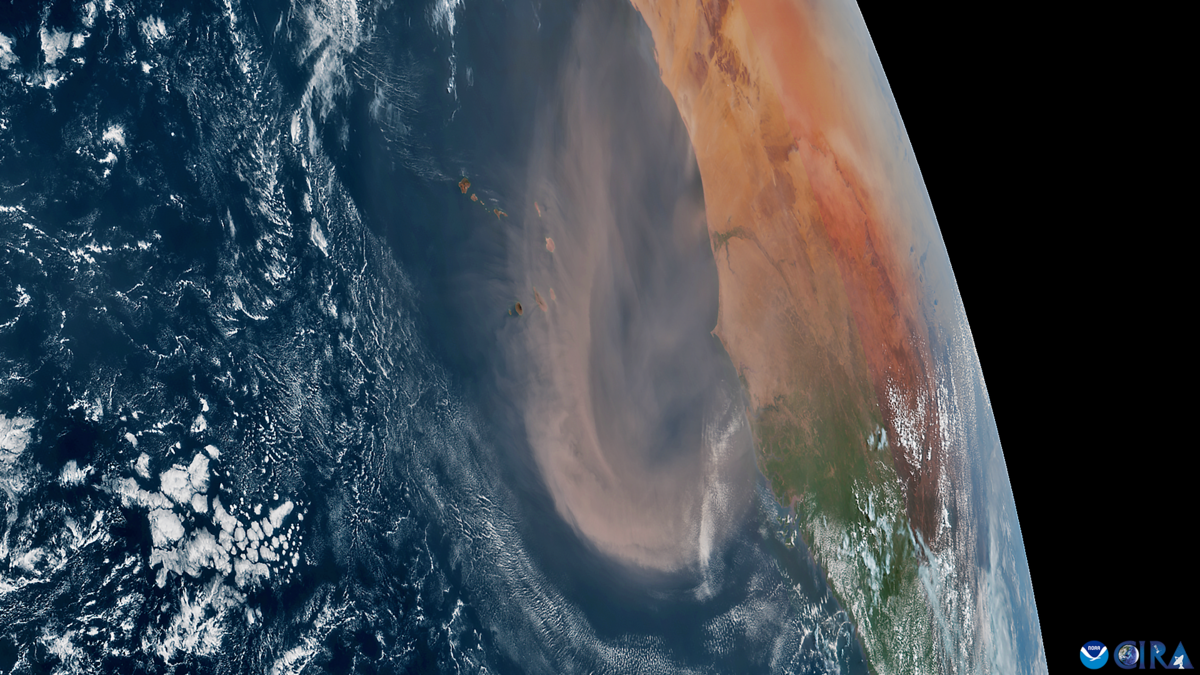
Image Credit: GOES Imagery from Wikimedia Commons

Take the Quiz: What Candle Scent Matches Your Overall Aesthetic?
Halloween is just around the corner. It's time to light that candle. Take this quiz and find out what candle scent suits you best.
The Sahara and the Amazon
However, not all of the dust falls into the ocean. Out of the 154 million tons of dust that is blown off of the Sahara, 27.7 million tons of it reaches all the way into South America, fertilizing the largest and one of the most stunning rainforests on the planet. The value of the Saharan dust to the Amazon, though, is not about how much actually reaches the rainforest, but what is coming along with it.
75% of Amazonian soils are naturally acidic, infertile, and nutrient-deficient. As a result of all the heavy rains constantly coming down on the region, many essential nutrients are washed away into the rivers and eventually into the ocean. One of these essential nutrients is phosphorus and without the Sahara Desert the Amazon Rainforest would likely not be the same place it is today. Out of the 27.7 million tons of dust that makes it across the Atlantic, 22,000 tons of it is phosphorus and that amount just so happens to match the amount of phosphorus that leaches out of the entire rainforest.
However, how can the Sahara Desert be so critical to the health of the Amazon rainforest when it has only existed for a few million years while the Amazon Rainforest has existed for at least 55 million years? The full answer to that question is beyond the scope of this article but for the majority of the past 7,500 years, the Sahara Desert was not the dominant source of nutrient rich dust. Instead, the Amazon got its dust from other sources such as the Andean region and southern Africa. If you would like more information on this topic, you can read these articles: Dust arriving in the Amazon basin over the past 7,500 years came from diverse sources | Communications Earth & Environment, 6,000 years ago the Sahara Desert was tropical, so what happened? | ScienceDaily, Amazon Rainforest Is Much Younger than Commonly Believed | Scientific American, and New Views on an Old Forest: Assessing the Longevity, Resilience and Future of the Amazon Rainforest on JSTOR.
Even though the Sahara Desert has not been the major contributor of dust to the Amazon in previous millennia, that does not mean that it is not critical to the forest’s well-being today. If the supply of dust dried up, it is certain that the Amazon rainforest would experience major biological change. Fortunately, it would seem, the Sahara Desert is the world’s largest hot desert and the largest source of dust in the world.
It is a fair bit larger than all of Australia. As a result, how could its dust emissions decline any time soon?
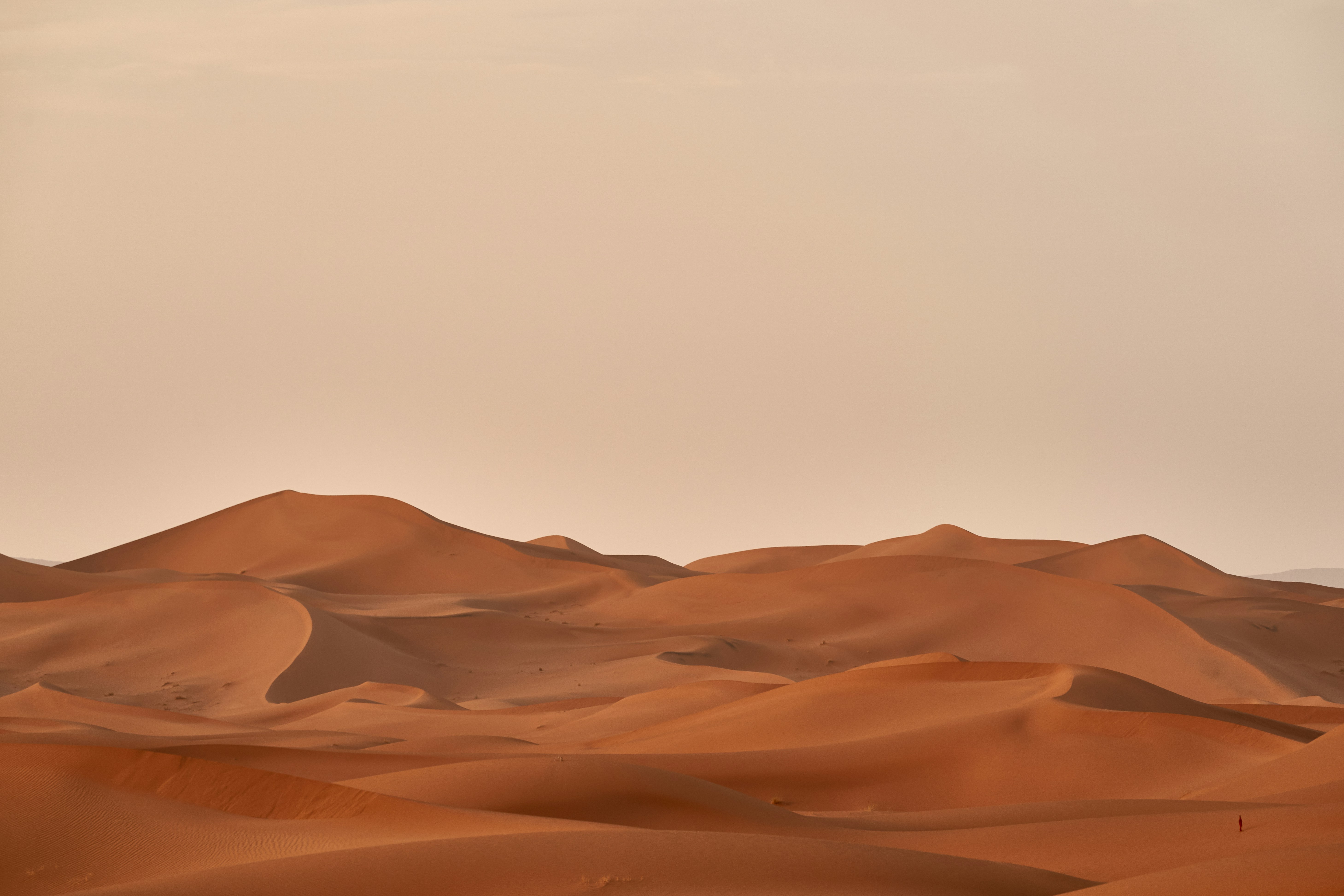
Image Credit: Wolfgang Hasselmann from Unsplash
Dust and Climate Change
The answer to that question is through climate change and a series of complex interactions between different climate systems on opposing sides of the planet. Here is how it works. With climate change, the Sahara Desert will start experiencing increased rainfall which will directly lower its dust emissions.
The reason why the Sahara will be getting increased rainfall is because of the northward shift of the Intertropical Convergence Zone or ITCZ. The ITCZ is a belt of converging trade winds near the equator. This then causes heavy rainfall and frequent thunderstorms there. In other words, the ITCZ is the reason why the tropics get so much rain. Now, this is very important for rainfall in the Sahara because the ITCZ can be shifted northwards or southwards depending on the various conditions of other atmospheric phenomena all over the world. One example is that the ITCZ moves away from the relatively cooler hemisphere. This means that because the Arctic is experiencing Arctic amplification (dramatically rising temperatures in the Arctic) and because Antarctica is not increasing in temperature anywhere near as fast (if at all), the ITCZ is moving northwards right into the Sahara and bringing heavy rains with it. If you would like more information about the other ways the ITCZ can be affected or why Antarctica is getting colder but still losing ice, you can post a comment below.
However, just how big an effect will the northward shifting ITCZ actually have on the Sahara? The answer to that really depends on how much more greenhouse gases we intend on dumping into the atmosphere.
Thousands of years ago when the Sahara Desert was covered in plant life during the African Humid Period, its dust emissions were reduced by as much as 80% when compared to today. Climate change will hopefully not have such a large impact on the Sahara Desert, at least in the coming millennia, but there is no doubt that it will have a serious impact not just on the desert, but on the world as a whole.
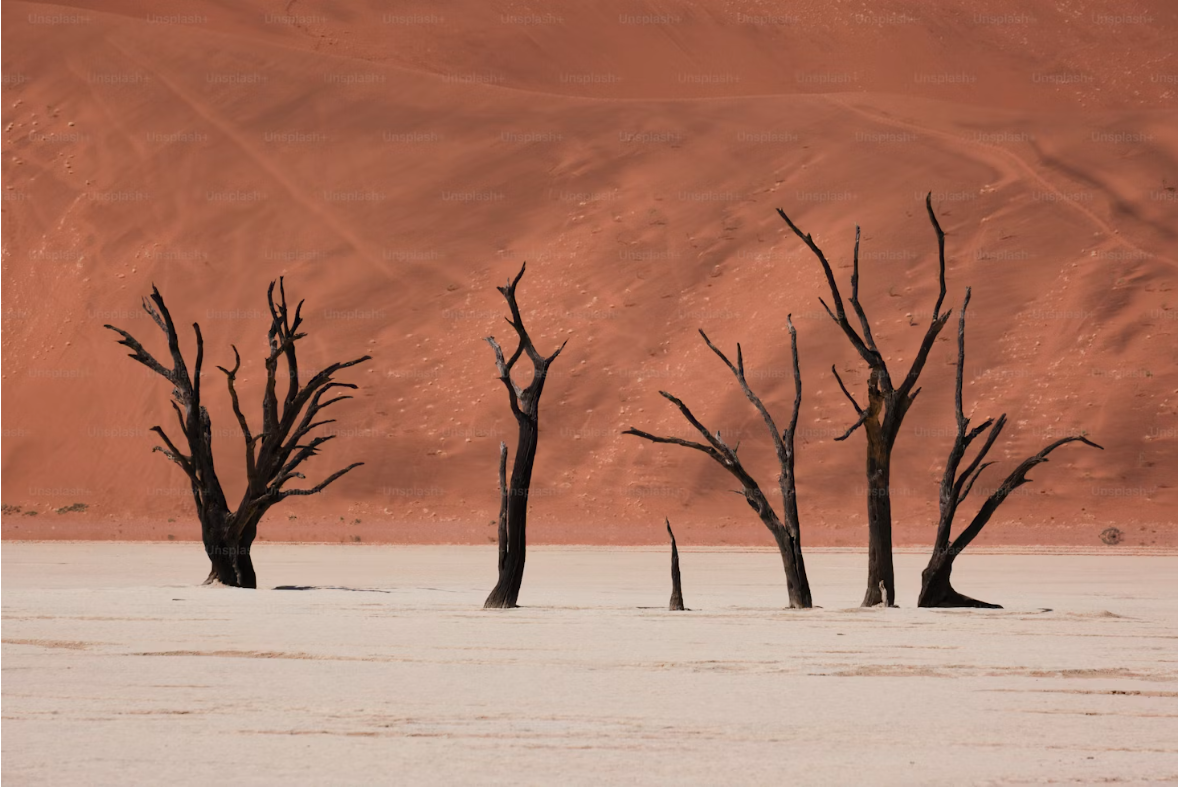
Image Credit: Joshua Kettle from Unsplash
For example, in the past when the Sahara Desert was much greener and filled with vegetation, there were warmer and drier summers in the eastern Mediterranean, northern Africa, and polar North America, but cooler and wetter summers in northern, central, and eastern Europe and eastern North America.
What Can You Do About Climate Change
Now, you may be wondering about what you can do about the greening of the Sahara. The answer to that is a lot. As the greening of the Sahara is being caused by climate change, probably your most effective action would be to reduce your personal carbon footprint. If you would like to learn about the most effective methods on how to do so, you can read this article here.




.webp)

.png)