

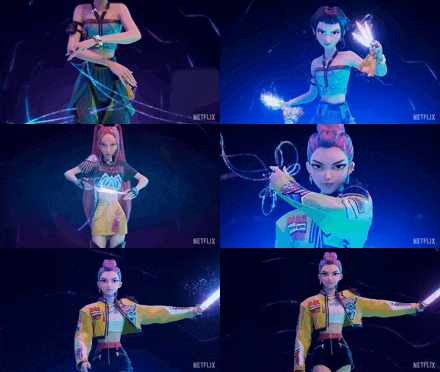


Would you watch a movie with great songs, a girl K-pop group, attractive villain guys, nonstop action and horror themes? If you’re in Gen-Z, this is the movie for you.
K-Pop Demon Hunters is the movie made for Gen-Z and somehow takes tropes that shouldn’t work and blends each genre into a beautiful story full of emotional and visual beauty. The animated movie taking the TV and film world by storm, K-Pop Demon Hunters, is the newest pop of color that the remakes and spinoffs of black-and-white modern television needed.
Let us slide into your dms 🥰
Get notified of top trending articles like this one every week! (we won't spam you)What is K-Pop Demon Hunters about?
K-Pop Demon Hunters follows a world-renowned K-Pop girl group as they balance lives as popstars and their secret identities as demon hunters. The three main characters, Rumi, Zoey, and Mira, are a refreshing repersentation of a group of girls who almost perfectly capture Gen-Z. Having moments of seriousness, laugh-out-loud humor, and demonstrates the power of friendship and communication.
In the movie, our main character Rumi makes a deep connection with Jinu, a great villain and a morally conflicted antagonist, who she challenges to embrace his good morals. With in depth character development, the show takes good versus evil to a deeper level.
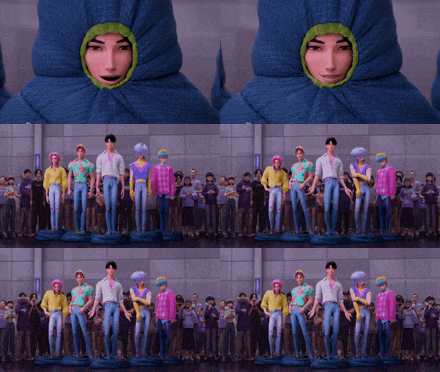

Take the Quiz: Which KPop Demon Hunters Character Are You?
Are you sassy like Mira or effortlessly charming like Jinu? Play to find out!
How does K-Pop Demon Hunters use Tropes?
K-Pop Demon Hunters utilizes and mixed tropes in a unique way. On paper, the tropes together can almost sound impossible to make a hit movie out of. The main trope that stands out in K-Pop Demon Hunters is the popstar/secret life trope.
Prevalent in the early 2000s in shows like Winx Club, LoliRock, Totally Spies!, and Jem and the Holograms, these series often followed teen girls famous for their singing abilities and worldwide fandoms who, behind closed doors, were spies, fairies, or superheroes stopping villains.
Apart from older tropes such as this, K-Pop Demon Hunters also dives into modern tropes, such as the enemies to lovers, a Gen Z favorite for its angst and deep emotional connection. The antihero trope, which is in line with the enemies to lovers trope, questions the idea of good versus evil, and makes the main character, Jinu’s story more appaling. Along with the cult classic tropes of ‘secerts’ this movie is packed with multiple tropes that shouldn’t work.
So how does K-Pop Demon Hunters mix old tropes popstar/secret life and good versus evil elements with modern favorites like enemies to lovers, antihero arcs, and hidden truths? How does the film manage to feel both nostalgic and fresh?
Knowing Your Audience
K-Pop Demon Hunters masters the idea of knowing your audience. K-Pop Demon Hunters clearly understands that its main audience is Gen-Z and it feels as though it was written for them. With the trend of K-Pop and fandom culture dominating modern youth entertainment, it is a genius idea for the writers to consider their audience carefully.
TikTok culture also plays a role, with edits of favorite attractive characters making each character visually appealing while giving them emotional backstories that make them more than just pretty faces. The love of musicals is another standout feature, with songs being some of the best parts of the movie.
Tracks like “Takedown,” a diss track aimed at the villains, “Golden,” a reassuring song about mental health and unapologetically being yourself, and “Your Idol,” a villain song with the sound of Stray Kids, BTS, and ATEEZ, use current music trends to create something unique.
How K-Pop Demon Hunters used Action & Horror Themes Perfectly
Themes of action and horror are not shieded away from in this film. The demons represent how easy it is to let negative thoughts consume us. In the movie, they destroy people and put them under a trance, introducing a surprisingly real-life horror element. Action scenes are choreographed beautifully, and even without the music, the story could stand alone as a thrilling spy adventure.
Rumi & Jinu: Netflix's Favorite New Couple
At the forefront of the story is the relationship between Rumi and Jinu. Rumi struggles with a secret that Jinu shares with her. Through Rumi’s fear of becoming what she has been taught to demonize her entire life and what Jinu hates being, they find solace in each other.
This dynamic delivers the kind of enemies-to-lovers angst that Gen-Z craves, complete with almost-kiss moments, tension, and the standout duet “Free,” which in my opinion is the best song in the movie. It taps into fandom culture’s fascination with falling in love with the villain and makes that connection central to the emotional impact of the film.
K-Pop Demon Hunters: The Blueprint for Success
A key takeaway from K-Pop Demon Hunters, which many kids’ movies now lack, is its embrace of modern culture. For new audiences, contemporary elements need to be woven into storytelling, and this film does it masterfully. It feels like a love letter to television and film evolving with the times. K-Pop Demon Hunters has successfully used old and new tropes to appeal to Gen-Z, making the impossible, possible.
With K-Pop Demon Hunters already green-lit for a live-action adaptation and two sequels, it’s safe to say this isn’t just another trend. It’s the real thing, most likely a blueprint for how to create originality that fans will truly love.


