






Each day, we hear about religion. Every day, wherever we go, whatever we do, religion always follows us. Nowadays, with social media, the overuse of the word has reached record-breaking levels.
According to an article by the National Library of Medicine, religiosity is an increasing ideology in adolescents (ages 12-17). Is this over-exposure good or bad? Also, does this have any future consequences?
Schools, the worldwide educational hub for teenagers, have historically exhibited themselves as the source of many religious debates. Scholastic activities have been the reason for religious division in many parts of the world. In dictatorships, the primary education system has been exploited to spread religious propaganda.
In contrast, through schools, concepts like equality and secularism have spread throughout society, raising awareness in all age groups. Despite this, do kids need to learn about religion in school?
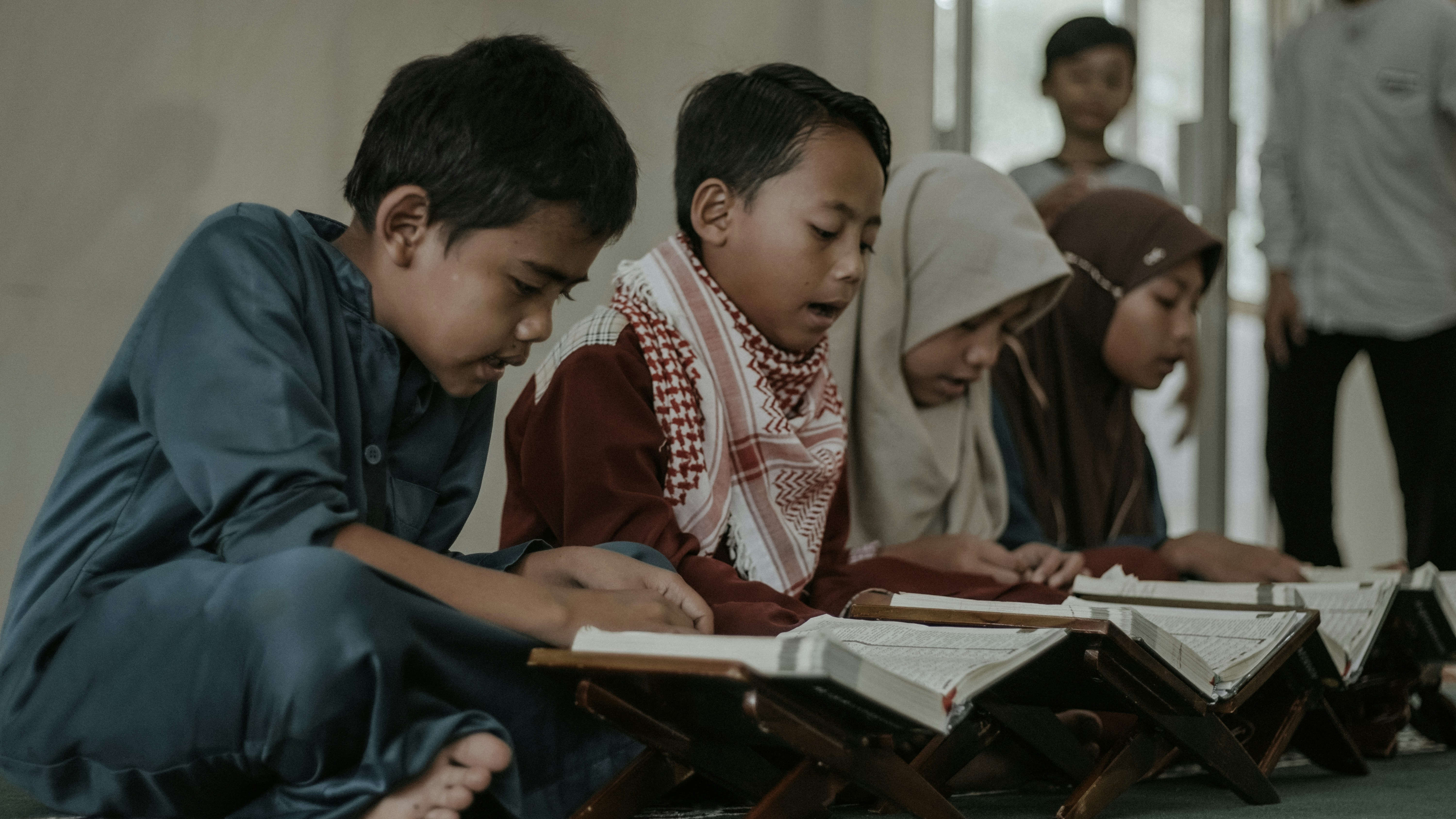
Image Credit: Andri Helmansyah from Unsplash
The reaction to exposure from religions mainly depends on two factors: maturity and personal opinions. According to a local survey, religious understanding is incomplete without maturity and personal opinions. These factors draw the line between healthy religiosity and extremism.
Keeping this in mind, it is important to understand the varieties in maturity and personal opinions of students. Without this, the religious study inside the classrooms can never prove itself effective. Educators must acknowledge these differences to ensure harmony in the classroom. Historically, this variation has long posed challenges in teaching and learning.
Keeping the aforementioned information in mind, teaching orthodoxy and devotion in schools can have great consequences—both good and bad. While selectively learning and embracing information can be extremely beneficial, maintaining an individualistic approach to religion in a diverse classroom can cause trouble.
After all, every student deserves equality, regardless of their beliefs. Approaches like 'Comparative Religion Approach,' 'Phenomenological Approach,' and 'Anthropological Approach' can be fruitful in these conditions.

Image Credit: Alex Shute from Unsplash
Throughout the years of religious studies, 'Comparative Religion Approach,' 'Phenomenological Approach,' and 'Anthropological Approach' have been highly regarded as effective teaching-learning methods. By comparatively demonstrating religion, prioritizing perspectives of mortals, and comparing the beliefs and practices, religion can be effectively taught. This methodology helps in maintaining a balance between religion and avoiding favoritism.
Finally, avoiding favoritism and maintaining balance is the trick to effective religious education. With this, equality can be ensured for all the religions and their followers. After all, the question is not whether religion should disappear from schools, but whether it can be taught in a way that unites rather than divides.