



Picture this. You’re staring at a blank screen, unsure how to start an essay or solve a tough math problem. In seconds, AI can generate the answer, explain the process, and even make it sound better than you could on your own. So, you are left with a question: do you attempt the work yourself or use AI to “help” expedite the process?
Let me backtrack a bit. Imagine this same scenario just a mere 3-4 years ago, where AI models were not well-known at all. You would have forced yourself to finish that essay, although it would have made the process take many hours longer.
Many people think that AI has caused students and people in general to become “dumber”, as everywhere, it feels like skipping the struggle is just a click away. Now, we have to ask ourselves the million-dollar question: Is AI technology actually harmful to us, and making us “dumber” compared to the AI-less generations? Or are we simply using our resources to our benefit?
Image Credit: Growtika from Unsplash
Let us slide into your dms 🥰
Get notified of top trending articles like this one every week! (we won't spam you)What is AI?
This term has been a big buzzword in society for the past year or so, but many people do not know the extent impact of AI on society and how it even works.
So what even is AI? You are probably well aware of ChatGPT as a form of AI, but in reality, AI has many more uses, and you probably use it every single day without even realizing it.
AI, short for Artificial Intelligence, is basically technology that can “think” in ways that usually require human intelligence. At its core, AI relies on algorithms and massive datasets to “learn” patterns and improve its accuracy. Machine Learning trains systems to improve over time without being programmed for every single outcome. It explains why ChatGPT has such a range of vocabulary!
Think about when Spotify suggests your next favorite song. That’s AI. When Netflix somehow knows exactly what show you want to binge next.
That’s AI too. Siri, Alexa, and Google Assistant all rely on AI to understand your voice and respond like a person would. Even Snapchat filters that turn you into a dog or make your face swap with a friend? Yep, that’s AI. Even your for you page on social media uses AI as it adapts to what you like to watch, as you may have already recognized.
And it doesn’t stop there. Cars like Tesla use AI to detect pedestrians and drive themselves on highways. Banks use it to catch fraud in real time.
Even doctors are using AI to scan medical images and detect diseases earlier than humans can. And of course, tools like ChatGPT can write essays, solve math problems, or explain things in seconds.


Take the Quiz: Religion, Schools, and Equality
Religion in Schools: Teaching Respect, Not Bias.
The Benefits of AI: Smarter, Faster, More Efficient
There is no denying that AI has boosted productivity in ways we could not even imagine a few years ago. Tools such as ChatGPT, Grammarly, and AI-assistants allow businesses to thrive, and people earn new skills quickly, generate ideas, and solve problems at lightning speed. AI can even code full apps now.
In fact, if used properly, AI actually improves the potential to make us smarter. It can open up pathways for things not possible before.
We know AI is more efficient than any other technology readily available, but did you know to what effect?
AI has the power to significantly boost our economy exponentially. A 2023 McKinsey report found that generative AI could add up to $4.4 trillion annually to the global economy. Contrary to what you have thought, using AI actually helps students with writing assignments if used in the correct manner. A Stanford study showed that students using AI writing tools improved their draft quality by nearly 30% compared to those without it.
Even in everyday life, AI is making processes much faster. According to GitHub, programmers using AI assistants like Copilot completed coding tasks 55% faster than those working alone. In other words, instead of replacing work, AI is amplifying it. With the right balance, people can use AI to learn quickly, reduce busywork, and, as a result, achieve more as a person.
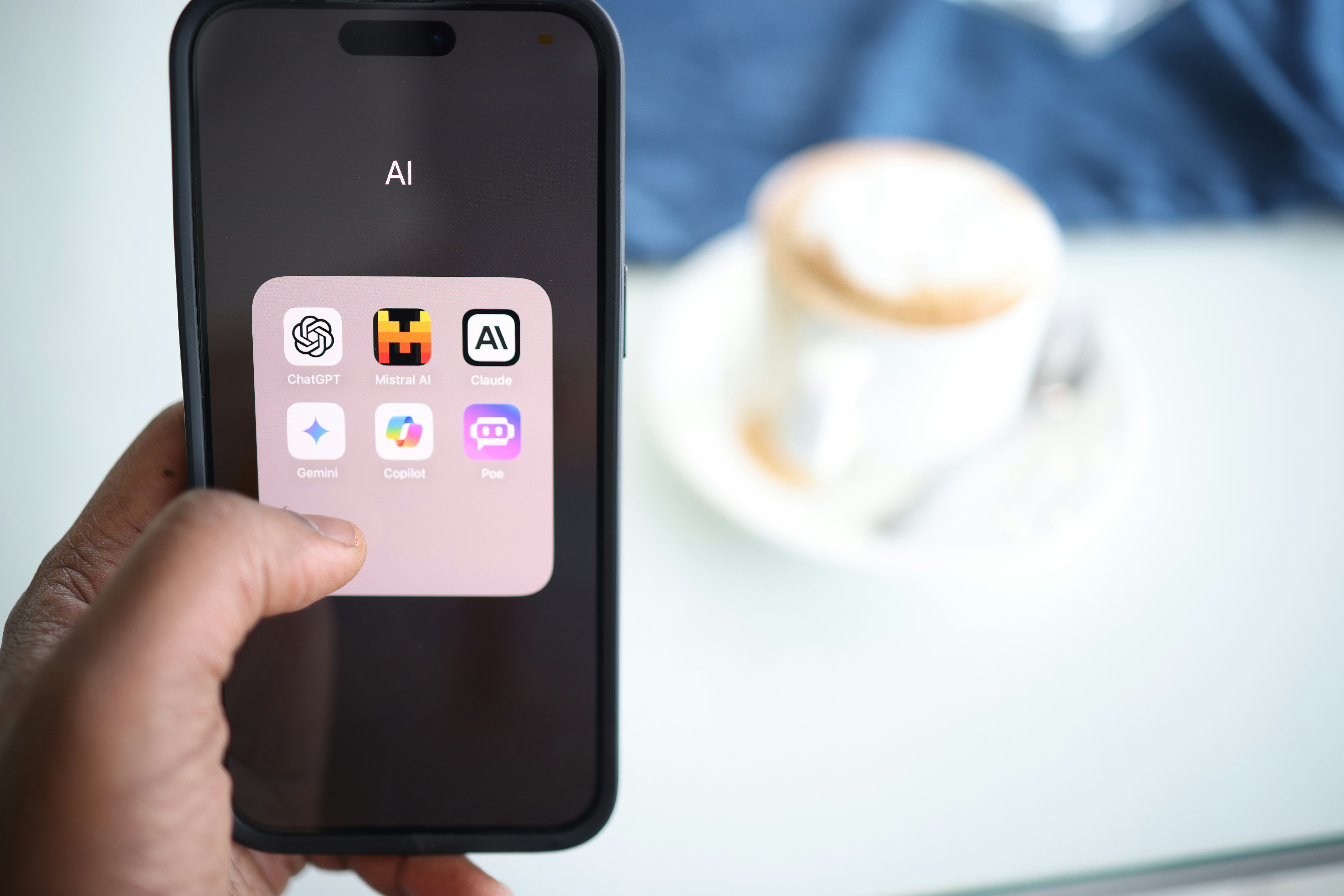
Image Credit: Solen Feyissa from Unsplash
The Risks: Over-Reliance and Lost Skills
It's hard to imagine what the drawbacks are of technology that adds $4.4 trillion to the global economy, but in reality, there are many drawbacks. With AI so available, people may skip the struggle that comes with real learning. Struggle is often where the deepest understanding is built. The hour spent solving a math worksheet, or the struggle to finish an essay without help.
Over time, this reliance could erode critical thinking and creativity, leaving people dependent on technology rather than building skills themselves. Nowadays, students are breaking crucial study habits since they have been using AI as a fallback plan, and this attitude carries on to how they act/react in adulthood.
We’ve seen this kind of shift before. Calculators made complex math quicker, but also caused some people to lose basic arithmetic skills. GPS helps us get anywhere instantly, but many can’t read a map anymore. AI could have a similar effect on memory, problem-solving, and even originality if we lean on it too heavily.
A study shows that AI technology has a very significant impact on people, eventually leading to dementia in their old age. As a result, dementia is progressing and appearing at a younger age than ever.
Image Credit: Igor Omilaev from Unsplash
Final Verdict: Is AI Making us Smarter?
AI is not making us inherently dumber. It is simply a tool, and like any tool, its value comes from the way we use it.
AI is redefining what intelligence looks like in a world where information and technology are abundant and rapidly changing. Yes, in some instances, we are losing skills that have defined us for years. However, this comes with a valuable trade-off: being able to have exponentially higher amounts of capabilities and achieve more as people.
If we rely on AI to do all the heavy lifting, we risk losing the struggle that builds critical thinking and creativity. It all depends on whether we let AI think for us or let it push us to think better.
Maybe the better question isn’t “Is AI making us smarter or dumber?” but “What kind of thinkers will we become in an AI-driven world?” Humans have never been "dumb" when using new and improved tools. We have always adapted to the tools available, from fire to the printing press to the internet. AI is just another tool in the rapidly developing society.
The real challenge is not resisting it or surrendering to it, but learning how to integrate it into our lives without losing the parts of thinking that make us human. If we can strike that balance, then AI WILL be the reason we find success.