




You might think that with the uprising of Artificial Intelligence (A.I.), the most affected community are the artists—but no. In fact, it could be you: a normal human being who’s trying to survive in a world where a machine has more values than an angry man who drives a car.
Everyday life now spins around more technology than ever—and this is just the beginning. If you pay attention to your surroundings, you’ll notice that every single person who has enough internet access to be aware of what’s happening right now is either too concerned about what A.I. tells them, or simply keeps it present to answer basic questions—even the deeper ones. Everyone uses it—whether it's a simple chat or a professional video creator. We all know that, there's no reason to hide yourself. And people who lie about it help me prove my point.
A.I. is portrayed as an essential element that came to change our lives, but actually, it came to change our perception of it. Now, there’s only one thing capable of pulling us out of the wave of mass distraction we've entered—yes, art. And no, A.I. should not replace something so moving and as personal as this. Instead, today is when more authentic art should be emerging.
Let us slide into your dms 🥰
Get notified of top trending articles like this one every week! (we won't spam you)The Beginning of a Whole New Era
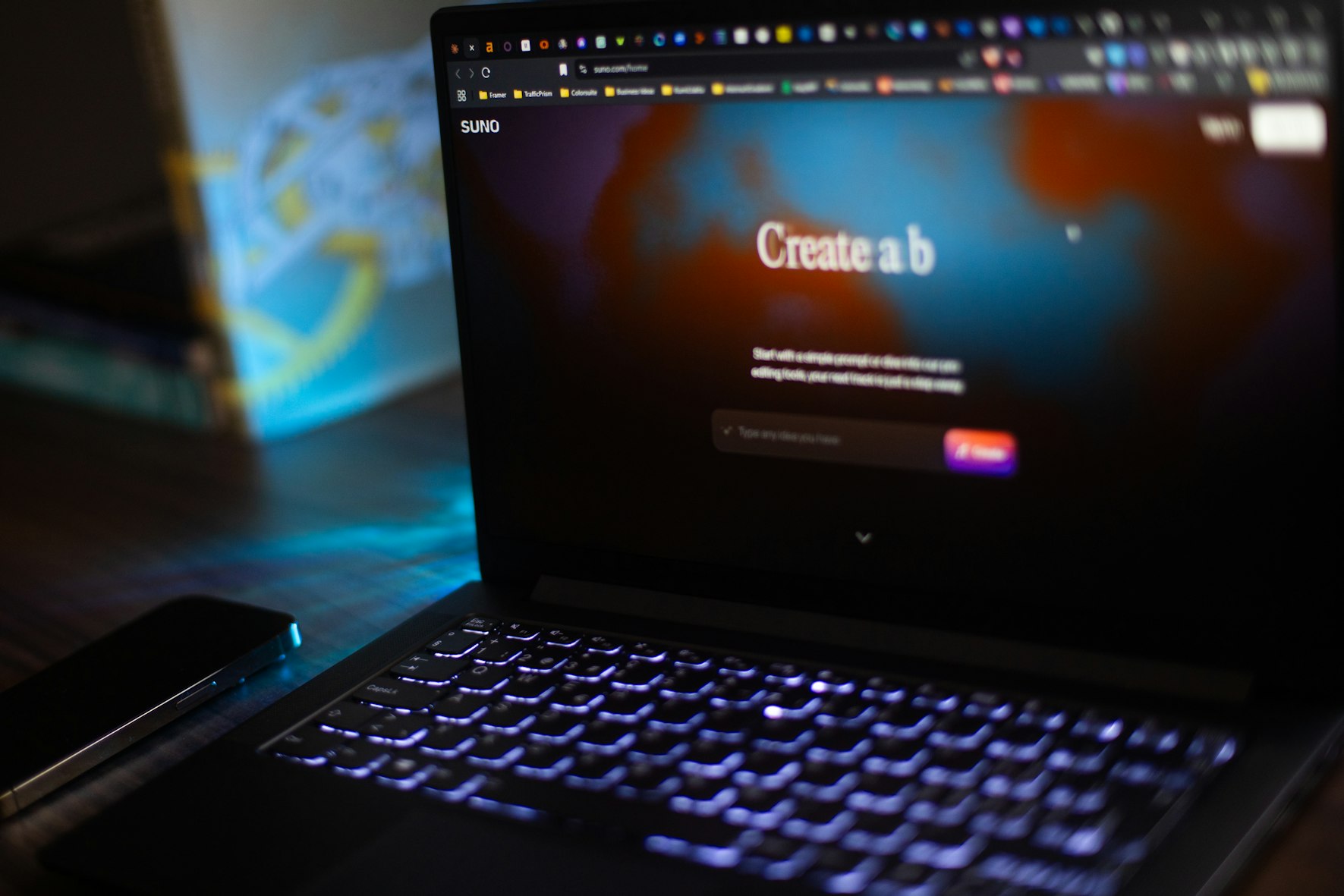
Image Credit: Aerps.com from Unsplash
The only way to be affected is by not adapting to changes correctly. Just as parchment became less common with the arrival of paper in Europe between the 11th and 13th centuries, and the use of letters declined in the 19th century with the arrival of the telephone, we need to be aware that, yes, many people will think a computer can write better than you, or that it can take less time to produce a more realistic and higher-quality drawing than you can. That may be true—but what value could it have?
All of these advances in technology are part of our daily lives now, and even more, they’re our reality. We need to learn how to combine all these new features with our past beliefs of how experiences are supposed to be made. The main mistake is thinking that we should replace one with another.
It’s like trying to replace a boat with a bicycle. You can’t do it because they’re not specifically related by their mainly features, but each one fulfills their function—as they should—in the context they belong in. They obey the instructions given by the one who handles them. It's the same with art and A.I.: even though they need to collide nowadays, they do what they’re supposed to on their own specific field.
Art transmits feelings to the viewer, bringing a new perception of the world itself.
AI can do whatever you can imagine within seconds, generating fake but realistic pieces.
Completely different things that could never replace each other, even less if we talk about A.I. replacing art. Luckily, we can be sure that it has something AI could never achieve and that's it powerful detail: life.

Take the Quiz: Which Fall Activity Should You Try Next?
Fall is full of exciting activities to match your vibe! This quiz will help you discover the perfect way to enjoy the season.
Not Against the A.I. —But in Defense of Art
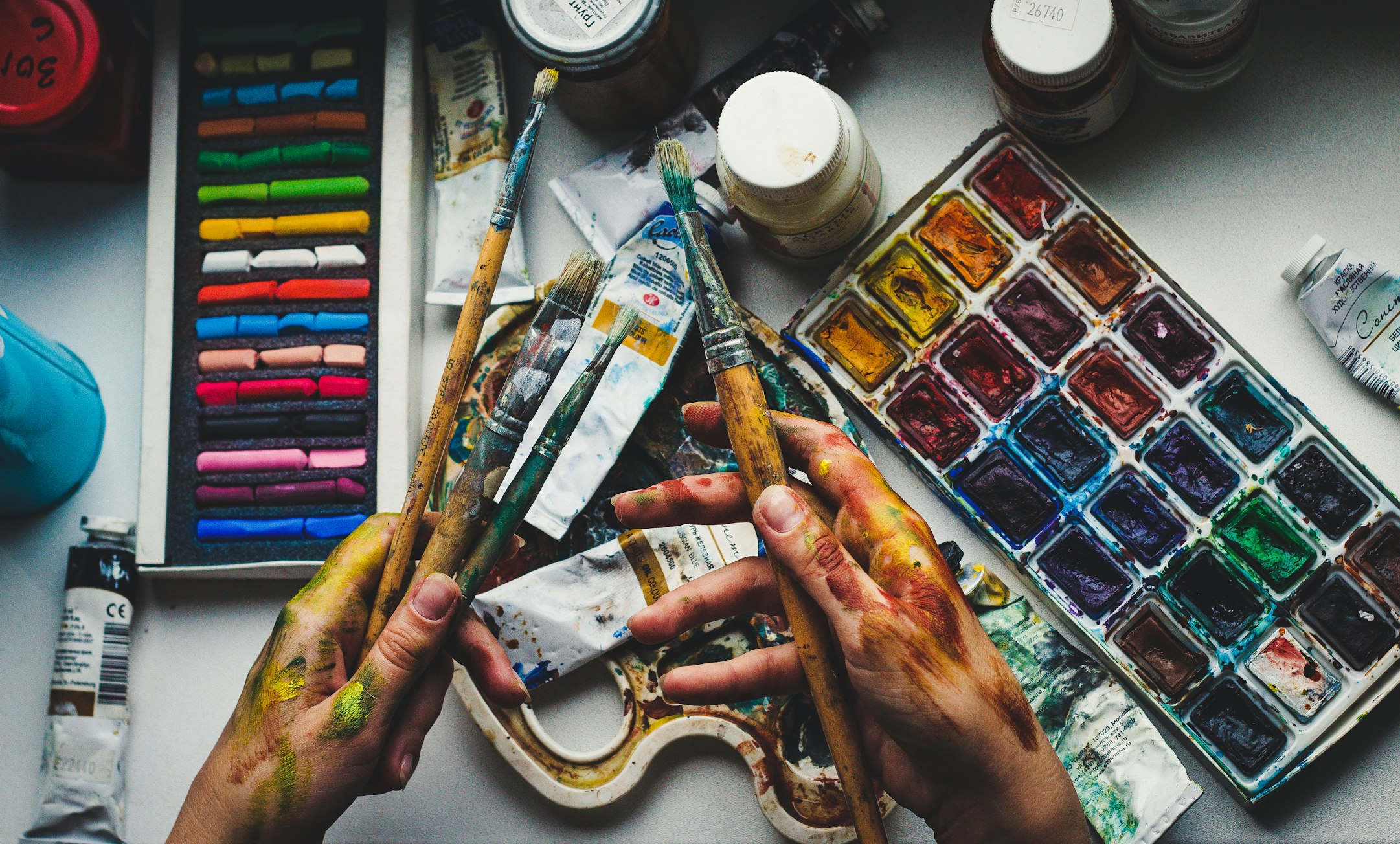
Image Credit: Veronika Scherbik from Unsplash
We can’t ignore the fact that, from now on, there will always be a comparison between both worlds—and a growing confusion when the difference between something generated and something created can no longer be detected at first glance. We can’t resist A.I., but we can use it to our advantage to improve our work. That’s why we need to find a healthy balance between both.
But what if, as artists, we want to do all the work A.I. can do—by ourselves?
We have to hold on to the imagination it might be stealing from us, so we can take the wheel of our lives again. Because it doesn’t matter how great A.I. can be if we still want and feel the need to make our own artwork. That’s the best part about art: having the ability and the chance to feel proud of thinking up a perfect rhyme, or discovering a new combination of colors you’ve never seen before.
Even though not getting what you want is painful, getting exactly what you want without effort feels wrong. It makes you disconnect from the artwork, unable to express any kind of emotion through it. You condemn yourself to the fact that everything you do will be meaningless if you don’t do it yourself.
What you’re asking A.I. to do may be understandable? Of course. But what meaning could it possibly have if you don’t know it—or worse, haven’t put it in?
A.I.-generated content is just that: surface. That’s it.
We Need to Understand A.I., Because Art Still Needs Us Too
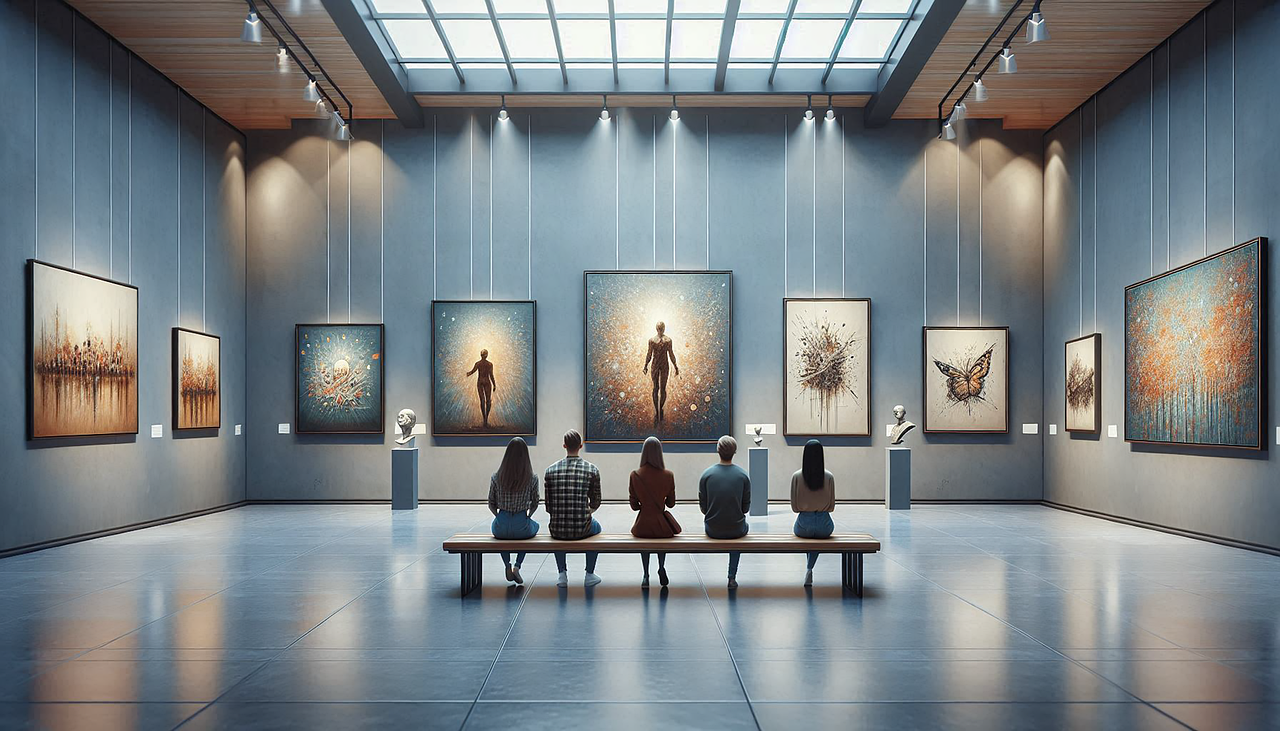
Image Credit: Alexas_Fotos from Pixabay
We understand that neither art nor AI can survive peacefully without the other, and we can’t do anything more than accept what we’re dealing with right now. But it’s still our responsibility —as artists— to keep alive what we value most: the freedom of expression and the feelings that art gives us every single time.
It’s not about the result, it’s about the process.
It’s not about replacing contemporary art with A.I. prompts. It’s about learning to appreciate their value separately —as if they were two completely different sides of the same coin.
Even though email is more popular these days, it hasn’t completely buried the postal letter. And the same goes for art. It hasn’t completely died—and it never will. In fact, with so much AI-generated content out there, expressing yourself through art holds even more value than when you had no one to compete with.
Because only you could’ve written that poem. Only you could’ve painted that painting. Only you could’ve performed that melody in that exact way.
Only you could’ve felt that choreography so deeply in your body. And only you could’ve captured that story that millions of people need to see on screen.
That’s why it’s special —because it’s authentic.
No matter how many times you ask the same question to different people, they’ll never give you the same answer. Because we’re not machines programmed to always give the same result.
We’re human. We feel, think, and experience everything differently. And above all, we don’t need all the knowledge in the world to understand what happens when something you’ve seen or heard touches you beneath the skin —so intensely that you know it’s real.
Because AI might generate powerful content —but only human hands can create something that truly touches the soul.


