





I have consistently had a high degree of ambition, maybe too much. As a student, I figured that accomplishment could replace attention and recognition. Straight A's, getting a leadership role, winning an award - every ounce of accomplishment translated into reassurance I was "enough." I found fulfilment in being the child who could do it all.
I could stay up late to work on a project, and I could even force myself to wake up early to work on another project; this became my identity. The multi-tasker, the person who never says no.
That feeling started to fade away after a while when I noticed that I was no longer on the pursuit of passion, but merely validation. I kept adding one more thing to my plate, always thinking that surely, the next achievement would bring forth satisfaction or wholeness. Unfortunately, it never did.
The happiness I got from each accomplishment quickly diminished; each accomplishment on the quest only made me want just one more. I found myself on a quest for all of this success and literally forgot how to enjoy what it was that I was doing.
When ambition is healthy, it can be like a fire, energizing you to be your best. Achievement as motivation ultimately becomes an obsession that burns everything around it. You included.

Image Credit: SEO Galaxy from Unsplash
Let us slide into your dms 🥰
Get notified of top trending articles like this one every week! (we won't spam you)The Slow Burn of Burnout
Burnout doesn't occur like an explosion. It comes in gradually. It begins when you say you can't take a break yet, that just after this deadline, just after this exam, just after this event, you'll slow down. But the "after" never comes.
For me, burnout meant always feeling exhausted while trying to be productive. I was always occupied, but I wasn't fully there for anything. I would start working on my computer in the morning, and my chest would tighten; not from being stressed, but from emptiness. I didn't know who I was without the constant rush of busyness.
But I continued. Stopping would mean facing a little fear that I might not be capable, like I always thought. That may be all the things I was doing just weren't enough. That is the cruel trick of burnout: it makes you feel like you can't slow down even when your body is begging you to do it.
It took me a long time to learn that exhaustion is not evidence of commitment, it's evidence of imbalance.

Image Credit: Chris Liverani from Unsplash


Take the Quiz: What's Your Hidden Personality Trait?
This might expose you a little...
When “High Standards” Become Harmful
Ambition can often masquerade as perfection. I convinced myself that I simply “held myself to a higher standard,” that I wanted to be proud of my work. But there is a thin line between doing your best and a feeling that you could have done more, or it could have been better.
I used to rewrite essays or papers three or four times, I would reread emails before hitting “send,” and think deeply before agreeing or declining an invitation to some event or opportunity in fear of missing out or disappointing someone. The more I did, the less joy I had in the exercise or task, whatever it was. Everything was a checklist; a product to be produced; a performance.
That is when I began to think – perfectionism is not the loving embrace of excellence. Perfectionism is a fear of inadequacy. Perfectionism is a belief that unless everything is perfect, you are unworthy of existence. That thought will wear you out faster than any all-nighter at home.
Learning to Pause Without Apology
The first time I refused something, I felt I was letting everyone and everything down. But over time, I began to realize that to say no to something meant I was saying yes to something, which was my mental health, my joy, or my peace.
Resting used to fill me with guilt. I'd sit on the couch while my mind turned over everything I "should" be doing. And slowly, but surely, I learned that productivity is not equivalent to purpose. Taking a time out for yourself is not being selfish; it is self-preservation.
Now, I try to listen to myself before I reach that breaking point. If I am motivated by fear or guilt, I have learned that it is not true motivation; it is pressure. And pressure without pause to rest/evaluate yourself is always going to lead to burnout.

Image Credit: Kinga Howard from Unsplash
How to Find Balance Before It Breaks You
Achieving balance is not an easy feat, especially if you are accustomed to overextending yourself. It takes time to get used to and feel good about it, as it may feel uncomfortable at first, you may even feel like you're falling behind. But balance keeps ambition from turning into self-destruction. This is what helped me find balance:
1. Redefine Success
Success isn't about your capacity to do more; it is about being personally fulfilled. For a long time, I defined success as being the best at everything I did. More in charge and take on more, raising expectations of myself until I could barely keep up with my own personal definition of success.
In time, I realized success could look softer. It could be having room to prioritize time with loved ones, sleeping well at night, or feeling calm when I opened my eyes in the morning. I began to realize that sometimes success is about finishing something important, not necessarily everything.
Your definition of success can change, and it is fine if it does! It should.
2. Treat Rest Like You Planned For It
We treat rest as a luxury, but it is a necessity. When we are ambitious, resting feels forced and unnatural. It feels as though you are losing momentum.
Burnout doesn’t occur because you are weak. Burnout occurs when you ignore what your body and soul need until it eventually gives in. Rest is not the same as going backwards and losing your momentum. It is intended to preserve your momentum.
Because so many productive people refuse to rest, they burn out faster. You should develop the habit of resting before you get to this stage. Rest can mean scheduling a day off after a crazy week or allowing yourself to just not feel guilty about just sitting because you are not doing anything.
Rest is not wasted time. It fosters recovery. Without a chance to recuperate, anything has potential to run out of energy, even the most get-it-done person.

Image Credit: Florian Siedl from Unsplash
3. Set Emotional Boundaries With Your Goals
Goals require a level of attention, but are not part of your identity. I have wrestled with my self-worth being tied to the outcomes I produce - when I succeed, I feel good about myself, and when I fail, not so much. When you live in a delicate situation, it generally indicates that your self-worth is tied to something you are not always able to control.
I often remind myself these days that I am not my achievements. If I fail, my self-worth does not disappear, while if I do accomplish something, my self-worth does not increase either. The space of creating a detachment between who you are and what you accomplish frees up space to breathe for yourself, and gives you the freedom to fail while still feeling whole.
4. Prioritize Joy, Not Just Progress
There is just something so wonderfully healing about doing things for the sake of enjoyment. It probably is not "productive" productivity, but joy and motivation are far more tied to creativity and purpose than any productivity checklist you can ever come up with. Bake for the joy of baking, write for the enjoyment of writing, walk simply because you are enjoying the walk.
Accomplishments without joy are just challenges. As soon as laughter moments are added to your life, your goals become lightweight. Your goals become the actual agent lifting you, as opposed to the weight pulling you down.
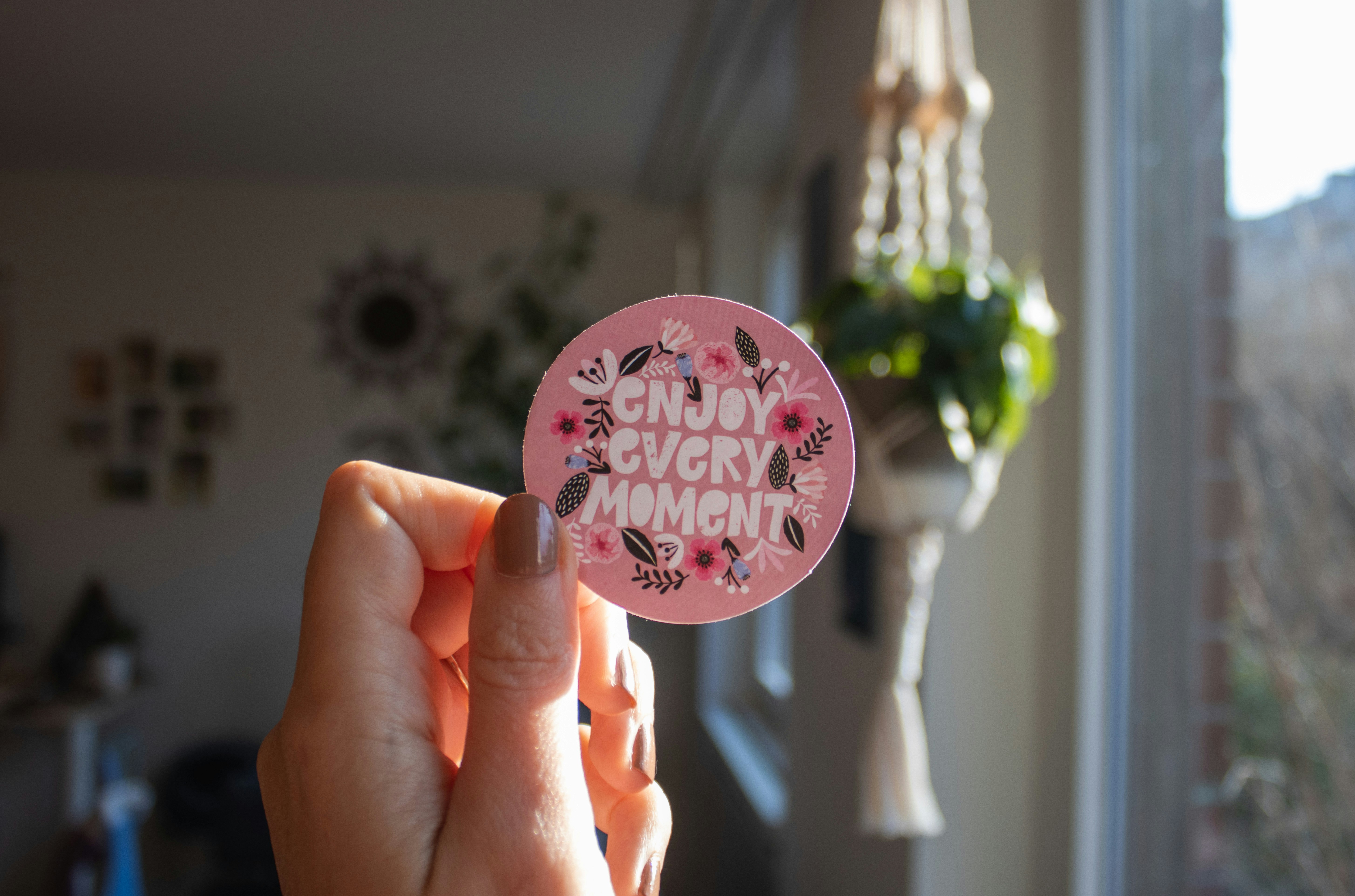
Image Credit: Susanna Marsiglia from Unsplash
5. Surround Yourself With People Who Don't Glorify Exhaustion
When those around you are engrossed in work, it becomes easy to consider overworking to be the social norm. I used to feel bad for resting while my friends or colleagues continued working, and in artificial social proof (my mind), I falsely considered a "lazy" state to be associated with resting. But being busy should never be viewed as a badge of honor. It should serve as a warning.
Be with people who affirm that peace is just as important as pace. The right people will be just as excited for you to rest as they will celebrate any win! And really, when you do start to see resting as a badge of honor, it will all make sense that balance has never been the antithesis of ambition, but balance is what allows you to accomplish what you set out to accomplish.

Image Credit: Rosie Sun from Unsplash
The Strength in Stopping
I still have big dreams. I still make lists, plan goals, and try to hold myself accountable for doing my best. But I'm learning that ambition is meant to empower, not to defeat. It is supposed to provide anticipation, not serve as something to recover from.
And the truth is, you cannot do it all. That is not failure; it is liberty. You do not have to justify your right to rest. You do not have to earn your place by being depleted.
Ambition is meant to illuminate your way forward. It is not meant to burn you.





.jpg)