

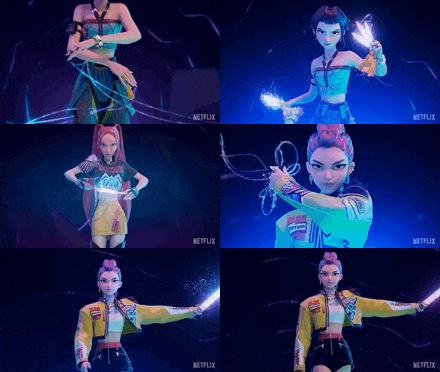


Let's talk about aesthetic subcultures on social media like Instagram or TikTok. I'm talking cottagecore, e-girl, dark academia, "that girl" aesthetic, and those are just the tip of the iceberg. These are social media subcultures that are predicated upon the practice of buying items and consuming more goods to fit a certain vibe or aesthetic.
Let us slide into your dms 🥰
Get notified of top trending articles like this one every week! (we won't spam you)Am I Unique? Or Am I Just Following Other Unique People?
In reality, they are just another set of labels for people to identify themselves with in this presumably label-less world, and the term “aesthetics” has been hijacked and distorted in the process.
Image Credit: Andrzej Gdula from Unsplash


Take the Quiz: How Well Do You Know Instagram Trends?
Take this quiz and find out if you are updated on the 2025 Instagram trends!
History of Aestheticism
Aesthetics, originally being a branch of philosophy, explores the realm of beauty and taste, and it is a subject that has been discussed at length by numerous philosophers, most notably Immanuel Kant (1724-1804). The primary questions that occupy the field of aesthetics include “What is beauty?”, “What is the value of beauty and art?”, and “How does one make aesthetic judgments?”.
Kant argues that one should approach beauty in a disinterested manner, which is not to be confused with the uninterested one. Kant’s disinterest refers more to an attitude of selflessness in the appreciation of pure beauty that excludes possessive desires. The pleasure that is derived from aesthetic experiences is therefore distinctly intellectual. However, when looking at the content that is on Instagram or TikTok, one sees caricatures of contemporary humanity.
Let’s move to a more recent time: the 90’s. Two big things happened around the 90’s. Counterculture was scratching its hands into the mainstream, and mainstream media was targeting teenagers and young adults more than ever before. You could turn on your TV and be like, "Oh, that's cool, I want to look like that." It became a little easier to follow a look without having to truly be involved in the scene to an extent, and movies were showing you ’’This is a jock teen, this is a goth teen—you can be any one of these.’’
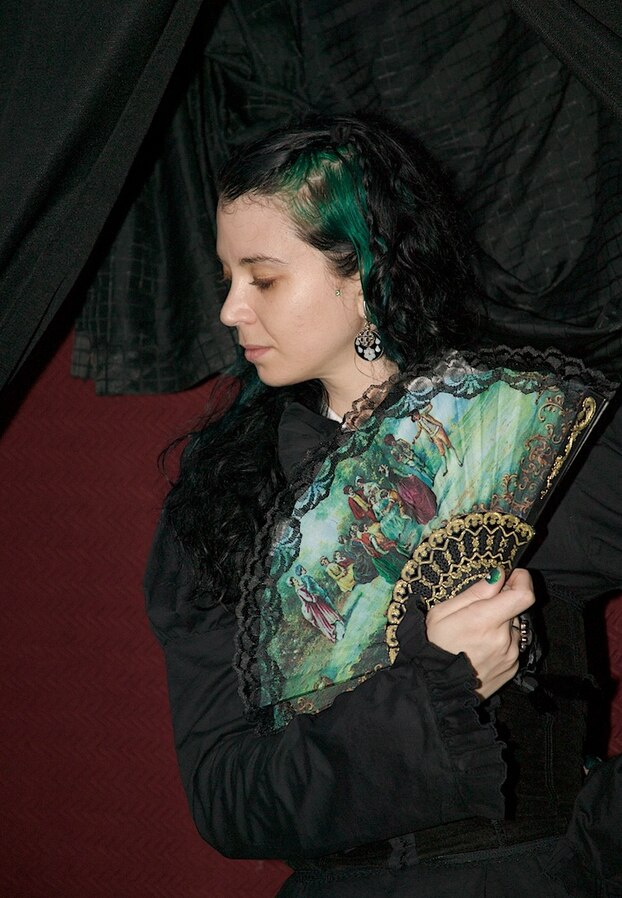
Image Credit: Goth Tea Party from Commons.Wikimedia
Not to mention magazines and malls were making all these aesthetics more accessible. Then, around 2010, the internet became popular, and it has completely changed how we think and how we interact with the world.
The 'That Girl' Current
Who exactly is that girl?
That girl is a girl who gets up at 5 a.m., meditates, drinks smoothies, showers every day, writes in her journals, has a daily workout routine, and eats healthy food. To be that girl, you must work on becoming the best version of yourself by changing your habits, being productive, and planning your days ahead. You also need to be physically and mentally healthy. It’s an entire lifestyle you have to adapt to.
What makes this trend appealing to a lot of people is how it is portrayed on social media; content creators try hard to make it aesthetically pleasing. In addition, most of these content creators are financially stable, either self-employed or entrepreneurs. Basically, it is the new “girl boss” of this era.
However, there are problems with being that girl. If you identify yourself as that girl, you would be urged to consume products that are recommended by this community. That girl is not much into clothing style, but more on furniture for your space, which could lead to overconsumption, which will eventually go to waste when another trend is on.
Furthermore, the that girl trend promotes toxic productivity and grounding your life in this whole mindset could be draining. It is okay if you use this trend to be inspired in becoming the best version of yourself. However, you must understand that you’ll not be that girl every day. After all, all the things we see in the media are not real, even your favourite influencer has lazy days.
Give Up Your Identity! Just Be Like... Everyone Else!
Ironically, these aesthetics disregard the individual entirely. Aesthetics are fixed and designed to be followed by many, suppressing the fluidity and particularity of the people who subscribe to them.
Gen Z is the loneliest generation alive, and labeling simply gives people a sense of identity without having to go through the hard work of figuring out who they really are. If you’re not sure what your personality is or what your passions are, you can pick a pre-made aesthetic and wear it like a costume. It’s instant character creation. You don’t have to develop a backstory, you just say “I’m cottagecore” and boom—everyone assumes you like tea, gardening, and wearing linen.

Image Credit: Camille Brodard from Unsplash
There’s also the social media factor: the internet rewards clarity. If you’re going to get noticed online, you need to be easy to understand in a glance. Having a clear, packaged aesthetic helps people know exactly what you’re about without you saying a word. That’s why a lot of these styles have specific colors, outfits, and even lighting—they make you instantly recognizable.
Are We Moving On Too Fast?
In addition, the disposability of these subcategories is concerning. Yes, it is cool that this generation is so creative at creating names when new things come up. However, the constant cycle of forgetting about it a month later and coming up with a new one is exhausting.
Honestly, I think the reason why it's always changing is because people are not satisfied with whatever they're choosing to stick to, because it's not necessarily the aesthetic that they're looking for. They're looking for a deeper fulfillment with finding a group to belong in and also trying to figure out their self-concept. But I don't think TikTok is the place to find that, especially because TikTok keeps pressuring people to choose a box to fit into, and the entry ticket is to buy a bunch of useless stuff in order to get into that box.

Image Credit: ROBIN WORRALL from Unsplash
Buying Products = Changing Inner Self?
There is this concept called 'brand personality', in which a company tries to attribute human characteristics to its brand so that it resonates with customers psychologically. We might start personifying a company as if it's part of our community, our subculture, or even our sense of self.
On TikTok, for instance, you’ll likely see guides on ‘how to be a downtown girl,’ ‘how to dress like a pilates princess,’ or ‘movies to watch for the light academia aesthetic.’ These videos suggest to their audience that they should not only want to be an aesthetic, but should change themselves to do so.
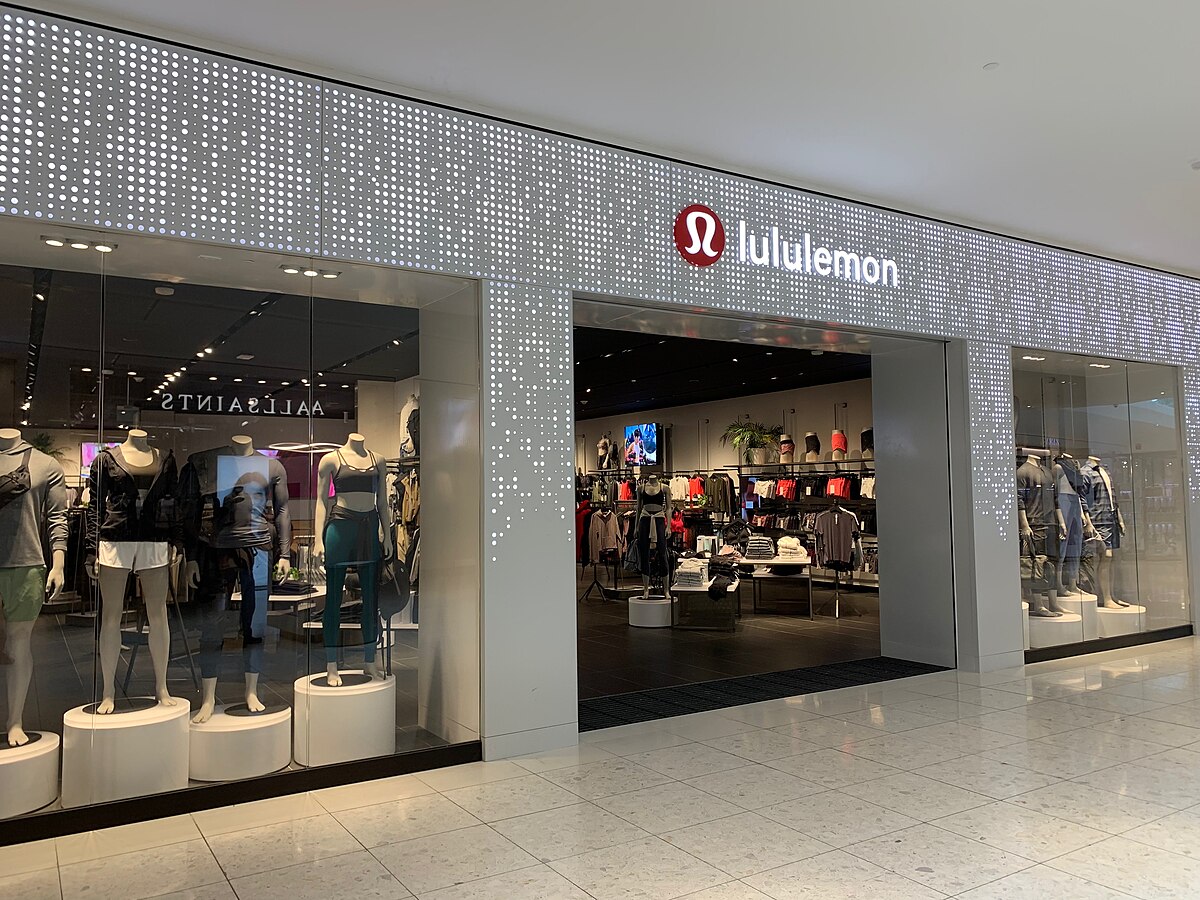
Image Credit: Lululemon Aventura Mall from Commons.Wikimedia
It almost seems like these labels are coming back into circulation not to promote the diversity of artistry and to encourage young women to be different, but it's just a rebranding of selling more products. The beauty industry's biggest consumers are primarily the ages through 18 to 41, and even then we're seeing the beauty industry try their hardest to go even lower by targeting 12-year-olds at Sephora by convincing them that they need skincare.
It's crazy because every single one of these aesthetics that is selling you both the products and lifestyle are never about you. Even the whole self-care era aesthetic puts a huge emphasis on product over developing self-concept and personality. Nowadays, it seems like it's completely prepackaged, that it's just personality in a box and you can buy it and return it whenever it becomes unpopular.
Image Credit: Brett Jordan from Unsplash
A lot of these aesthetics on TikTok are selling you a lifestyle, but they're also selling you the lie that if you just do this and if you just wear this and if you just buy this, you too can have an organized fulfilling life. It's so enticing because they seem so happy and organized and together, but what a lot of people don't realize is getting your life together takes a lot of effort that has nothing to do with being a pink Pilates princess.
Obviously, it's 100% okay for you to want to strive to be better; everyone should. And to even look at some of these aesthetics and the values that come with it and be inspired by them. However, I don't think buying $50 Lululemon leggings is going to help you achieve your goals. And that's the thing with these aesthetic trends — they make it seem like you cannot achieve these goals without buying products associated with it, when that is a flat-out lie.
Fear Of Missing Out (FOMO)
Instead of developing a good healthy self-concept, embracing that we're imperfect, Gen Z is trying to replace self-concept with the micro trends and personality boxes that are prepackaged for you that you can buy with money, which has honestly led to a very self-absorbed, hyper-aware, self-conscious generation of people. A lot of people feel unfulfilled because of the oversaturation on being over-obsessed with oneself.
But why the push to conform? People like to feel like they belong somewhere. It's basically just modern-day tribes. People want to feel connected to others who they think are like them, and aesthetics are the fastest shortcut to that. You don’t have to actually be part of a movement or spend years building trust—you can just adopt the visuals and language of a group, and now you “fit in.”
Embrace Your Uniqueness!
The main way to develop a good and healthy self-concept is actually by embracing one's uniqueness, acknowledging strengths and weaknesses, and maintaining a balanced perspective on personal qualities.
The truth is, the lifestyle that a lot of these micro aesthetics and fast-paced trends are promoting are lifestyles that are just not obtainable for the average person because of how expensive and time-consuming they are. But there is so much that you can do and improve on and work on yourself without a lot of these products being sold to you.
And of course, there's nothing wrong with you participating in these trends if you genuinely like it and if it's for fun. Don't put yourself in an environment where you don't feel truly appreciated and seen. There's nothing wrong with sticking to one aesthetic just because everyone else is moving on every two to three business days.
But if you find that you fit in none of these aesthetics, that's also fine too. Maybe it's time to make your own. And if you find yourself drawn to a certain aesthetic because they're promoting a certain lifestyle, do you feel overwhelmed by it? Get started on a health journey era. Just remember you don't have to get it right and perfect the very first time, as valuable growth takes time and effort.





.jpg)
.jpg)