


We’re all into fashion. Almost everybody’s into fashion. In fact, you’d have an easier time finding someone who isn’t.
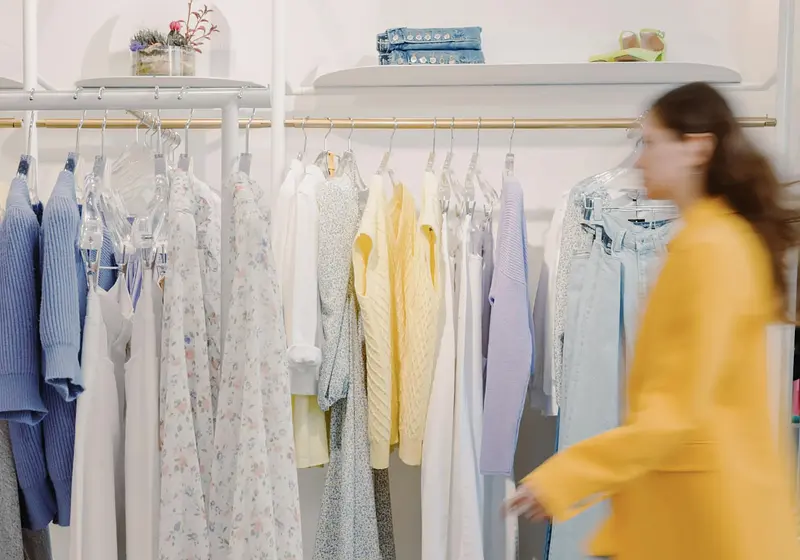
We live in an age of fit checks and get-ready-with-me’s. There’s a sense of dopamine to be gained from putting on a cute pair of jeans and being told how well you dress. You love pretty clothes, you love different styles, you love saving outfits on Pinterest, your closet is overflowing, and your Amazon cart is ever-expanding. You’re into fashion, obviously. Except, fashion is more than that. Fashion is defined primarily as a popular trend, especially the ones in the styles of dress, in the words of Google. It’s easy to see how, by that definition, you’d be into fashion. Fashion, though, is more accurately defined by its secondary definition: a manner of doing something. What you’re into is better described as an aesthetic, which is the creation and appreciation of beauty. It’s the components that make up a particular art. It’s a shortcut in fashion, and while a respectable interest, it’s nonetheless different than an interest in fashion.

Fashion is an art form. In better words, it’s a culture. It is a curation of experiences and a rich history.
It’s more than simply buying a cute top from the mall. Fashion is a reflection of life. Fashion is political. Fashion is cultural. Fashion is historic. In pre-colonization Africa, fashion was an identity. It was indicative of the different tribes. They wore the skins of the animals they caught and the cloth they made from the bark of the trees in their area. The Mbororo people, for example, dyed cloth where each color had meaning. Red and purple dyes were costly, meaning those who wore them were upper class. Colors like yellow and orange were more common to come across in the local plants, allowing lower classes to access them. They wore flowy clothes or sometimes skipped over pieces of clothes altogether because of the hot climate. Fashion was functional.

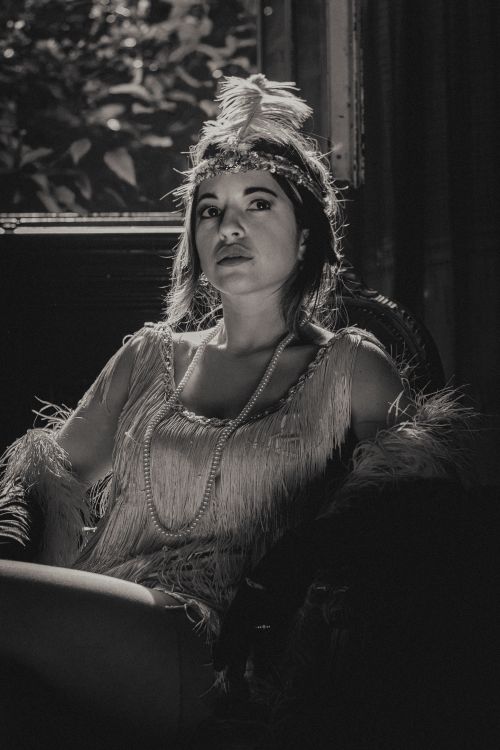
In the 1920s, women underwent a fashion revolution. Up rose the flapper fashion with bobbed haircuts, short skirts, heavy makeup, and sequined tops. World War 1 had just ended in 1918.
While the men were off at war, it was up to women to keep society afloat. That was a revolutionary idea in itself at the time. It challenged the standard that women were to be put on the back burner, quiet people, not quite citizens, who were to be neither seen nor heard. A woman’s job was to silently take care of the home. They were mothers, they were maids, they were property, but they were not citizens, and there was no place in society for a woman. Flapper fashion revolted against these ideals with loud pieces and bold fashion. It was women’s way of saying, “We are here, we will be seen, we will be heard, and you will make room.” Wounded was the idea that women were tied to their modesty or their household. Women wouldn’t be ignored any longer, and it’d be difficult to try with a striking feather hat entering the room before she did. Fashion was rebellious.
What we’ve lost in the fashion space is the idea that form follows function. Fashion used to be a culture, a way to adapt to life, but now, fashion often precedes life. To be into fashion is to treat it as a respectable art form.
Like any art, it is developed through personal taste. In the same way a painter may find inspiration from the daily walks they take, a fashionista finds inspiration from the experiences they’ve lived. Fashion taste is developed from developing your persona. It’s curated through shows you’ve watched, books you’ve read, art you’ve seen, and adventures you’ve had. It is a reflection of your beliefs, where you come from, and your identity. It can’t be watered down to a two-word phrase for a TikTok trend. Though the trend may be aesthetic, it may fall into the broader category of “fashion” by the standard definition; it is entirely different to appreciate aesthetics than it is to appreciate fashion.

Aumusee from Wikimedia Commons
The problem is that most people recognize fashion for what it is: an identity. Yet most still prefer shortcuts as opposed to the gradual curation of this persona. People buy items based on a vibe.
They shop for who they want to be, not who they are. This isn’t problematic on its own, as it’s expected for people to want to grow or change. The problem is that people shop for who they want to be in place of taking steps to become that person. You want to be perceived as an important, busy woman, so you buy a button-up and a pencil skirt, and call it “office siren”. You want to be perceived as an intellectual book reader, so you buy a cable-knit sweater and name it “Rory Gilmore Aesthetic.” This is how fashion begins to feel fast and inauthentic. All meaning behind the fashion is dissolved, and being perceived a certain way based on your looks is prioritized.

This phenomenon is seen in goth and punk spaces as well. Goth and punk fashion were characterized by their political beliefs. They were founded upon principles of feminism, anti-capitalism, and individual freedoms.
Their fashion is defined by their ideologies of countering the norms. Today, there’s a surge of people removing politics from fashion when the fashion is inherently political. Being goth isn’t about wearing black or chunky boots; it’s about encouraging individuality. Being punk isn’t about edgy music and ripped jeans; it’s about fighting against a toxic society. You can’t remove the meaning from fashion and expect it to still be fashion. You can’t call yourself a lover of fashion and disregard its significance.
Next time you throw on a pair of jeans, remember that they’re popular for being durable and reliable. Remember that they stem from workwear for farmers and miners. Fashion is a record of humanity.
It shows where we came from, what we’ve lived through, and who we are. There’s no shame in being disinterested in the history of fashion, same as you may not be interested in political history. It’s deluded to expect that everyone holds the same beliefs or honors the same things. There’s no shame in simply liking cute clothes or appreciating a certain style. But when you say you’re into fashion, you’d be wise to remember that fashion is political. Fashion is historic. Fashion is humanity.