



Why is it that we romanticize toxic love?
Many fan-favorite relationships were grounded on manipulative or painful beginnings, and emotional turmoil is always heavily in the process of these couples getting together. Toxic love has become a strangely captivating theme in popular culture, and that's reflected in shows that are currently popular right now as we speak.

Image Credit: Decmon from Unsplash
Let us slide into your dms 🥰
Get notified of top trending articles like this one every week! (we won't spam you)Exhibition A: The Summer I Turned Pretty
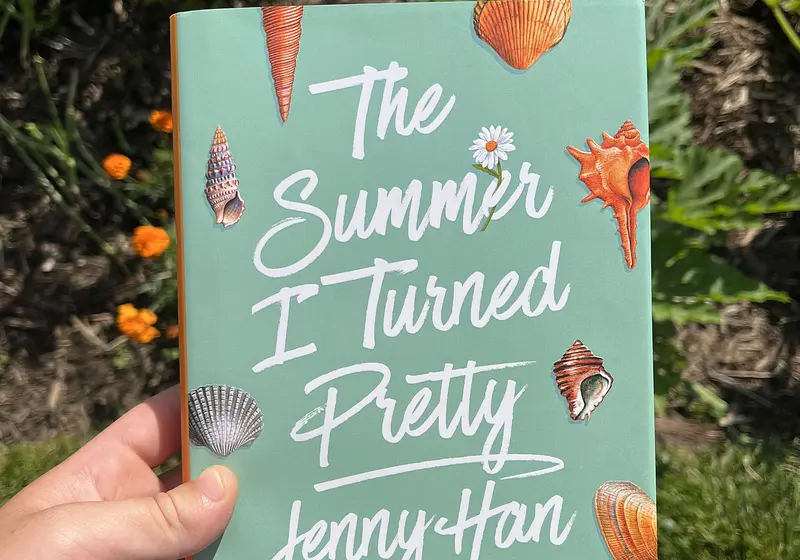
Let's face it: The Summer I Turned Pretty may be an entertaining show and I understand why it's beloved--it has its heartfelt moments and a realistic, pertainable coming-of-age-charm. I remember I liked the books when I was younger, but the more I think about the love stories it features the more morally ridiculous it gets.
For one, Belly has been bouncing back and forth between two brothers for years. For two, Jeremiah cheats on her in season 3--twice--yet less than a week later he proposes to Belly and she agrees to marry him.
Then, after the cheating and after Jeremiah acting like an immature idiot throughout all of pre-wedding planning, Belly blows up at Conrad--the older brother, who has been pining for her ever since they broke up four years ago--when he finds out his brother cheated on her. She says that he treated her worse than Jeremiah ever did because...he forgot to buy her a corsage for prom and was a little emotionally unavailable while his mother was dying at eighteen years old.
Yet Conrad is still irrevocably in love with this girl, embodying the trope of the suffering, devoted partner willing to endure boundless emotional pain just to be with one person. This taps into a familiar yet potentially problematic cultural script: that true love means sacrificing your own well-being, tolerating inconsistency or hurt, and even excusing harmful behavior.

Image Credit: Fewings from Unsplash
But by wrapping these dynamics up in a sentimental, sweet coming-of-age story where Belly and Jeremiah are viewed as 'good' characters and cheating is repeatedly excused--not just with Jeremiah, but also with Taylor and Steven--The Summer I turned Pretty romanticizes toxic love. It turns manipulation, betrayal, and emtoional pain into something that is desirable or necessary to get with the partner that you are ultimately meant to be with.
That's not to say that every love story is easy or that it should be, but this show blurs the lines for viewers--particularly its teen / young adult audience--for what a healthy relationship or love should look like.


Take the Quiz: Which KPop Demon Hunters' Huntrix Member Are You?
Are you the chaos on stage or the calm in the storm? Let’s find your Huntrix twin.
Exhibition B: Kpop Demon Hunters
Another show that's been extremely popular lately: Kpop Demon Hunters isn't a strictly romantic show, but it does delve deeply into intense personal relationships and complex romantic entanglements--many of which arguably fall into the realm of toxic love.

Image Credit: Caleb Ekeroth from Unsplash
The relationship between Rumi and Jinu is depicted as toxic--geared by co-dependency and emotional manipulation, as Jinu sabotages Rumi under demonic command. Furthermore, Jinu is 400 years old. 400. Yes, age differences are often deemed acceptable in the context of fantasy but Rumi is in her early twenties--multiple centuries of a gap is too much. Not only that, but Jinu is a murderer and very much the bad guy for most of the film.
Perhaps because of this, the relationship storyline bewteen him and Rumi feels rushed and forced. Within an indecipherably small window of time, Jinu goes from villain to romantic interest: one that lessens Rumi's agency and cheapens her growth as well as their whole story. Their relationship does not feel consistent to the characters that were portrayed to us and lacks a natural progression, leading out of nowhere to Rumi's sudden attraction to him in spite of their clashing beliefs.
Exhibition C: The Notebook
A romcom well-loved by many, many people around the world--The Notebook, released in 2004. It's no secret that this movie features an extremely toxic, unhealthy relationship between its leads that can be traced back to their very first encounter. Despite Allie's repeated rejections, Noah is persistent to the point of being harassing and stalker-like. He also threatens to jump from a moving Ferris wheel unless Allie agrees to go out with him--this is plainly blackmail that relies on Allie's sense of responsibility and morals.

Image Credit: Oziel Gomez from Unsplash
Once they get together, the toxicity doesn't just fade away either. The movie showcases the two's constant fighting as a sign of passion rather than an absence of communication and the ability to have necessary conversations. In one of their bigger fights, Allie slaps and shoves Noah and he pushes her in response. To tie the ribbon to this unhealthy couple, Noah emotionally cheats on a woman that he agreed to be in a committed relationship with because he did it all while still completely enamored with Allie.
This presents the idea that as long as you are completely in love with a certain person, you are given a free pass to cheat on the relationships that you willingly got yourself into. This film romanticizes all these toxic behaviors, setting murky morals and unrealistic, maybe dangerous expectations for viewers. It says that passionate love can be manifest in stalker-like obsession, emotional sabotage, and cheating.
Exhibition D: Toxic Love in Music
Toxic love is often portrayed with intense highs and intense lows--exciting and passionate and dramatic: it draws people in. But the many songs that celebrate passionate, tumultuous, unhealthy relationships reinforces the idea that love is only real when it's intense or complicated or never feels easy. For instance, there are many songs that glorify cheating, emotional abuse, or even physical violence under this idea of 'I was so crazy in love with this person there was no other choice'.

Image Credit: Erik Mclean from Unsplash
A specific example of this is 'Every Breath You Take' by the Police, which is viewed as a romantic classic. And yet it has long been understood as a song depicting possessiveness and obsession in a way that isn't normal--the lyrics describe someone obsessively watching their every partner's move and this toxic "watching" is presented under the guise of love. 'Don't Lie' by The Black Eyed Peas is another very popular song, and one that discusses the dynamics of deceit in a relationship--specifically when a partner is lying about their infidelity. The protagonists seem aware of the lies yet are continuing to stay in the relationship.
The examples are endless--"Toxic" by Britney Spears, loved by multiple generations, "Wrecking Ball" by Miley Cyrus, "Love the Way You Lie" by Eminem ft. Rihana, etc.
While I'm not saying that all negative depictions of love in music is inherently bad, there is an issue that arises when toxic dynamics are normalized or even romanticized--which can ingrain an understanding in young audiences that unhealthy relationships are something to endure in the name of love.
How To Not Fall Into These Traps of Romanticizing What's Unhealthy:
To avoid these traps of romanticizing unhealthy relationships depicted in media, it's critical to first understand that there is a difference beteween normal, temporary struggles and arguments-- --and patterns of behavior that are genuinely harmful or toixc. Healthy love can't be devoid of conflict, obviously, but there is nuance within that: it's about how you and your partner are able to navigate those conflicts.
With mutual respect, understanding, and a commitment to working through issues together. Emotional highs and lows is not synonymous with manipulation, abuse, or any constant sense of instability. It's essential to think about whether the challenges you are facing in a relationship are leading to mutual growth as a pair and further understanding or continuously piling on damage and distress. By recognizing the difference and not tolerating harmful behaviors--emotional control, deceit, physical aggression, etc.--you can eschew the trap of romanticizing toxicity, whether that is in your own life or in the media.
Loving someone wholly means embracing both their strengths and their flaws and accepting them as they are. Encouraging growth and change in the right direction is not the same as trying to change who your partner is, and it's of extreme import that that distinction is clear.