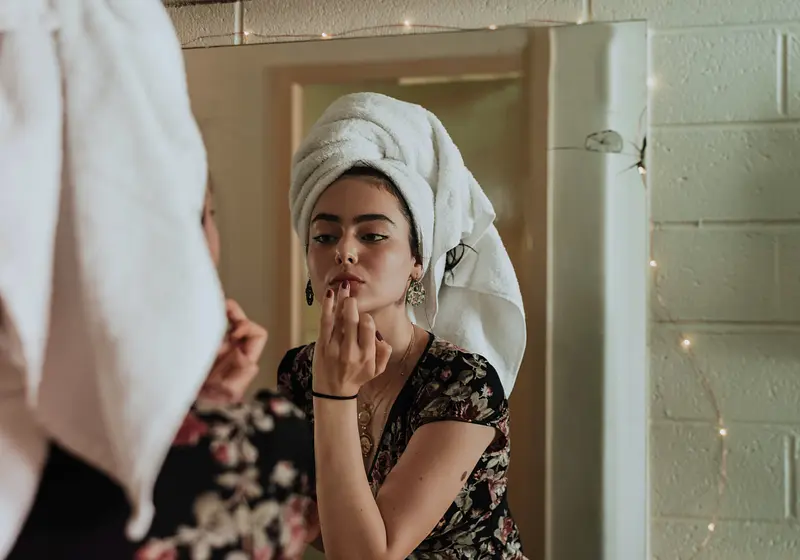





The rise of teen girl aesthetics were made popular by their reputation as a form of self-expression. The influencers who promote trends like "clean girl", "coquette", and "that girl" always seem to look like a walking Pinterest board. From the outside looking in, the girls that perfectly embody these visuals are pretty and privileged — the type of girl that everyone wishes they could be.
Though it may seem like a harmless trend that provides girls with creative autonomy, the rise of the "perfect girl" aesthetic reinforces perfectionism, classism, and unrealistic standards for teen girls.

Image Credit: Nick Noel from Unsplash
Let us slide into your dms 🥰
Get notified of top trending articles like this one every week! (we won't spam you)"Perfect" is Never Perfect
It isn't hard for girls to fall under the misconception that the ability to meet societal standards determines their worth. There's only so much that you can judge about a person through the barrier of a screen. The influencers we see on social media look so perfect that they don't even seem real.
The truth is: that's because they're not. It's so easy for people to hide their flaws behind the covers of social media and paint themselves as the person that everyone else wants to be.
From seeing a "perfect" girl online, we tend to look in the mirror and compare what we see in reality to a filtered illusion. It's so common to constantly compare yourself to others, and your brain convinces you that you have to be a certain way to be socially acceptable. We also tend to see ourselves through different lenses than the ones we use to view other people.
They say that it isn't good to look at a picture of yourself for too long because your brain will start to distort it. Things that you hadn't noticed before begin to pop out and seem much more prominent the harder you look. When we look at ourselves, we tend to focus on our flaws, whereas when we look at someone else, their insecurities are not nearly as visible.
The secret is that trending aesthetics were specifically designed as slim-fitting categories that only certain people can fall into. The reason why this works is that girls are willing to rearrange themselves just to be able to fit into the mold.
But no matter how many molds we squeeze ourselves into, there will always be another. What we also don't realize is that it doesn't matter how subjectively perfect a person might seem through beauty or privileges and how close they are to actually meeting societal standards; it always feels like there's something that needs to be changed about ourselves.

Take the Quiz: What’s Your Perfect Skincare Product for the 'Clean Girl' Look?
Take this quiz to discover the perfect skincare product for your “clean girl” routine!
What It Really Means to Be a "Clean Girl"
The "clean girl" aesthetic is modeled by minimalistic accessories, a light-makeup look, and most importantly, the slicked-back hairstyle. The point of this trend is exactly what it sounds like: to look clean and put-together. The truth is, a lot of honest influencers have actually noted using more makeup strategically to look like they're wearing less makeup.
This means wearing a lot of base makeup (foundation, concealer, blush, etc.) to cover impurities in the skin and give off the "clean" look without using dramatic eyeshadow or eyeliner to avoid the heavy makeup effect. Another truth is that although the slicked-back hairstyles give off the neat and put-together look, the amount of product used in the hair to achieve this look is not as clean as it looks. Oftentimes, girls actually use the slicked-back hairstyle to hide unwashed hair, making the "clean girl" trend counterintuitive to its name.
The amount of popularity this aesthetic has received ultimately establishes an unrealistic standard of always looking clean and neat, even when this is not necessarily the case. Additionally, the pressure to fit into this category highlights insecurities in young girls by forcing them to appear this way. In my personal experience, not knowing the reality of the light-makeup look, I felt insecure with my skin texture, seeing all the girls online who appeared to have flawless bare faces.
I also realized that I didn't like how I looked with the slicked-back hairstyle, as I felt like it distorted my facial shape. It was discouraging to feel like I didn't fit into the mold, especially seeing all the pretty girls who did. Trying to follow the trend ultimately emphasized the flaws I saw in myself, though realistically, the "clean girl" aesthetic is not what it's promoted to be.
Framing Femininity - The "Coquette" Aesthetic
The girls who fall under the "coquette" aesthetic categorize themselves as dressing similar to dolls. This trend is made up of dainty features, light skin, rosy cheeks, and outfits covered in lace or bows. It became popular not only through its rise on social media but by making its way into fashion brands that adopted the look.

Image Credit: Jelena Mirkovic from Unsplash
The "coquette" trend ultimately promotes hyperfemininity by equating it with a stereotypical perspective that girls are cute, petite, and innocent. Not only does the aesthetic reinforce unrealistic beauty standards by pressuring girls to be doll-like and perfect, but it also romanticizes harmful gender roles by framing femininity in a certain way. The surface-level trend of adding bows to every outfit can be a harmless form of self-expression, but on the deeper level of curating girlhood to stereotypical standards, it becomes a narrow box that teen girls force themselves into.
She's Just "That Girl"
Being "that girl" is different in the way that it's less about a conventional appearance and more about an idealistic lifestyle. This trend promotes productivity, and the influencers who display themselves as "that girl" depict their daily routines that often consist of waking up early every day, eating three healthy meals a day, working out consistently, and doing hobbies like journaling or meditating. Though their organized lifestyle is the star of the show, they always seem to be naturally glowing and beautiful.
To be "that girl" means to be the perfect girl on the inside and out. It means that you never get angry, you're never bothered by anyone else, you're never stressed, you're pretty, you're privileged, and you're living the upper-class life that everyone wants.
There's nothing wrong with romanticizing the little things in life or trying to live an organized lifestyle. The danger is in the way that this idea is presented to promote effortless perfection through strict exemplification. Realistically, "that girl" in the context of perfection doesn't exist, and the false perception of her initiates a race that's ultimately useless.
Anyone can be "that girl" in the context of motivation and self-improvement. Though no one can really be the perfect version of themselves, being "that girl" shouldn't be about the aesthetic, but the mindset it takes to be the best version of yourself.

Image Credit: Samantha Gades from Unsplash
Teen girl aesthetics can be uplifting rather than deceitful, but it all depends on the way we perceive them. It shouldn't be about chasing perfection by putting yourself in a box or setting unrealistic standards for yourself. Instead, aesthetics should be seen as loose categories of self-expression that promote inner beauty and define self-worth, not by privilege, but by personal growth.