




Each fortnight, somewhere across the globe, a language dies. There is no news stories. No remembrance memorial.
No worldwide vigil. Just an ending. A final speaker dies. A final story is never told. A final way of understanding the world disappears into the air. The rest of us go on living: scrolling online, studying for tests, rushing to our next location. In those moments, the entire universe has just vanished.
And that is the magnitude of what we are losing and the way it is happening silently.
Languages do not just die; languages take worlds with them. They take metaphors formed by mountains, proverbs formed by storms, lullabies formed by ancestors that many of us will never know the names of. When a language dies, we lose ways of thinking that humanity will never recreate regardless of how many books we write or how many databases we build.
And, we don’t very often talk about language loss. Maybe it is because it is silent. Language loss does not occur with noise; it disappears. And disappear is easy to miss.
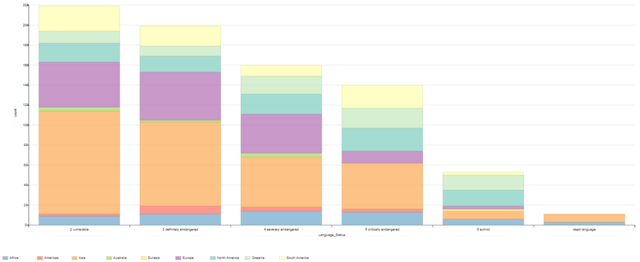
Image Credit: Endangered Languages on Wikimedia Commons
Let us slide into your dms 🥰
Get notified of top trending articles like this one every week! (we won't spam you)Why Are Languages Disappearing So Quickly?
Globalization: Convenience Over Cultural Complexity:
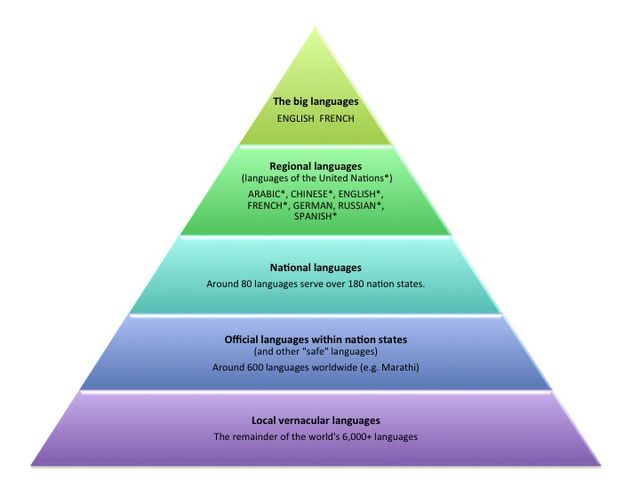
Globalization has simplified communication, but it has escalated uniformity. English, Mandarin, and Spanish—the languages of commerce, diplomacy, and digital power—shape the structure of the modern world. They shape our economies, shape our education systems, and fuse the algorithms that determine content visibility.
The imperative to assimilate is seldom articulated but is imperceptibly present: learn the language of opportunity or miss out.
Parents urge their children to acquire the global language for their future success. Children begin to abandon their first language in public to avoid embarrassment. Over time, fluency disintegrates: a child becomes bilingual, his child becomes semi-fluent, then the next understands but may not speak. Then it ends, not dramatically, with gentle inevitability.

Image Credit: Endangered Languages on Wikimedia Commons
Education Systems: When Learning Means Leaving Something Behind:
Schools frequently become the last straw. In many countries, local languages are downplayed as "unofficial," "unprofessional," and "holding students back." Children are instructed to put them aside, sometimes punished for speaking them, sometimes softly cautioned that these languages would not "get them anywhere."
But language is not just a jacket we put on and take off; it is identity. It is memory. It is collective consciousness.
A language can live through colonization. It cannot live through shame.
When children equate their mother tongue with inferiority, the clock has begun to tick on that language.

Image Credit: Kituwah Academy (Endangered Languages) on Wikimedia Commons
Social Media: The Accelerated Erosion:
The digital world could have been a sanctuary of linguistic diversity but, instead, it often expedites extinction. Short-form content demands immediacy of understanding. Algorithms will always reward that which will appeal to the widest audience, and they, in a biased way, favor dominant languages.
A meme in a lesser-known Indigenous language will never circulate as quickly - or broadly - as one in English. A tutorial in a minority language will not reach an audience as large as one in Spanish or Arabic. . Online, visibility translates to survival, smaller languages cannot compete with virality.
Even digital archives, important as they are, cannot replace that there are living speakers. You can store a dictionary; you cannot store soul.

Image Credit: Tracy Le Blanc on Pexels
Take the Quiz: What Kind of Political Personality Are You?
Ever wondered what role you’d play in the political world? Take this fun quiz to find out!
The Cultural Cost: What We Lose When a Language Dies
A language is not simply a set of vocabulary; it is an entire worldview condensed over centuries.
Some languages have words for things for which we could write entire paragraphs. Some languages record relationships in ways that modern languages don't even fathom. Some understand time differently, reminding us that the future is not always something we travel to linearly, identity is not always singular, and that truth is not always spoken — at times it is sung.
When a language dies:
- A story that no one else can tell is lost
- A ritual is stripped of its context
- A landscape loses its name
- A community loses its memory of itself
Humanity is a little quieter. A little flatter. A little less wise.
We talk about loss of biodiversity all the time: trees, oceans, species. But loss of language is an ecological loss as well; it does not simply lose the language, it also loses all the knowledge and understanding about medicine, seasons, farming, wildlife, and so on. Embedded in the grammar and metaphors of a language are centuries of knowledge and understanding about ecology.
When a language dies, the earth loses a witness.

Image Credit: Endangered Languages on Wikimedia Commons
Languages on the Edge
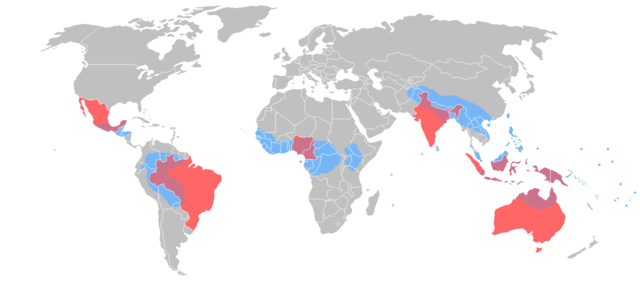
Today, over 40 percent of the world’s languages — more than 3,000 — are endangered. Many have fewer than a thousand speakers. Some have fewer than ten.
Some endangered languages are:
- Ainu in Japan
- Yaghan in Chile and Argentina
- Breton in France
- Nǀuu in South Africa
- Cornish in England, revived but still fragile
- Kalaallisut dialects in Greenland
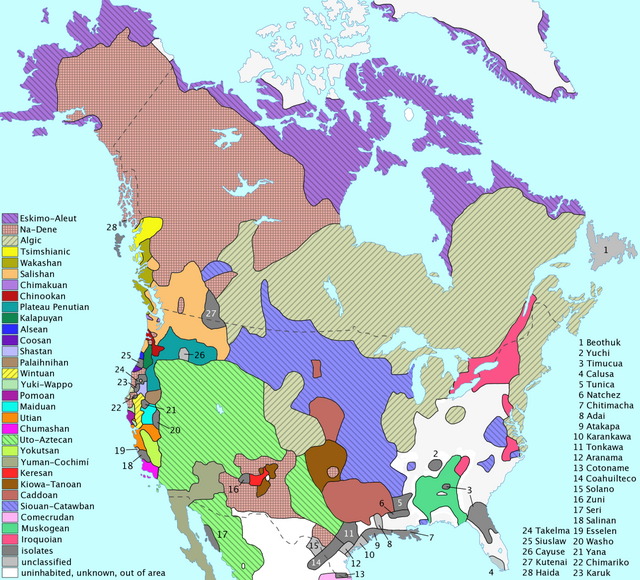
- Lakota, Ojibwe, and many Indigenous languages across the Americas
- Welsh, now regaining momentum through activism and policy
Each of these languages is a living archive: of weather patterns, ancestry, humor, cosmology, and poetry. Losing them is not losing “words.” It is losing worlds.
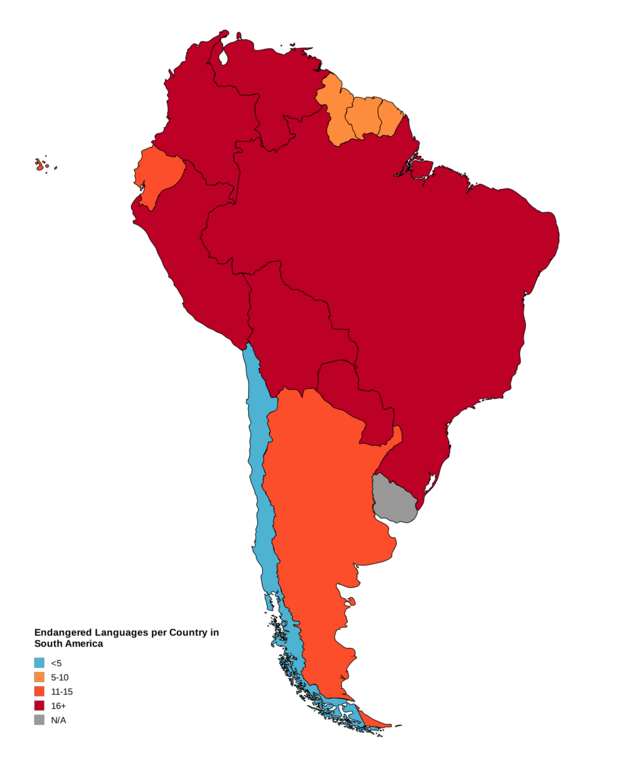
Image Credit: Endangered Languages on Wikimedia Commons
People Fighting to Keep Their Languages Alive
Even with the vast scope of loss, there persists resilience of a different power — a quiet resilience, a hopeful resilience.
There are educators bringing Indigenous languages to life in classrooms where they were once told to cease. There are Elders recording oral histories so that people in the future can hear voices they were never meant to lose. There are activists creating TikTok lessons in threatened languages to show that the past can exist comfortably on a contemporary platform. There are linguists working alongside communities to document the phonetics, grammar, stories, and songs of languages before they disappear.
As someone who was born and raised in Canada but removed from it at a young enough age that I likely didn’t yet have the language or capacity to fully understand the enormity of what surrounded me, there is weight to this issue. I didn’t have the language or the age to comprehend I lived in a space where whole societies thrived well before the one presently mapped out. I didn’t understand how many Indigenous languages were nestled on the determination of their last speakers, and it was all too easy to see how sound could simply vanish in silence if it was not activated.
Retrospectively, it does hurt to know I roamed in places, stories I could not hear- not that they weren’t occurring- but rather the world was made sure such stories and spaces remained quiet. And with this hurt is responsibility. To listen now, to learn now, to honor what I once walked through without understanding.
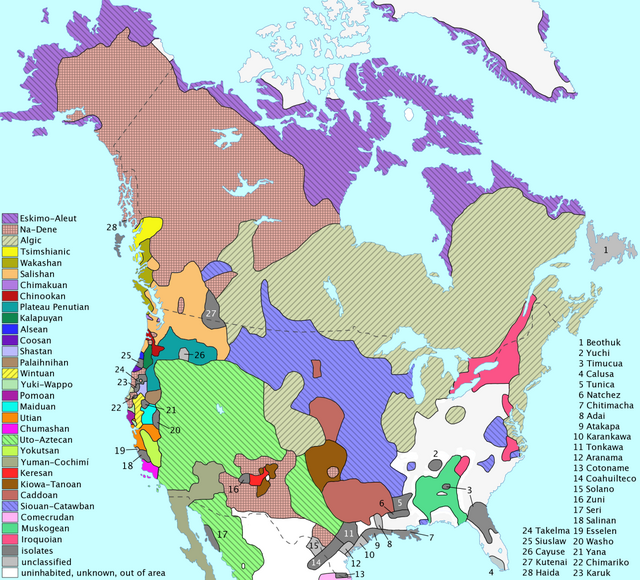
Image Credit: Endangered Languages on Wikimedia Commons
And in a unique space between community activism and revival, there is academia—my own published research included—on how language policies and planning influence whether minority languages survive or disappear. After months of case studies, policy analysis, and research, I learned that the survival of overnight language is infrequently determined by culture. Language becomes a remnant of governments: what languages are "official," what they publicly fund, permission for classroom instruction, and what they simply let disappear.
My study drew attention to the impact of top-down decisions; curriculum requirements, media requirements, language rights or the absence of them; on either strengthening (or weakening) a language’s future. It also highlighted something else: the best policies, initiatives, mechanisms, and plans advance a language most effectively when worked on with communities rather than above them. Planning can support the work of the people that carry the language from their lips and memory, so it leads to successful friction rather than failure by laying the groundwork to rejuvenate the language.
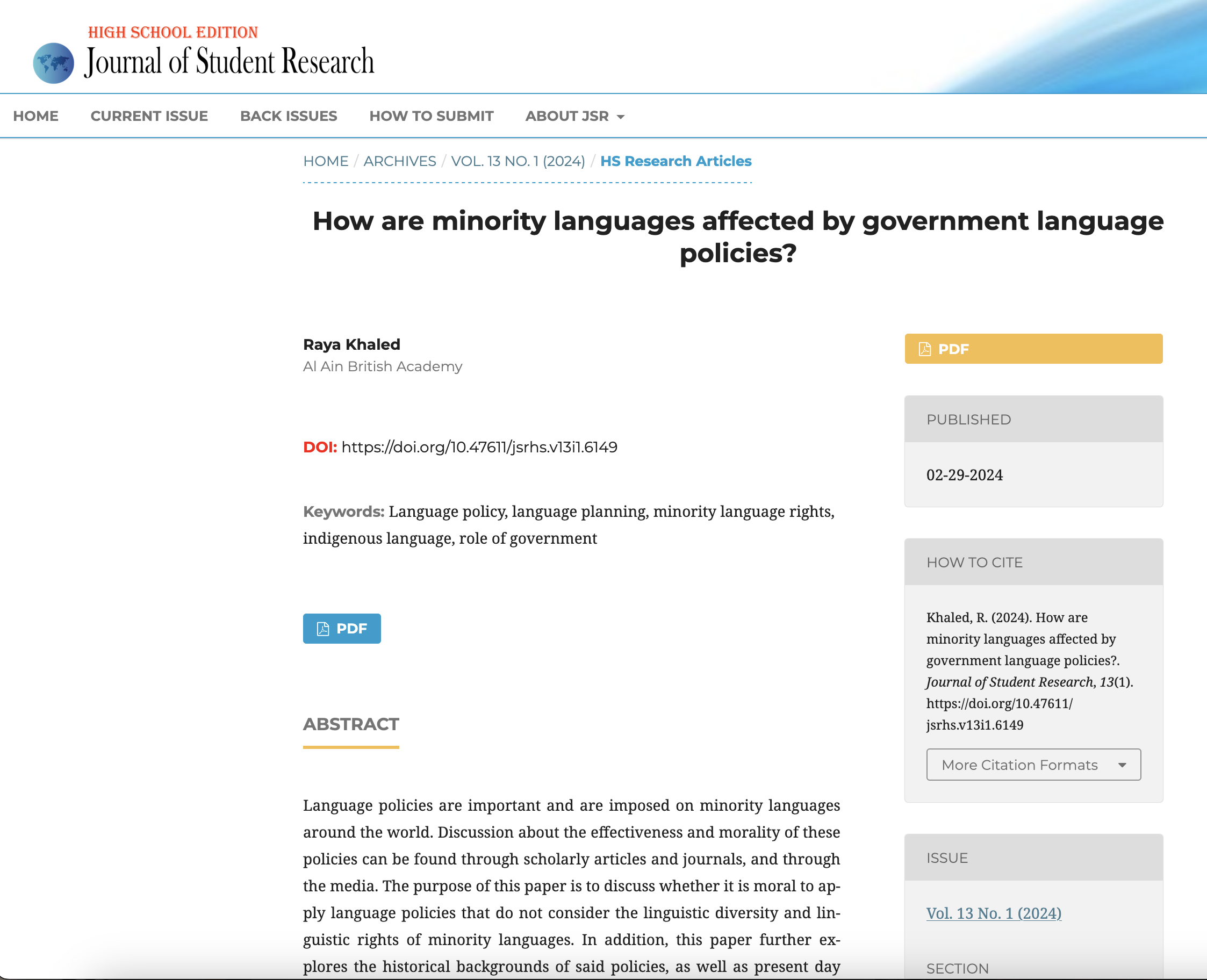
Image Credit: Raya Khaled
Revival is slow. It is imperfect. It can feel like you are swimming upstream forever.
But, it is happening. And that, in and of itself, is a miracle.
A Small Beginning: What We Can Do
None of us can singlehandedly save a language; but we are not meant to. Preservation is collective, not heroic.
You can:
- Learn a few words from an endangered language
- Follow creators or activists working to preserve them
- Support organizations that archive and revitalize Indigenous knowledge
- Challenge the assumption that only “global” languages are valuable
- Ask whose voices are missing when a language disappears
Even one word learned is an act of respect—a small flame protecting a much larger fire.
Revival begins not with mastery, but with attention.

Image Credit: Endangered Languages on Wikimedia Commons
Why It Matters Now
Every language embodies a way of being in the world, a logic, a sense of humor, a lexicon for love, loss, memory, and hope. It is a navigator of meaning beyond the geographical and historical context that shapes how individuals shall examine their world, make choices, speak with their elders, or console their children.
A language disappears and grammar or vocabulary is lost; in fact, an entire suite of a community's understandings disappears that looked at life through a different analogue lens. The world of expression of emotion, values that shaped behavior, and silent ethical patterns of thought that generations used to explain what it meant to live, to feel, and belong is no longer available.
But we stand on the brink of this loss ourselves. We can choose to watch these worlds become less relevant or we can choose to remain engaged, to grow knowledge, understanding, and solecism together.
The first step is talking about it. The second step is listening. The third is speaking, even if it isn't flawless.
There are no stories without a listener. And there are no languages without a speaker.