






Language is defined by many profound influences. Language has always served as a form of identity and as a form of heritage. The first boundaries we learn as children—the first words we know, the first phrases we form—become our cultural identities, while the last boundaries people lose. The last language we lose, the last identity that belongs to us, dictates our cultural and historical identities.
We can see the power of language and its cultural impact in the language we are limited to, the language we speak, and in the context of the institutions that we participate in. For example, the institutions of the nation-state (the ability for citizens to be able to live in a specific territory) and the institutional control over the lives of individuals who are part of a "minority" language or ethnic group.

Image Credit: Logan Gutierrez from Unsplash
My research into the subject matter concerning both language policies and plans with regard to language has indicated to me, through my findings as well as the research conducted by other researchers, that the decisions made by governments regarding language use in society, education, and preservation are not a simple function of linguistics in and of themselves. Rather, these are political acts based on the history of the particular country as well as its conflicts over the way its people perceive themselves and their national identity; and, therefore, these decisions reflect the competing national perspectives present in today's world.
Whenever a government identifies a specific language as being an Official Language, or regions alter their educational systems' curriculums, or an ethnic group's language gets relegated to the periphery of society without due consideration of that language and ethnic group's historical significance, that government is also engaged in negotiating, either consciously or unconsciously, the identity and memory of all citizens of that country as well as determining the limits that exist concerning national imagination and the incorporation of specific cultural identities and their associated historical accounts into the National Historical Record.
While these types of governmental interactions may appear to be administrative in nature, they bring up significant and profound issues related to identity, belonging, whether a nation can effectively be created at the expense of other groups and individuals, and whether legislators can create an effective national identity, and if such existence is a given, whether it will be created through available means (laws) or through unquantifiable means that must be accepted by all.

Image Credit: Krists Luhaers from Unsplash
Let us slide into your dms 🥰
Get notified of top trending articles like this one every week! (we won't spam you)The Cultural Context
Cultural context can be understood as a matrix of competing discourses and ideologies competing for dominance. Many of those competing discourses or ideologies have resulted in the social and political advancements of minority groups and have been built upon the social status of individuals within that minority group. However, the political influence of a dominant discourse is not exclusive to language; therefore, cultural contexts must be understood within a broader perspective.
Language and culture are strongly interdependent; however, it is within this dependence that a person's cultural context may create opportunities for advancement, such as increased wealth or increased education, as well as barriers to advancement. Furthermore, within the context of institutions, language also has the potential to aid in social justice efforts or create further problems with access to resources.

Image Credit: Shahnewaj Mahmood from Pexels
Take the Quiz: What Kind of Political Personality Are You?
Ever wondered what role you’d play in the political world? Take this fun quiz to find out!
Language as a Political Boundary
For centuries, states have regarded language as a border that divides insiders from outsiders. This has always been crucial to colonial powers, particularly the British Empire. In establishing English as the language of administration, education and 'progress', the British Empire not only used English as a means of communication, but it also used English to reshape the cultural hierarchy of entire cultures throughout its territories.
Indigenous languages in many parts of the world were often considered barriers to development and were replaced, or erased, by the languages of colonial powers. Schools, therefore, became the vehicles for Linguistic Assimilation, training students to believe they were inferior because their first language was not English.
The losses associated with Linguistic Assimilation are more than just the loss of vocabulary. The loss of language also includes the severance of the generational continuum that connects people to their ancestors and their cultures, the destruction of Indigenous Ways of Knowing (Epistemologies), and the removal of Indigenous Ways of Knowing and replacing them with Western Ways of Knowing.
In many Indigenous communities, children are raised with a complete inability to communicate in their grandparents' languages, which fractures their cultural identities and affects them profoundly even today. The trend has continued after decolonization and brought about the creation of many post-colonial nations struggling with two sides of the same issue: the need to use the language of the original colonizer for business and success in the global economy, or the desire to support the use of the indigenous language of the country to demonstrate a cultural revival.

Image Credit: ArtHouse Studio from Pexels
In India, South Africa, the Philippines and many locations throughout North America, the discussions surrounding this issue are more than an academic conversation; rather, they illustrate the conflicting nature of the ideas of unity and diversity at the same time, and between the ideas of a participant in the global economy and the community’s authentic identity. To choose one language to be used in a nation signals a nation deciding which of these visions to align itself with.
However, the truth is that when you raise one language to the highest level, you tend to lower the status of the other language or languages. By lowering the additional languages, you begin to erode the identity of the individuals who are connected with that specific language.
The Power to Define a Nation
Modern Language Debates are currently very politically charged. When deciding on an official language for many of the world's countries with large multilingual populations, it is more than just an administrative convenience — rather, it is a form of nation-building. It represents not only the country itself but the culture and identity of the people.
Choosing to have a single official language also indicates which language has the most value in telling the stories of the country's history, and will thus be significant to the people of that nation. This helps to explain why these language debates are often the source of controversy in many modern conflicts.
The battles between the French and the English in Canada are about much more than just Bilingualism; they are about preserving the culture and identity of French Canadians. The conflict between Arabic and Berber in North Africa is also the result of long histories of oppression and resistance by Berber speakers. The support of Mandarin in China at the expense of regional languages is indicative of the Chinese government's efforts to create cultural cohesion, while giving little consideration to the use of multiple languages.
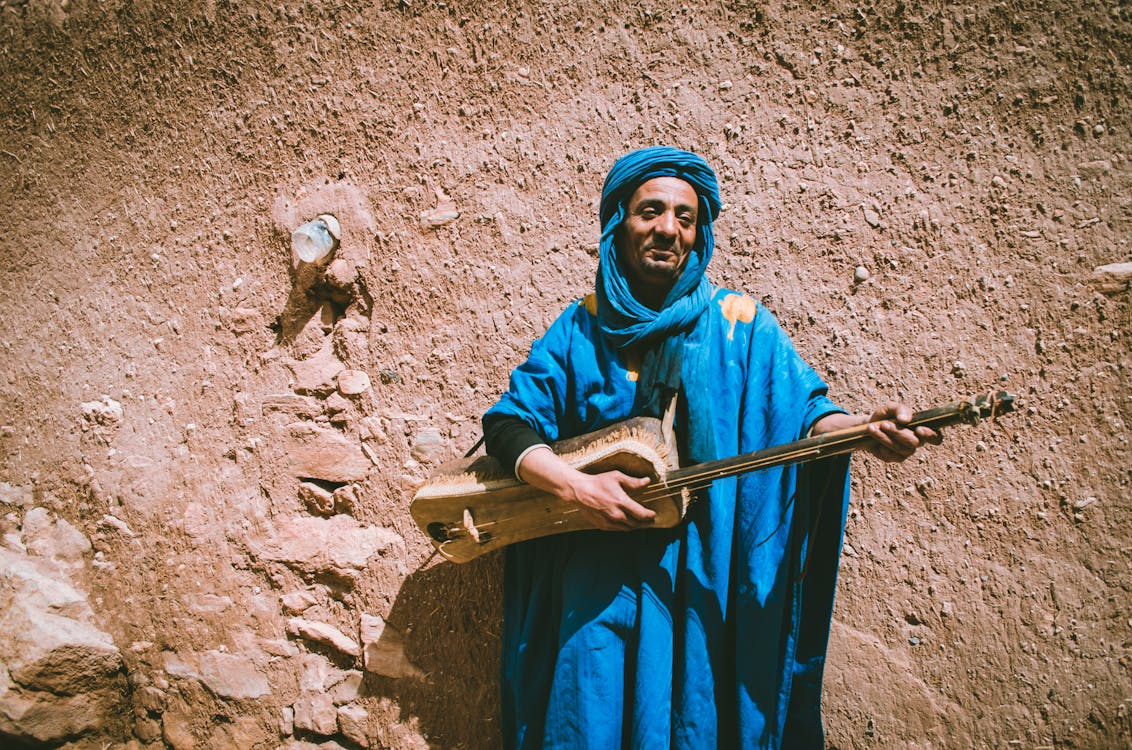
Image Credit: Nicolas Postiglioni from Pexels
The underlying question that all of these language debates rely on is: Who does a nation belong to?
Without intentional efforts by the day-to-day power of a nation to ensure that all language groups feel valued, languages cannot exist peacefully and in harmony. As one group begins to dominate the majority of the power in society (due to governmental policies), the power of the other groups begins to fade away — slowly at first but eventually almost unnoticeably — until the entire heritage and use of that other language is at a point of being extinct.
When Protection Becomes Resistance
Languages are not only something that is imposed from above, but they are also a form of reclamation from below.
Minority communities across the globe are working hard to keep their languages alive. More than just a means of communication, these languages are viewed by their speakers as an act of solidarity. From Māori Immersion Schools in New Zealand, to the revitalization of the Irish Gaelic language in Ireland, to grassroots campaigns regarding the recognition of the Amazigh people, there is a clear picture being highlighted by these efforts that many policymakers don’t recognize: People do not simply use a language; they live it.
Each language carries with it information related to memory, cosmology, rhythm, humour, and worldview. In addition, each language shapes how a community interprets time, nature, kinship, and emotion. When a community loses their language, they lose its framework to interpret the world: not just its linguistic framework, but its cultural framework as well.
Because of this fact, communities are willing to put a lot of time and effort into their protection efforts, regardless of whether there are economic advantages to preserving their language. To preserve a language represents an assertion of cultural sovereignty, and it is a refusal to allow the outside world to define your identity. In those instances, the language ceases to be passive; instead, the language is political, resilient, and emotional.

Image Credit: Thaia Ribero from Unsplash
The Illusion of Neutrality
The emotional and deeply rooted historical implications of language policies often position these issues as practical, through an efficiency lens, when in actuality a chosen language of administration, education and other institutions reflects the priorities of one segment of society at the expense of others. Although there are arguments relating to the requirement for language when applying for citizenship, education, or access to public services seem rationally sound.
The restrictions imposed through the implementation of language laws create a barrier for many groups, particularly for newly arrived immigrants, refugees, and First Nations people, thereby serving as a means of limiting access to public services or participation for said groups.
Further, when the government establishes language expectations as part of their eligibility criteria for access or participation, the government creates a framework for defining who belongs, or does not belong, by establishing what the government defines as the "correct" degree of integration, education and/or worthiness of participation. In this respect, language becomes a means of filtering or excluding those groups of individuals from participating fully in the life of the government, rather than being a common cultural resource to share.

Image Credit: Randy Jacob from Unsplash
The Double-Edged Sword of Unity
Language is a powerful uniting force between two people. When both individuals are speaking the same language, there is also a way for them to communicate, which promotes national unity and identity.
In a multilingual country, it is often necessary to create a common language for the purpose of uniting and maintaining the country. When demand for standardization increases to the point where an individual cannot represent themselves in their own language, it can be harmful to that country. There are many languages that have been pushed into private settings and are only spoken in the home, by elders, and have largely been left behind by youth. While there is a clear message that diversity is accepted, there is still only silence around that diversity.
Unified languages need to be supported by the preservation of linguistic diversity. Accordingly, there is a challenge to maintain a connection between those who speak different languages while also having commonality through their spoken languages. Very few countries have mastered this process, and this should be a goal to develop when nations want to build an identity for themselves and create a sense of unity among their citizens.

Image Credit: Hannah Busing from Unsplash
A Future Built on Linguistic Justice
Power and language are intertwined: language reflects power, and as society becomes increasingly interconnected, it will be more and more easy for minority/endangered languages to become extinct, and will also make it easier for communities to reclaim their culture.
Language is identity, and language policy must be ethical, imaginative and based on the understanding that diversity is a cultural asset, and that linguistic justice is not only about protecting minority languages but also about dignity, fairness and the right of an individual to tell their own story.
While technology, migration and globalization are often thought of as the future, there is another urgent question: whose voice will define OUR future?
The languages that we preserve (and the languages that we do not) reveal more about our values than any political speech ever could. If we want to create a society that values belonging over enforcing it, we must start listening to the voices that have been silenced for so long.


