




"I'd like a strawberry banana smoothie please."
Heads tilt. Eyebrows raise. It's subtle, fleeting, and barely noticeable, but I know that look all too well. God forbid that I, as an Asian teenage girl, order anything other than a bubble tea.
In the eyes of Western media, "Asian" has been reduced to an aesthetic. But even in a world that normalizes and even romanticizes bubble tea girls in poems written by white men, young Asian women are not your tokenized metaphors and personally, I am tired of being treated like one.
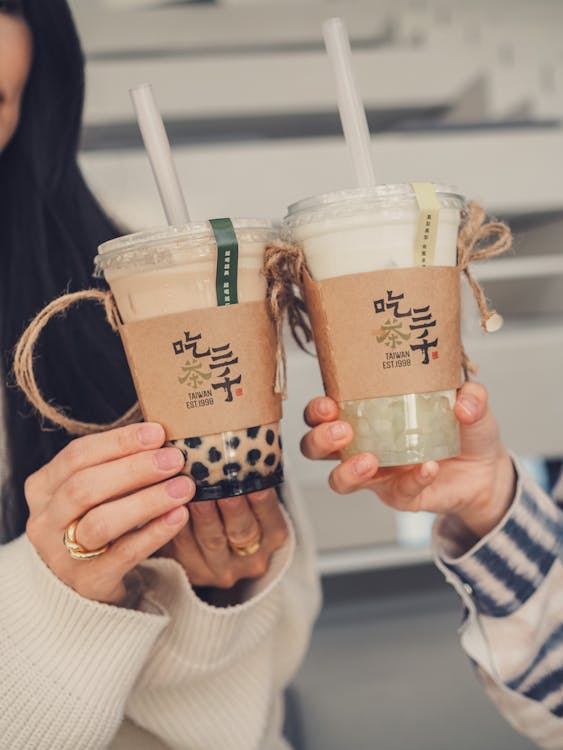
Image Credit: Sergeeva from Pexels
Let us slide into your dms 🥰
Get notified of top trending articles like this one every week! (we won't spam you)Asian Baby Girl (ABG)
ABG (abbr., slang). Asian Baby Girl. This is a term emphasized by social media platforms that categorizes our identity and puts Asian women in a box.
A quick search on Pinterest reveals a common theme of looks involving dark hair, flawless skin, false eyelashes, and revealing outfits. Though styles of makeup are not unique specifically to Asian culture, the term ABG is a strict category that encourages stereotypes in ways far beyond just looks. For a while on TikTok, there was a trend "POV: it's your 90th time on a date with an ABG".
"Who do you listen to?" Keshi, Illennium, Dabin
"What do you like to do for fun?" Raving, gaming, clubbing, drinking boba
"Where do you like to go?" Seaside, Irvine Spectrum, Signal Hill
Depicting a sense of predictability not only implies that pretty young Asian women are all the same, but cultivates the idea that we are only desirable if we look a certain way, act a certain way, and like certain things. It encourages Asian girls on the social to be influenced into fitting into this stereotype and conform to how the culture is painted by a Western dystopia. And because in their eyes, those who can be considered an "ABG" are all uniform, it encourages men to objectify us and bounce between us like trampolines (thus why the trend indicates a 90th date).

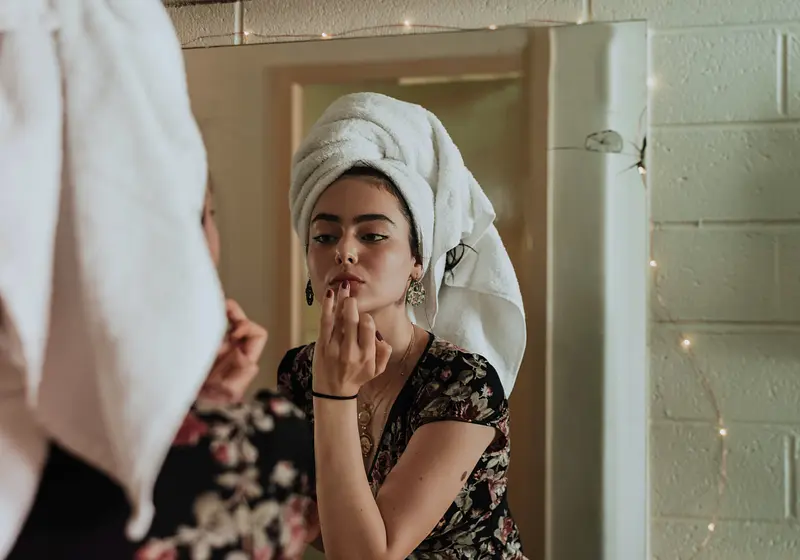
Image Credit: Broström from Unsplash

Take the Quiz: Which Female Character Trope Do You Belong To?
Whether it's in film, TV, or literature, you've likely come across these female character tropes. Take this quiz to discover which one best matches...
The Oxford Study
The tendency for Asian women to often be in a relationship with white men is referred to as "The Oxford Study" in reference to a study conducted in 2011. The results of the study imply that Asian women display a stronger attraction to the "masculinity" of white males while white men are more strongly attracted to the "femininity" of Asian females.
This term emphasizes the fetishization of Asian women from a white male gaze and attempts to use "science" to explain interracial relationships. Additionally, it reinforces a cultural hierarchy where white men are portrayed as dominant and placed above the submissiveness of Asian femininity.

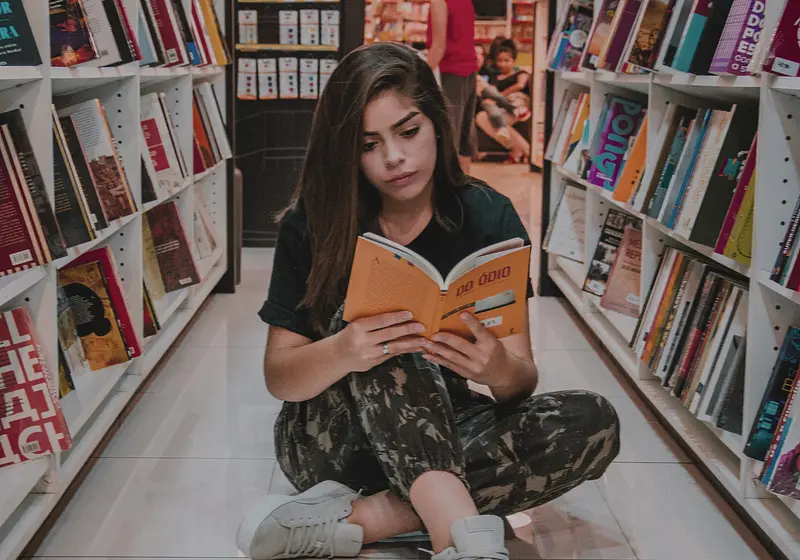
Image Credit: Quaynor from Unsplash
Again, it plays into the idea that young Asian girls seek desirability and are accessorized by feminine features.
Common Stereotypes
In Western media, it is common for Asians to be characterized by stereotypes and depicted in a certain way that aligns with them. While "ABGs" are known for bold characteristics and are quite the opposite of the cutesy, bubbly traits of the "soft girl" and "anime girl" aesthetics, they all serve as categorizations for beauty in the eyes of men. Again, it encourages young Asian girls to become uniform in order to fit in a box.
Asians are also very commonly stereotyped as the smart characters with strict parents, emphasizing the portrayal of us as obedient and successful overachievers. While in a lot of ways, the encouragement for this behavior is positive, it can serve as a trap that places acceptance over personal passion. It forces a sense of perfectionism and can be extremely invalidating by heavily attaching objective success to cultural envelopment.

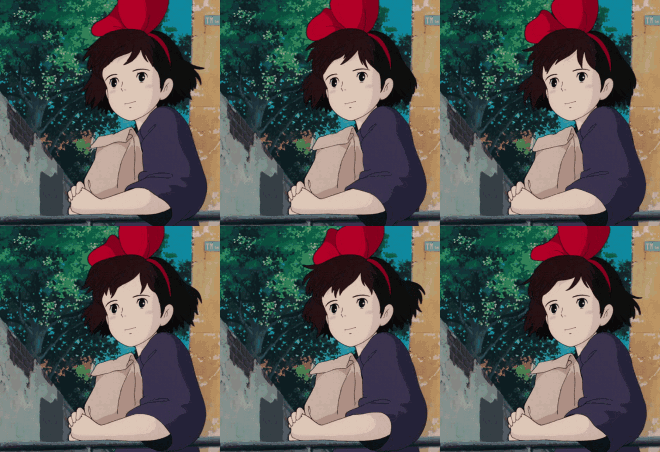
Image Credit: Bailey from Unsplash
As a Vietnamese-Korean-American, I am constantly pressured into conforming to another person's narrative. I don't want to be seen as just another bubble tea girl written by a white man who sees no difference between one Asian girl and another. It is important to me that I am able to take the pen and write for myself. Whether I order a bubble tea at the next boba shop will be determined by me and not by someone else's idea of me.