



.jpg)

Biology. The subject that lures you in with pretty diagrams of flowers and then hits you with the full complexity of the human immune system, genetics, and DNA structures hits different, right? If you've ever asked, “How do people remember all this?” while staring at a diagram of the nephron for the fifth time, I’ve got you.
Sometimes study of life and evolution feels like the end of life, that different level of stress to memorize them. No toxic productivity, no “just focus harder” nonsense. Just a real, tried-and-tested brain-cell-sparing game plan from someone who’s survived the cycle (both Krebs and mental).
Let us slide into your dms 🥰
Get notified of top trending articles like this one every week! (we won't spam you)1. Break It Down, Don’t Dumb It Down
Let’s be honest. Most biology textbooks are information bombs; you just open one and get bombarded by ten different processes and twenty different diagrams, and you have that sale. You might have heard buy one, get 2 free. Yes, exactly, you get 10 different exceptions in each topic.
So, my first strategy was chunking. I used to select big, tough, important topics and break them into small units. Let's suppose I take DNA replication.
- What are the components involved?
- What’s the order of steps?
- What’s the purpose of each step?
- Who invented it and how?
- What’s its significance?
I used to break them like this and make answers for these questions instead of reading the paragraph ten times aloud. So I used to act as if I were teaching a student, and it used to be easier to retain things.

Take the Quiz: Discover Your Ideal Stress-Relieving Hobby
Everyone deals with stress differently, and finding the right hobby can help you relax and unwind. Take this quiz to find out which stress-relievin...
2. Audio Loop Learning (a.k.a. Your Voice is the New Spotify)
At first, I thought recording myself would be cringe. But I was desperate, and instead of recording video, I recorded audio of my own explaining mitosis, and then the next morning, while brushing my teeth, I just played it and started hearing Slowly, my brain started absorbing the info — effortlessly. This was a game-changer. Slowly, I made a playlist of previous year questions, analogies, MCQ, assertions, and reasons, and I used to play them in my free time, like while brushing, cooking, walking to the coaching centre, etc.

Image Credits: Armin Rimoldi via Pexels
3. StudyTok Isn’t Just Aesthetic. I Made My Notes Look Like Comic Books (Kind Of)
I used to think StudyTok was all about aesthetics, highlighters, iPads, and lo-fi music. But when I started exploring the content, I realized: some of the best hacks that helped me. I made my notes look like comic books, yes, you heard it right.
My notes were crazy. I doodled tiny cells with speech bubbles, mitochondria yelling “ATP time, baby!” and chloroplasts humming “Here comes the sun…” like little hippies. Colour-code like a legend, assign colours for different topics: plants = green, blood = red, water = blue. Your brain loves patterns. This
helped me make topics fun, and I got interested in biology, not just parrot reading, but to understand how life works. It might sound ridiculous, but when you do something weird, your brain starts getting attracted and does not ignore it.

Image Credit: American Jael via unspalsh
4. Diagram First, Theory Second
Biology is 70% visual. If you can see it, you can visualize it, and if you visualize it, it's easy to put it in long-term memory and remember it. Make the animation in your mind of every process and system and how it works, which helps you to put that topic in memory permanently, and when u memorize, you get flashbacks of those animations you created.
Before reading any dense theory, I drew out the process. Didn’t matter if it was messy or not. I just needed to make sense of it with shapes, arrows, and labels, like it was just for reference to visualize the concept in my way. Then I compared it with the actual textbook diagram and corrected myself.
Over time, I made a dedicated "messy bio diagrams" notebook. It was chaotic but golden. These sketches helped me:
- Remember pathways (like the Krebs cycle or nerve transmission)
- Visualize interactions (like antibody-antigen binding)
- Map functions (like hormone regulation)
For digital learners, apps like BioRender, Notability, or even Canva became my drawing boards.

Image Credits: Abdulai Sayni via Unspalsh
5. Teach It Like You’re a Chaos Professor
Have you ever tried acting like a professor and teaching an imaginary class? This trick is the best. Congratulations, you’ve found the ultimate study trick. It’s scientifically proven that teaching someone to organize information in the brain and store it in long-term memory.
At first, I used to grab my friends randomly and forcefully teach them topics. Later, we levelled up and made a rule that each member in the friend group will learn topics, and we will explain each other the next day we meet. It was kind of a ‘study mafia game’. We became experts in learning families of flowers and plants and their morphology also tackled tough topics like genetics and molecular basis in no time.
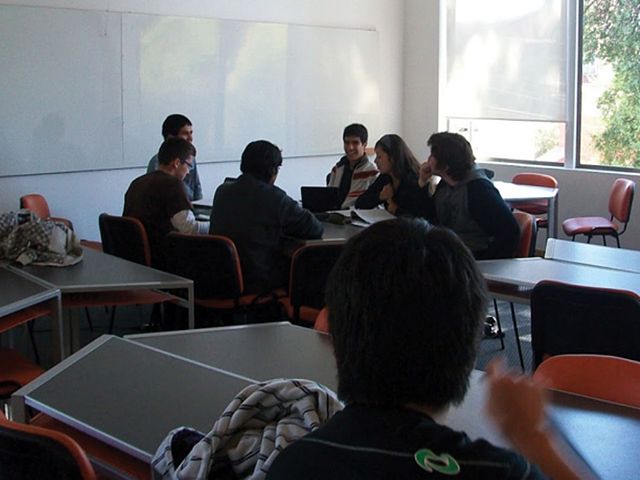
Image Credit: Carlos Gatica via Wikimedia Commons
6. Weird Rewards Work Wonders
Look, if my brain is going to act like a stubborn toddler, I’m going to treat it like one.
I made tiny deals with myself: “If I finish this topic, I get exactly 15 minutes of my comfort show, no ‘just one more episode’ that used to hit me with clearing topics faster with more effort. “If I score 80+ on this practice paper, I’m getting dessert, no questions asked.” I love sweets, and my parents won’t allow due to health aspects, but this trick lets me run to grab those mouth-watering desserts. Sometimes it was cake, sometimes it was scrolling memes guilt-free, and sometimes it was just lying in bed doing absolutely nothing. And it worked, because my brain started associating “finishing work” with good things.

Image Credits: Ron Lach via Pexels
7. Turn Past Pain Into Future Power
I made a “Tough Topic Wall,” literally a sticky note on my wall for every topic I had cried over. The rule was: it stayed there until I could explain it without notes. Some of my Wall of Doom topics: Osmoregulation in kidneys, Action potential in neurons, Lac operon, etc.
Taking a topic from the Wall of Doom to the “I can explain this in 60 seconds” stage was incredibly satisfying. I stopped comparing myself with others. Chasing in the rat race to score and compete with others was not my strategy. I always aimed for scoring better and better than previous mock test setting benchmarks and competing with my scores with my potential to make it better.

Image Credit: Brooke Cagle via unspalsh
Final Thoughts: Study real, not perfect
I always suggest that to study content-wise and clear topics with understanding them, you don’t have to be the next Marie Curie in biology, okay. You don’t have to always be perfect, following every single tip every day and every second; you can study while lying on the floor. Sometimes, watch five TikToks before starting.
But keep showing up. I know sometimes biology feels boring and lengthy, but it isn’t by being the smartest in the room, it’s by being the one who refuses to give up… even if your mitochondria are wearing sunglasses.
So here’s to mitochondria, meltdowns, and breakthroughs. May your studying be as real as your Netflix addiction.
You got this. Let's Go!







.JPG)


