


One take, one orchestra, one mic, and a universally adored classic is born. Today, one teenager, one laptop, one sample, and a song is sheathed in thousands of streams overnight, with the public being pulled to either end of a newfound music critique spectrum—loathing or loving.
Recently, as the internet continues to expand, technology has become central to most people's minds, with music being a primary but often overlooked casualty of social media’s dominance. Online platforms such as TikTok, Instagram, Spotify, and Snapchat wield enormous influence in the music world, elevating it to heights once unimaginable and sometimes causing it to plummet to lows that are equally hard to believe.
Nevertheless, these platforms drive trends, and thus the music space, more than ever. This unprecedented shift begs the question: why does modern music so often exist at extremes, either hailed as iconic or dismissed as trash?
Let us slide into your dms 🥰
Get notified of top trending articles like this one every week! (we won't spam you)Evolution and Its Echoes
By the time we landed on the moon, per Frank Sinatra’s Fly Me to the Moon, his voice had already defined an era—recorded live, one mic, one take in the 1940s.
Picture this: you walk into a studio with a bustling, fully-bound orchestra, preparing to record your song on the one microphone that resides in the recording room. You’d sing with the orchestra until it sounds close to perfect, then record one take, completely live.
Suddenly, the world we knew changed pivotally, emblematically placing Sinatra, among other singers of the time period, as an authentic legend with unabashed talent for his art form.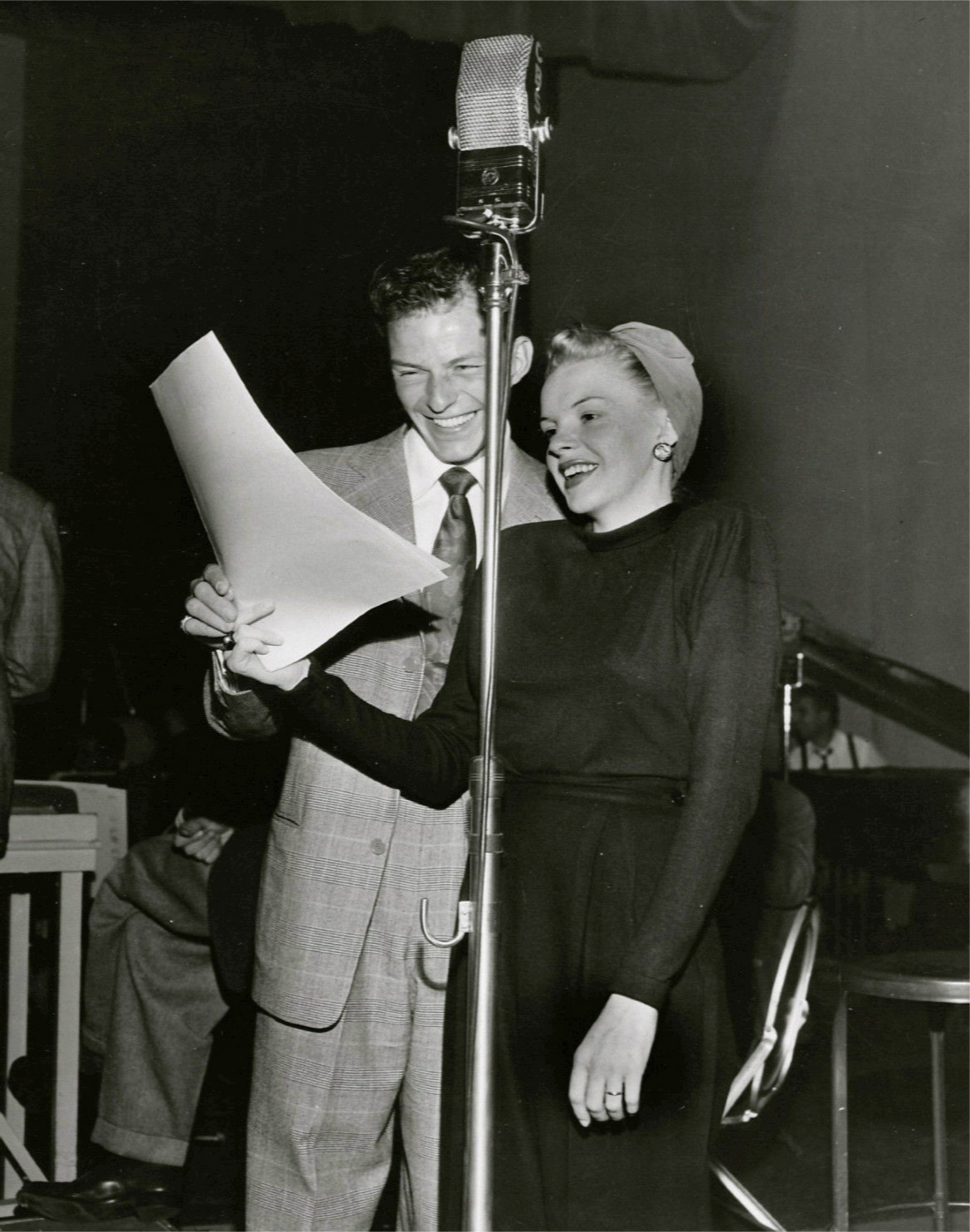
Image Credit: CBS Radio from Wikimedia Commons
Then came the 1960s, where rock and roll became the dominant force, particularly with the British Invasion led by The Beatles, and the subsequent rise of psychedelic and folk rock as music reflected the era's social unrest.
The aforementioned authenticity was as present as ever, but with a new development—machinery, specifically, multi-track recording, where one could change a specific section of a song by simply punching in or out.
What followed was a glistening artistic takeover, which was pioneered by none other than a renowned mathematician and scientist. Dr. Andy Hildebrand, a seismic data analyst, had realized that the exact principles utilized for interpreting sound waves in seismic data could be applied to pitch correction in music. Thus, Auto-Tune was born, beginning with Cher’s 1998 hit Believe, featuring a groundbreaking and distinctive robotic vocal effect.
Then, the same idea was placed onto arguably the elemental echo of music—drums, specifically through 2000s quantizers. Drums, though perceived as simplistic, realistically have an abundance of moving parts, from the playing to the tuning (yes, drum sets need to be tuned), to the rims, to the recording, each part of a certain kit needing both a mic and a specialist to record it.
Employing this new musical phenomenon saved not only money but time, granting listeners accurate music at quicker speeds and in greater quantities. However, this resulted in a rather generic drum sound—with consistent snares, basses, and hi-hats in the same order at the same time, sans any particular creativity.
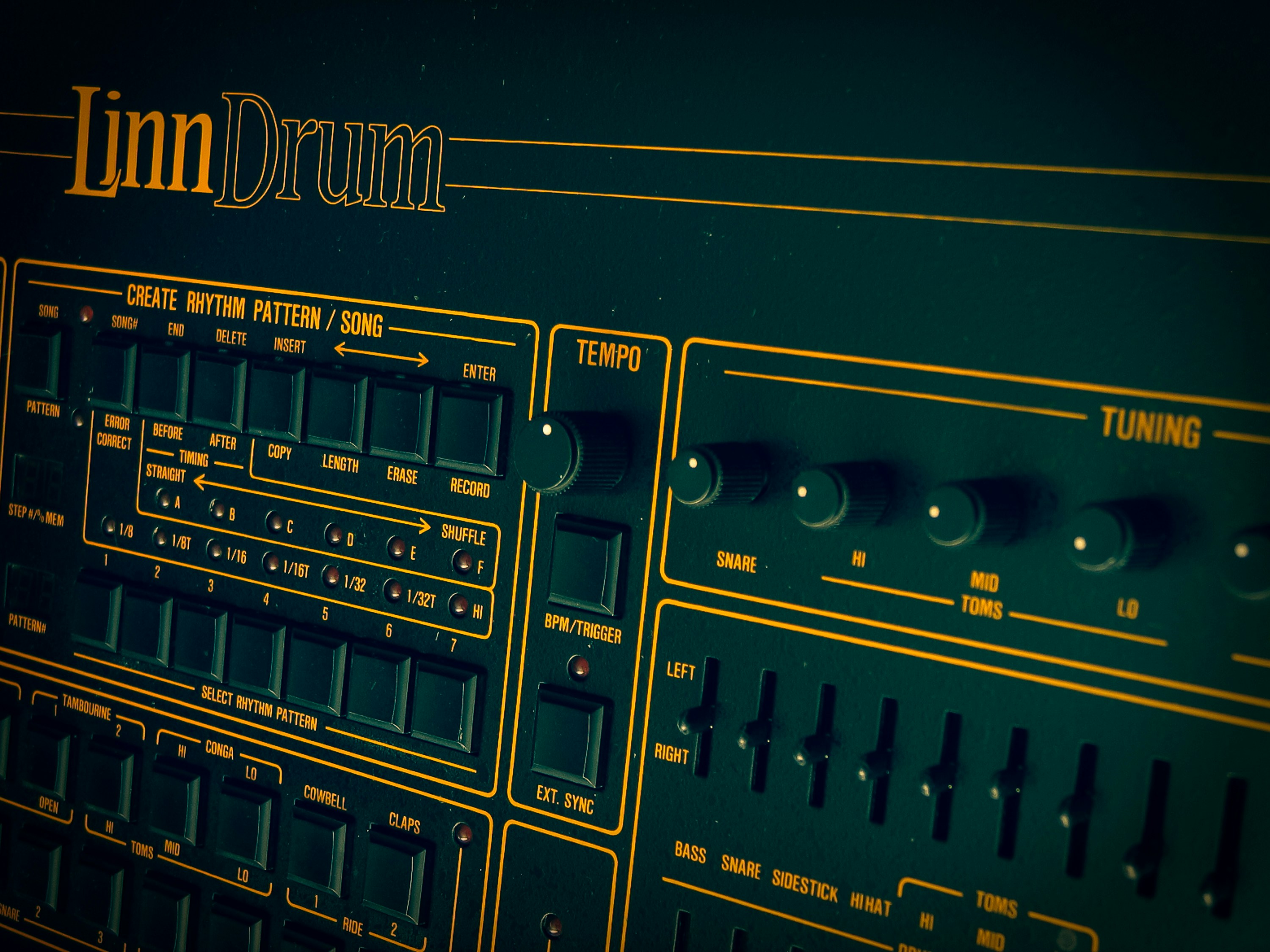
Image Credit: Steve Harvey from Unsplash
This predominance was quick to spread, eradicating any presumed strife regarding tuning and music, with new AMP modelers, a machine able to digitally recreate the sound and feel of traditional guitar amplifiers and their associated effects.
Rock bands were sidelined, with solo artists and producers gaining favor in the industry due to the newfound ease of music cultivation and chart-ready hits—after all, why hire an entire band of professionals when all you need is a laptop?
Here begins the era of music that we currently reside in, recognizable by our creative dependency on technology in all art spaces, primarily music. This shift from musicianship and performance to production and technological dependency is supremely tangible. While musical history and technology have shaped artistic freedom in both positive and negative ways, the sharper question remains: how have trends themselves fueled such extreme reactions from listeners?

Take the Quiz: What’s Your Secret Superpower? This Quiz Will Reveal Which Singer Icon You Resemble
This fun quiz will unveil your unique qualities and reveal which music icon you resemble the most.
Why Modern Music Feels “Trash” to Some
Atlantic, Island, Interscope, and Universal–labels that have been pushing sounds primitive to the modern mainstream. Faced with continuous fear of rejection, artists in the music sphere need the essential resources from these labels, such as substantial financial backing, access to professional industry networks, established marketing, distribution channels, and expert opinions, among other things.
However, these labels have been prioritizing safety over artistic experimentation, resulting in a consistent stream of formulaic pop, where risk-taking feels absent and music’s previously genuine nature feels inaccessible.
For example, remember the summer-song phenomenon Espresso by Sabrina Carpenter - beach-goers and summer-breakers alike were evanescently consumed by that catchy chorus. Nevertheless, when taking a closer look at the song’s form, binary (or ABAB), it’s clear that the song was made for a specific platform—TikTok, where repeated verses are easy to utilize.
After the booming adoration and positive reception the song received, labels and artists searching for success decided to follow in the Carpenters' footsteps, resulting in repetitive songs with an immense lack of creativity—arguably the very basis of music creation. This homogenization of sound is the primary culprit as to why the modern age is riddled with “trashy” music, alongside a decline in complexity. Fewer chord changes, simpler timbres, and louder “wall” mixes equal lasting genericity in the mainstream.
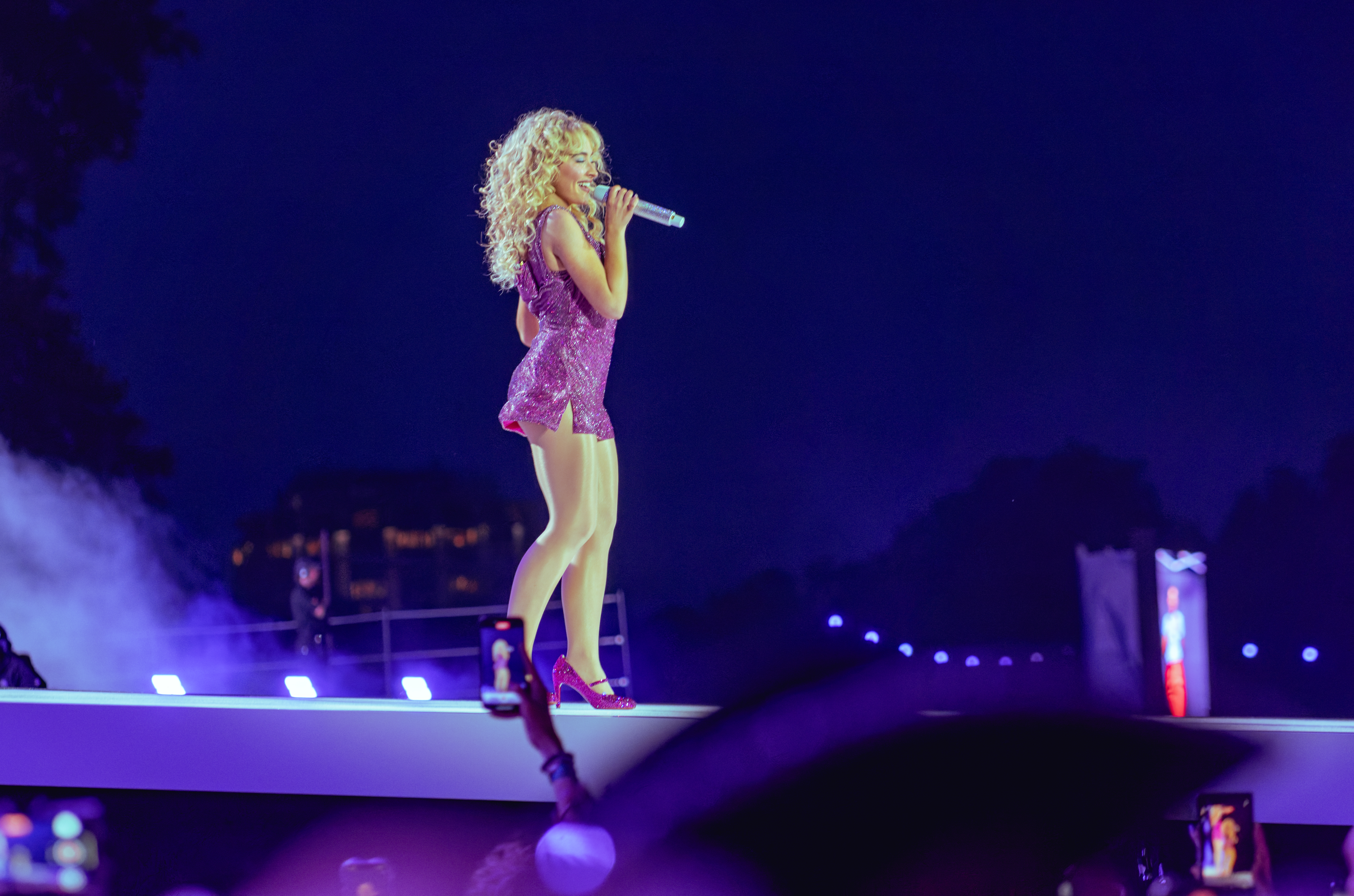
Image Credit: Raph_PH from Wikimedia Commons
Music, further, is more accessible than ever, which is fabulous for smaller, authentic artists looking to break into the space. However, it also results in deep oversaturation. Anyone, in theory, can create music, as it is apparently abundant through streaming services such as SoundCloud, Spotify, Apple Music, and so forth. Where music was previously a meticulously crafted rarity, now audiences must sift through songs to find one that fits their fancy.
Though music is an art form, it's being viewed as another mass-market item, suited for overconsumption. Even artists hailed as presumably seminal can get lost in the machinery. Take Renée Rapp’s latest album: despite being positioned as a bold new voice, the project felt interchangeable, weighed down by the sheer number of co-writers and a formulaic sound. What should have been innovative ended up generic, a casualty of the very system that prizes safety over originality.
Generationally, however, it is crucial to recognize the fundamental bias we obtain. It is found, particularly by the University of Chicago’s National Opinion Research Center, that older listeners dismiss what doesn’t match their formative years (up to age 20), our preferences being decided by our childhood genre choices, or perhaps what we were conditioned to.
“Iconic” VS Insignificance
Democratization has been a staple, specifically within America’s constitutional republic. Unsurprisingly, this access has infiltrated the music space as well, where anyone with a laptop can release music worldwide, as previously discussed.
Though this may be perceived as a negative, due to the aforementioned oversaturation of the market, it makes music supremely easy to both access and create, allowing for expression through the historically scarce art form.
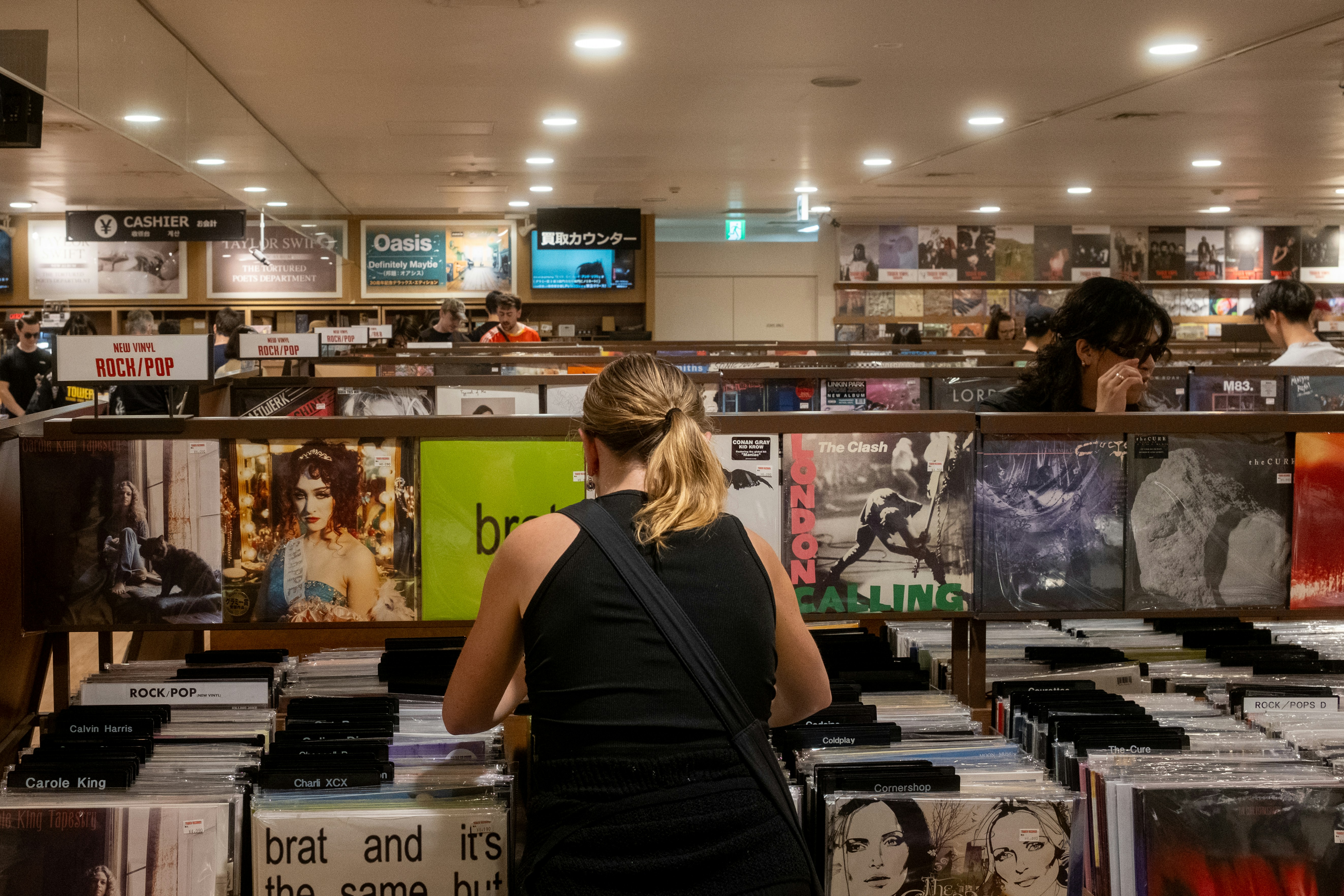
Image Credit: Dao En Wong from Unsplash
Moreover, though sampling, remixing, DAWs, autotune, and technological machinery can be musical weapons in some capacity, they can also be utilized as creative tools for mass reinvention and experimentation if the label or the artist dares to stray from the musical norm.
For example, KATSEYE’s Gnarly or the entirety of Chappell Roan’s The Rise and Fall of a Midwest Princess, both of which were considered unconventional, utilized current technology to elevate their music, either with sultry samples or interesting remixes, later growing to be universally loved despite their unorthodox nature. Perhaps the narrative by which we turn over these trends must be shifted.
For instance, rather than trends being seen as a means of musical catastrophe and banality, they can be seen as amplifiers, where TikTok turns 15 seconds of audio into a cultural moment. And rather than seeing the blurring of certain genres, such as country-pop within Sabrina Carpenter’s new album Man’s Best Friend, we can perceive it as our generation blending boundaries, creating hybrids that didn’t previously exist but continue to revolutionize music.
Most importantly, songs no longer need to be complex to hit; they merely need to mean something—whether to dance, cry, or vibe online. Though music serves as a means of controversy, it also sparks necessary conversations that, in an age of loneliness and isolation, are key to furthering both our generation's mindset and the culture around music.
The Answer to Our Polarization Problem
Music taste is, all in all, shaped by what we expect from it, from art to fun to background noise. The internet, however, speeds up cycles of hype and/or backlash, resulting in instant canonization or instant trash. Though some songs are both at once: “bad” to critics but iconic to fans, the objective answer is… not objective at all and depends completely on how you measure the piece. Dissatisfying answer, I know.
The nuance of music in and of itself must not be forgotten, as it will eternally remain an art form and thus remains completely subjective. Perhaps what makes it truly modern is this duality—we’re living in a time where trash can become iconic overnight, and iconic can fade just as fast. I’ve learned that while technology, commercialization, and generational bias make modern music divisive, that same tension defines music culture today, shaping our overall community.
Embracing these complex conversations, analyzing the art we enjoy, and expressing when we don’t is a new part of our modern age, one that shouldn’t be shunned but instead welcomed. If Sinatra’s one-take orchestra embodied authenticity, today’s bedroom producer embodies possibility. Neither cancels the other out. Together, they prove that music’s true power lies in its extremes, from abundantly iconic to horrifyingly volatile, or otherwise.