



You make a 10-step to-do list at 2am in a flurry of adrenaline, wake up at 11 am and somehow you’re already “late”. Everyone passive-aggressively gives the “wake up at 5 am, grind, no excuses” advice that you KNOW you can’t follow; but you try anyway, you fail, and you feel horrible about being unable to do the most “basic tasks ever”.
Let us slide into your dms 🥰
Get notified of top trending articles like this one every week! (we won't spam you)Hustle Culture and What it Promises
Hustle culture says that success is equal to discipline and consistency, where discipline is controlled behaviour and consistency is conformity. We’re promised a lavish lifestyle with everything we could ever need, but only if I wake up, eat, shower, work out, and sleep, all in one specific order at specific times of the day for the rest of my life? Not only does that not sound appealing but it also feels absolutely impossible.
Hustle culture assumes that all brains are the same. It teaches us that resting means we’re lazy and that everyone has the same 24 hours.
Before I started taking my ADHD medication (and even now honestly speaking), I used to schedule my work with procrastination time included. Yes, I know how crazy that sounds but it works because it indirectly tells my brain that I have enough time to finish a task because I’ve factored in my distraction. This lowers the amount of stress I feel when I give myself a deadline and makes it easier to work.

Image Credit: Marissa Grootes from Unsplash

Take the Quiz: Discover Your Ideal Stress-Relieving Hobby
Everyone deals with stress differently, and finding the right hobby can help you relax and unwind. Take this quiz to find out which stress-relievin...
Why it fails ADHD brains
ADHD productivity is not linear, it comes in waves. There are days where you hyperfocus and days where you stare at the ceiling, doing absolutely nothing. Hustle culture doesn’t allow us to rest, to take breaks, so the second our motivation and attention fluctuates, we’re at the point of guilt, feeling like a waste of space.

Image Credit: Hiki App from Unsplash
Another huge reason why hustling fails us is that our brains are wired to work when sparks fly; when we’re interested in something, or have a deadline too close for comfort is when we work best. I know as kids, our parents always told us to finish all our homework on Saturday night so we could enjoy Sunday to its fullest. I was always a very well-behaved child, but when it came to homework, I always saved it for the last possible minute.
Now that I’m in college though, I’ve started working on my projects on time, and a huge reason for that is interest. In school I had subjects like maths, physics, and economics (every moment felt like torture), but now I get to study subjects like media, global politics, and marketing. Interest = Productivity. But we can’t force interest in every topic, and trying to do so leads to burning out.
Us folk on the spectrum have multitudes of things to worry about; some of my favourites being time blindness and executive dysfunction. Managing time well and organising tasks accordingly is seemingly one of our biggest daily obstacles. I don’t have much to offer except my two cents on it: to-do lists and timers.
I KNOW I KNOW we hear this ALL the time, but don’t knock it till you try it. This is one of the multiple videos I use to time myself when I study. A countdown often works better than a stopwatch (but at the end of the day, it all depends on my mood).
A to-do list isn’t just to give you anxiety about all the things you need to do, but to help you remember all the things you need to do; also, the utmost pleasure I receive when I check things off my list is out of this world. I also use timers for a hit of dopamine (in a world where the number of hours you study is stressed upon so much, a stopwatch telling you how long you’ve studied feels like an achievement).
What actually works
Throw your rigid schedule out the window. Use self-imposed deadlines and reward motives. Break down tasks into smaller tasks.
For example, if you need to write an essay on X topic, break it down into writing an introduction paragraph, doing research, writing subheadings, body paragraphs and a conclusion. This makes working so much easier because it makes you believe you’re getting things done– which you are.
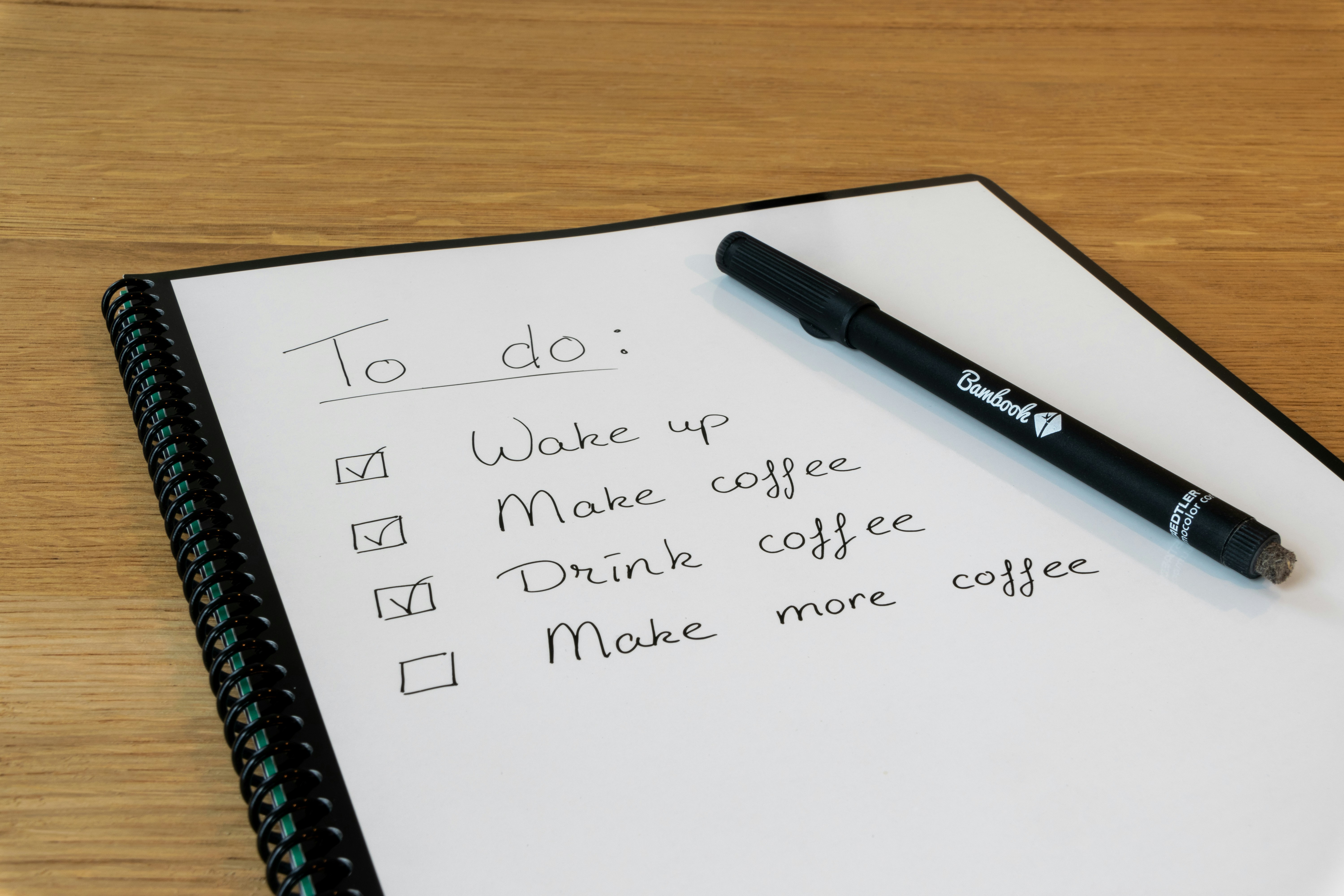
Image Credit: Thomas Bormans from Unsplash
Most important: progress > perfection. Just start. Don’t try to make your work perfect on the first try. It’s a lot easier to edit something mediocre than trying to edit as you work (this will just slow you down, frustrate you, and cause you to give up).
Shame Cycle
Okay, someone has to break the cycle right? Might as well be me to tell you (you might already know this, but you probably need to hear it again) that you are your own person. Stop comparing yourself to others and what they’re doing.
Your only competition is you (I cringed writing this, but it’s true; you’re the only one standing in your own way, giving yourself boundaries that end up dictating what you do). Telling yourself with conviction that you can’t do something will result in the same impact as telling yourself that you can do something.
We spend so much of our time feeling guilty for being unable to do things others do, but everyone is on their own timeline. We can’t spin the Earth so the sun rises faster… but what we do know is that the sun WILL rise. It’s just a matter of patience.
