




For over forty years, the Star Wars franchise has always been something bigger than the films. It has been a common vernacular of wonder, a galaxy we learned to dream inside, united in shared myth, struggle, hope, and faith that the smallest person can change the course of destiny. So when The Rise of Skywalker came out, that weight of legacy was present. This wasn’t just the release of a film, and an emotional evolution - a final chapter meant to gather all the lessons and teachings this saga has taught us, a final moment of purpose.
Instead, we got something much less certain. The film hurried the moments that needed to be reflective, it raised its voice where it could have whispered, and it actively worked to reassemble fractures that didn’t actually need fixing at all. What was meant to be the final punctuation was forged in elapsed time, and many of us exited the theater not feeling the fullness of an ending, but instead an emptiness that we had been ushered past the conclusions of a beloved story.
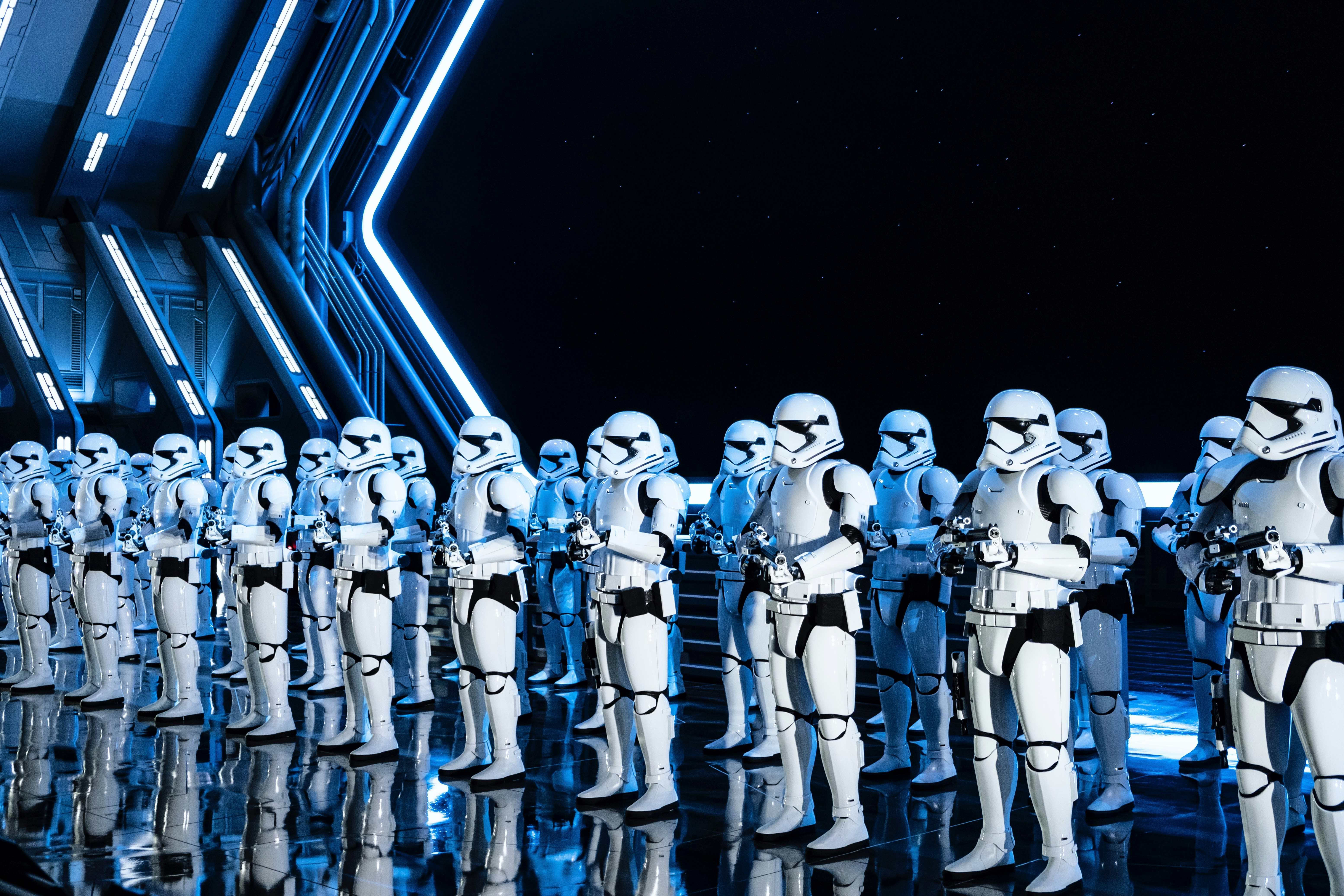
Image Credit: Brian McGowan on Unsplash
Let us slide into your dms 🥰
Get notified of top trending articles like this one every week! (we won't spam you)The Problem of Fearful Storytelling
By the ninth episode, Star Wars had already become a spark for debate. The sequel trilogy tried to strike a balance with legacy and renewal, boldness and nostalgia, and Disney was clearly attuned to the noise around it. Too attuned. The Rise of Skywalker does not feel like a film motivated by imagination, but rather fear.
You can feel the fear in the frantic attempt to undoo any aspect from The Last Jedi that may have presented controversy in certain circles. As if revisions could quell the outrage. You can feel the fear in the hurried release of events, the whiplash of reveals, the breathless momentum from planet to planet without allowing meaning to catch up. Rather than trust its own characters, the film manipulates them, sentimentalizes them, or sometimes discarding their arc altogether.
Fear leads storytellers to shrink from depth. It leads to a replacement of risk with repetition. In The Rise of Skywalker, that fear is manifested as a deep unwillingness to trust in the new trilogy's ability to stand on its own.
Image Credit: Brandon Russell on Unsplash

Take the Quiz: Which ’90s Movie Character Are You?
Are you ready to travel back to the iconic ’90s and discover which unforgettable movie character matches your personality? Take this quiz to find out!
Characters Who Deserved Better
Maybe the saddest aspect rests with the characters that ultimately did not get the opportunity to connect or were pushed into convoluted arcs.
Rey, who at the start of the trilogy was placed as a vessel of possibility, is now trapped by the baggage of a family she never needed. Her power, which once represented the liberating concept that anyone could ascend, is instead tied to the bloodline and destiny. What could have been a story of self-actualization turned into a story of inherited obligation. It is a shift that constricts rather than expands the narrative meaning.
Finn, who had perhaps the most compelling introduction of the entire trilogy, disappears. The illusion of a stormtrooper breaking free, defying and confronting a systematic structure built on control and regimented obedience, evaporated to simple suggestions or plot lines that could never fully develop. Poe, too, is robbed of the nuance, including the implications, and again relegated to the role of the reckless charming character in a fish out of water situation having no contributions to the plot.
The trio never truly are afforded a moment of breath as a trio, but instead, the relationship appears manufactured by mere virtue of proximity. The bond does not feel earned through actual exchange of stillness, conversation, or vulnerability. The amount of time the film spends trying to right itself undermines the ability for characters to simply be.
Image Credit: Barrington Ratliff on Unsplash
Nostalgia Without Substance
The story telling structure of Star Wars has been steeped in nostalgia since its inception, and well-done nostalgia serves as a connection across generations. The Rise of Skywalker, however, took nostalgia as a net. Instead of expounding on the connections established in the story, the film relied and characters we know from the past and the phrases we had heard in the past to distract us from the imposed absence of emotional coherence.
The reintroduction of Palpatine starts out more like a blind panic than a reveal. Rather than expand upon the thematic ideas the sequel Trilogy had established, the plot collapses back into familiar villains, familiar stakes, familiar grandeur. Nostalgia becomes a stand-in for imagination. It becomes a way to escape the more arduous travel of bestowing meaning.
But meaning cannot be conjured from references and easily recognizable imagery. Meaning has to be earned.
Image Credit: Rod Long on Unsplash
What This Says About Modern Blockbusters
The disappointment surrounding Episode IX is not only indicative of Star Wars, but also reflects a wider change within the world of big budget storytelling, where franchises are handled like portfolios for world capital and endings are constructed for the sake of risk avoidance rather than narrative closure. The Rise of Skywalker did not feel like a story told by artists, but rather felt like a story created from marketing meetings, audience feedback loops, and the apprehension of bringing everyone pleasure.
Yet stories that attempt to make everyone happy rarely please anyone. They lose their edge. They lose their bravery. They lose the emotional honesty that transforms a film from mere entertainment to something more compelling in a persons mind.
And perhaps most ceaselessly, they overlook the audience. They assume that we want pleasure and not complexity. They assume that we need clean and not nuanced.
But audiences do not fall in love with clean. They fall in love with truth, particularly when that truth is even more difficult to traverse.
The Ending We Deserved
The Rise of Skywalker illustrates that closure is not a product of narrative but an aim of it. The sequel trilogy had ultimately already begun to sow the roots for a richer ending. An ending where Rey is not defined by a legacy but is instead self-defined.
An ending where Finn’s rebellion means something larger than a moment of bravery. An ending where the force is not a bloodline but a possibility. An ending where the trilogy believed enough in itself to exist in the present without reliance upon a past.
We deserved a final chapter that spoke to the courage of its characters. A final chapter that spoke to the value of narrative trust over damage control. A final chapter that trusted in an audience that may have preferred an ending that challenged over comforted.
Instead, we saw a last chapter that meant to unify a story while forgetting to check its own pages.
However, the more valuable lesson learned from the experience is not it is okay to be disappointed because Star Wars disappointed us, but rather, stories are harmed too much because of fear instead of a true sense of belief. If there is anything to take from this it is that at least The Rise of Skywalker reminded fans and storytellers alike of how much we actually care, and if anything, care enough to be disappointed. Care enough to wish for better.
Star Wars was never just about light versus dark. It was about the spaces between light and dark, that's where meaning is created. And that is the ending we will continue to carry with us. Even though the movie didn't give it.