






Over the last four decades, all of the US presidents combined have declared an average of 7 National Emergencies per each of their 4-year terms. However, Donald Trump has declared a total of 10 national emergencies, with 7 of the ten announced in the first month of his presidency.
By definition, a national emergency gives the President special powers for a limited time to address the issue posing a great danger to the nation. It allows the president to bypass normal legislative procedures and allocate federal funding for specific actions. Which would suggest we are living in unprecedentedly dangerous times.
A closer look at three of the most newsworthy National Emergencies during Trump’s tenure suggests otherwise.
Let us slide into your dms 🥰
Get notified of top trending articles like this one every week! (we won't spam you)National Energy Emergency
On January 20, 2025, President Trump invoked the National Emergencies Act through Executive Order 14156. He expedited domestic energy production, such as fossil fuels, while excluding wind and solar energy production. With fossil fuel advocates contributing tens of millions of dollars to Trump’s 2024 election campaign, this “emergency” is more likely a case of “you scratch my back and I’ll scratch yours.”
On May 15th, 15 democratic states sued Trump for using the emergency to bypass environmental regulations and replace legislation that favors traditional means of energy production. Critics argue the rollback benefits the wealthiest Americans, who not only back Trump but also profit from outdated energy systems.
The White House, however, claimed that the National Emergency was warranted because the current energy output is too low to meet national needs low-income Americans are most at risk. This is and isn’t true. First off, as the world's largest oil and gas-producing country, the notion of an energy crisis is relative.
Oil prices are near the 20-year average, and gas prices are close to a three-year low. However, as current energy infrastructure ages and “green” methods for producing energy, like wind and solar, fail to replace the output of the original system, widespread blackouts are indeed possible – some would even say likely.
So when the Trump era US Department of Energy argues that these new policies will actually help us to maintain the infrastructure by updating systems already in place and supplying Americans with “reliable, consistent power by superseding normal regulatory requirements,” think twice. Those outdated systems were being replaced because they were putrefying the planet at an alarming rate, which has been directly linked to the uptick in extreme weather events. Flooding, wild fires, heatwaves, tornadoes and extreme rainfall account for the 15 billion-dollar weather disasters that have occurred in the first half of 2025.
So while it’s true that wind and solar power alone is not going to keep the lights on, neither will updating older, more toxic ways of manufacturing energy. In this case, Trump’s “national emergency” measures are setting the stage for a real national emergency in the winter months ahead.

Image Credit: Pixabay from Pexels
Take the Quiz: What Kind of Political Personality Are You?
Ever wondered what role you’d play in the political world? Take this fun quiz to find out!
National Emergency at the Southern Border (Proclamation 10886, Jan 20, 2025)
On his first day back in office, Trump revived the Southern Border Emergency, redirecting military resources to the Department of Homeland Security (DHS) and expanding border control operations. As in 2019, this again cost billions in federal funding for wall construction and expanded Border Patrol. In April, Trump also turned a strip of borderland into a Pentagon-controlled military zone.
The hysteria that Trump successfully created during ABC’s Presidential Debate in September 2024, included an unsubstantiated claim that Haitian immigrants were eating cats and dogs in Springfield, Ohio. While this rhetoric ascertained that his supporters would applaud the theatrics at the border, what those poor folks failed to understand is that by diverting such military force to Texas to fend off a river of mostly families with young children seeking asylum from Mexico’s fight against gang violence, Trump was choosing spectacle over real national security.
Even more to the point is that undocumented residents pay taxes, harvest our food, and build the infrastructure we rely on everyday. In Texas, where criminal data by immigration status is available, immigrants of all legal statuses are arrested at less than half the rate for violent and drug crimes, and only about one-quarter the rate for property crimes compared to U.S. citizens
By blurring the lines between police and military involvement, taking soldiers away from training necessary to their own safety in a combat situation and spending a colossal amount of money on relocating troops to the area, the real cats and dogs we should have been talking about are those it was raining into the Rio Grande in the form of taxpayer’s dollars.
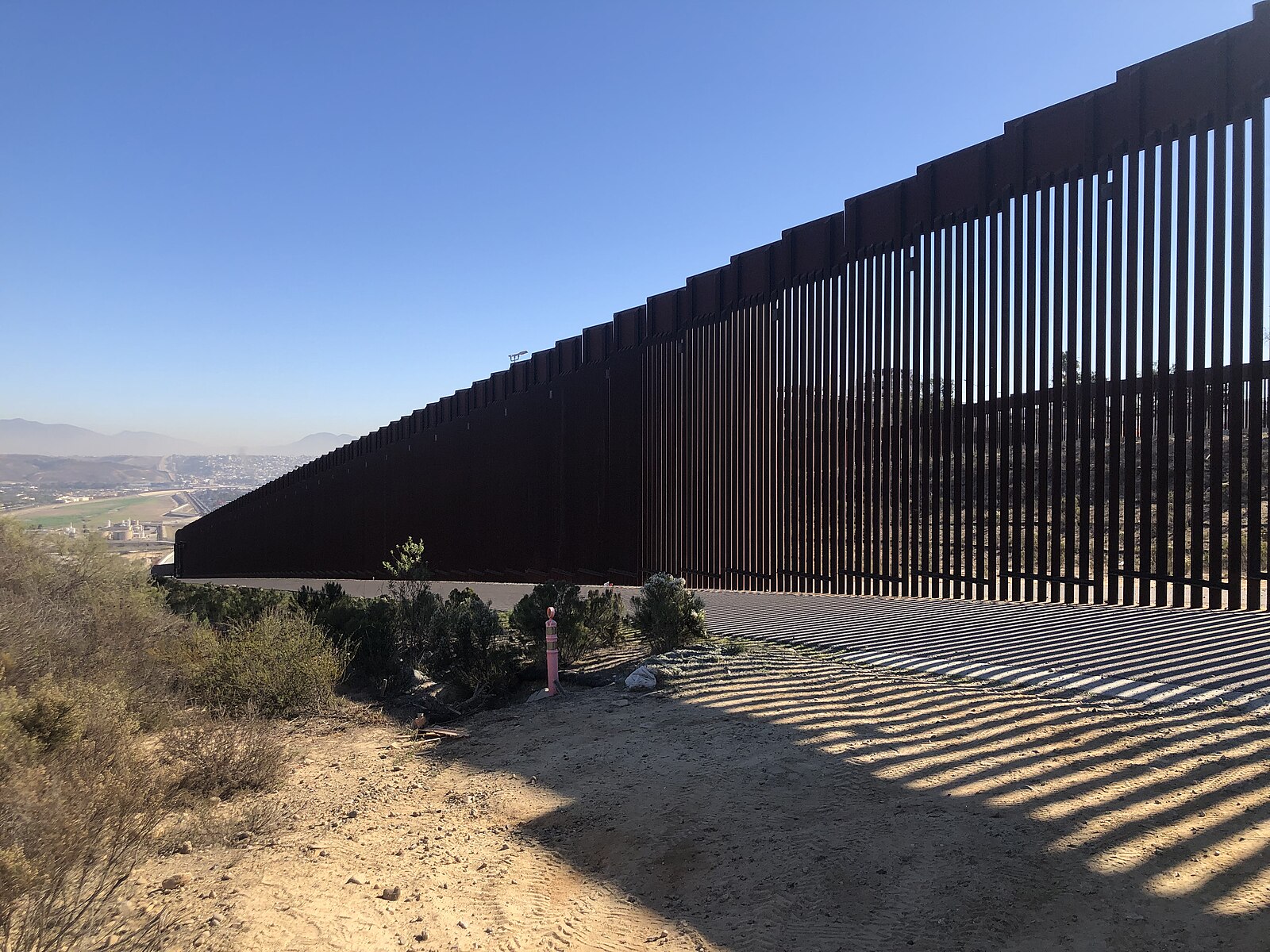
Image Credit: Amyyfory from Wikimedia Commons
Crime Emergency in the District of Columbia (Aug 11, 2025)
On August 11, President Trump declared the tenth national emergency of his tenure, citing crime rates in the district that “have undermined the proper and safe functioning of the Federal Government.”
In fact, the crime rate this year in Washington, D.C. is at a 30 year low, but by invoking Section 740 of the Home Rule Act, Trump has federalized the Metropolitan Police Department (MPD), re-assigned Mayor Muriel Bowser’s power to the US Attorney General and deployed 800 National Guard troops.
This marked the first time the president has used his emergency powers to take authority over an entire city’s elected officials and safety departments and according to a Washington Post poll, 61% of the residents in D.C. feel less safe in response to Trump’s action.

Image Credit: Rosemary Ketchum from Wikimedia Commons
Conclusion
Critics claim that Trump’s national emergencies ignore the separation of powers and bypass Congressional authority. This precedent opens the door for future administrations to use emergency powers in similar ways, whether it’s on the militarization of borders or bypassing due process.
Through the Southern border, energy efficiency, and crime emergencies, it’s clear that Trump leveraged constitutional and statutory loopholes to seize powers not previously allowed by the president’s office. His policy measures are no less than a series of systemic threats to the democratic purpose upon which the country was built.
While the administration portrayed all 10 emergencies so far as necessary responses to active crises, most clearly serve the political, ideological and economic goals of the current administration. Historically, it is only when the masses face down facism by cutting down on consumer spending, insist on non-violent protests by at least 3.5 % of the population and refuse to become complacent that political ground is regained.


