


.jpg)

Let’s talk about Deepfakes.
Yes, it’s that one subject that you've all heard of but pushed to the back of your minds. We’re broaching the artificial intelligence topic here at the Teen Magazine, because the way I understand it, it’s either going to solve our problems with absolutely no repercussions or destroy society as we know it (I suppose it could be something in between, but I've consumed way too robot media for that).
That’s right: I’m making you choose between two extremes: Thunderhead or The Matrix. WALL-E or Terminator. Her or HAL 9000.
Luckily, you don’t have to pick now. Instead, I’ll just tell you about Deepfakes.
Let’s start with a basic overview. What is it?
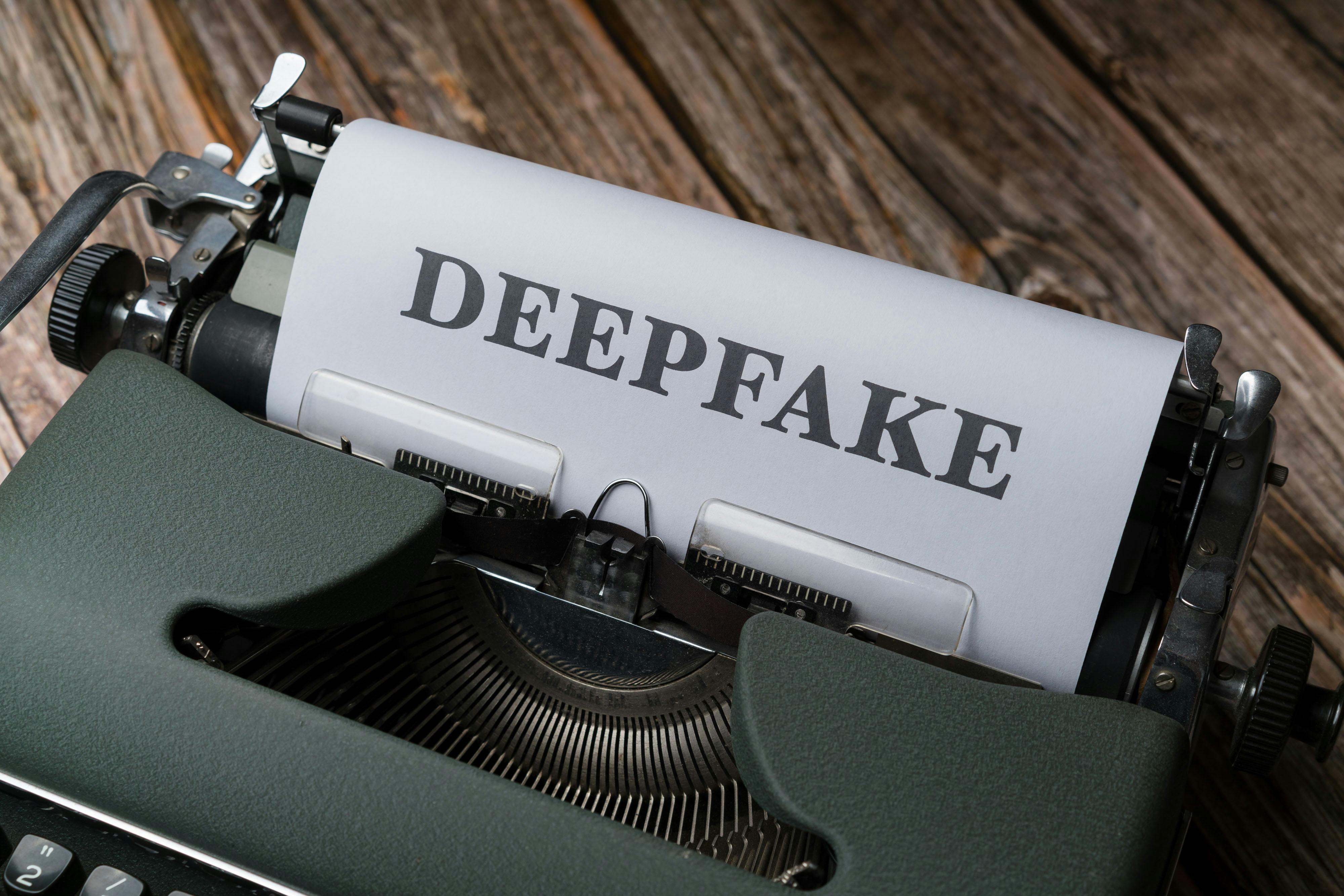
Image Credit: Winkler from Pexels
If you don’t know what a Deepfake is, that’s fine. Fifty percent of everyone reading this did just Google it, and the other fifty percent who know the basics can feel free to skip that part.
As for the readers who either Googled it and need some more information, or Googled it and are now consequently more confused, let me break it down for you: Deepfakes are essentially fake, AI-powered replications of someone. It mostly comes in the form of a video with someone’s face, talking to you in someone’s voice.
Since an artificial replication of someone has always and will always go wrong(Ahem, Replicas), deepfakes have pretty much spiraled out of control and are now used explicitly for malicious purposes. Its primary usage is to spread misinformation and to impersonate people.
But all of that begs several questions: What can it do? How does it work? Should we be scared, and how soon can I get access to that technology for completely non-malicious purposes?
Well, worry not, dear reader. Three Wikipedia pages, two news articles, and one specific episode of The Daily Show later, and I now consider myself an expert in Deepfakes. Let’s dive in.
Let us slide into your dms 🥰
Get notified of top trending articles like this one every week! (we won't spam you)What Can They Do?
Let’s start relatively simple: What can these things do, and what can they be used for?
Perhaps before Deepfakes had been limited to smaller aspects of life, typically the stuff that you’ll see scrolling around online, but as AI continues to grow and advance, deepfakes have also become more convincing.
An example of one big problem, for instance, is if a CEO of a big company was really bad at seeing through fake phone calls, and someone called them to urgently complete a business deal. Or the general public was really bad at detecting AI, and someone made a deepfake of a politician saying things they’ve never said to deliberately mislead people.
It’s not just that anymore, either. As of late, we’ve seen some potential for them to start doing serious damage. Not that long ago, a fake Marco Rubio contacted several high-level government officials via phone calls. Luckily, even government officials seem to procrastinate calling people back, so the deepfake didn’t actually do any damage, but the prospect of it being able to operate at that large a scale is still terrifying.


Take the Quiz: What kind of friend are you?
Are you the loyal ride-or-die, the chaos instigator, or the wise advice-giver? Take this quiz to find out what kind of friend you really are!
How Do They Work?
The way Deepfakes works isn’t too hard to explain or understand. Let’s say you’re up to some mischief, you want to commit fraud, you need a video with a recording of their voice to make it seem real, and you know how to make a deepfake.
You, like the scoundrel you are, would boot up your computer and pull up a picture or actual recording of someone you took during a Zoom call. This is who you want to impersonate. A program scans their features and facial movements and begins to create the deepfake.
But you don’t just need their face, you need a voice, and since QuickTime Player is far inferior to OBS, you don’t have them talking to you on that one Zoom meeting. No biggie: An app on your phone records phone calls, and the foolish imbecile once called you asking you for something. Something about covering for a shift because they had to attend a funeral. 
Image Credit: Piacquadio from Pexels
Anyway, you have your voice clip now, have the program analyze it, and boom. You have your deepfake, you little charlatan.
What Can You Do?
The only thing you can really do against deepfakes is by trying to tell them apart from a real person calling or telling you something.
Oftentimes, deepfakes look like garbage. Morphing flesh, weird-looking eyeballs, or odd deformities are dead giveaways. The only ones that will be able to trick are grandmothers or any middle-aged white uncle.
But sometimes, they’re more convincing, and the tech that makes them is always improving, just like normal artificial intelligence.

Image Credit: InstaWalli from Pexels
The way to tell if something might be AI or not seems to be the same throughout all of AI-created videos, art, whatever. Other details include if there’s text in the background that’s weirdly morphing together, the wrong number of fingers, the mouth not matching up with the voice, etc.
Despite all these techniques, I still think the most reliable method is that gut feeling. Ever heard of the uncanny valley, where humans apparently have this intrinsic fear of things that look like they’re human but aren’t? It just feels like it’s wrong.
Well, there you have it, dear reader! A guide to yet another terrifying aspect of misinformation spreading!
Now, if you’ll excuse me, I have a bunch of doppelgängers of myself I have to deal with. It’s no biggie; they’ve just committed business fraud and called my school principal in my name.
There are a lot of them, but it’s a good thing I can count them all on my twelve fingers.