




Compared to the main character in Gather by Kenneth M. Cadow, I am vastly more privileged. I have a comfortable pillow upon which to lay my head at night and never have to worry about where my next meal is coming from.
And yet, despite all of that, there is a way that the main character, teenager Ian Henry, articulates my own coming-of-age concerns with excruciating clarity. In gritty language that is unique to his story, Cadow’s protagonist contemplates the world with an eye for egregious power imbalances, injustice and isolation. What do you owe the world when it feels like the world owes you?
In the age of the internet, of AI, it might be said that all Gen Z’ers are having to grow up too fast. As mere humans, our brains are having to adapt to an information overload like no other generation before us.
And yet, these are macro concerns in Ian’s world, far removed from the ones he must confront: heating a dilapidated house, caring for an ailing mother, growing up without the kind of support system most people assume is the baseline experience for teenagers in America. These are power imbalances that we rarely speak about, for in one of the wealthiest countries in the world, they are indeed unspeakable.
Ever since moving to America from China three years ago, I have been terribly disturbed by the homelessness crisis in America. It is a visual that is unique to this country – especially in the way that the rest of the population steps over, circles around and otherwise ignores the obvious inequities in this society. Which is why Cadow’s book has become a favorite this summer.
I am immediately transported into Ian’s shoes, forced to navigate a world that seems unfair on even the good days. On my worst days, Ian’s world feels frighteningly similar to my own. After all, this book is a survival story, and in 2025, I think it’s fair that on some level, all teenagers are just learning how to survive.

Image Credit: Berna T. from Pexels
Let us slide into your dms 🥰
Get notified of top trending articles like this one every week! (we won't spam you)When Adult Problems Become Teenage Problems
Ian is growing up in a house in rural Vermont that has been in the family for generations. As his family slowly falls apart, the house and the land it sits on become the only constant in his life. It is where he meets the stray dog, for whom the book is titled, who will become his best friend.
The trouble all begins when his father abandons the family early on, his grandfather subsequently passes away, and his grandmother moves out to take care of a distant sister who has fallen ill. Eventually Ian and his mother, a woman too fragile for the rigors of an impoverished life who suffers from opioid addiction, find themselves alone in the house. Just when things couldn’t be any harder, they receive a notice from the town tax collector that due to his estranged father’s failure to pay the property taxes, they are now in arrears by $12,000! Ian’s mother finds renewed relief in her habit and Ian, a rising star on the school’s varsity basketball team, must abandon his dreams to find work.
Inevitably, Ian's mother spirals further out of control, and Ian soon finds himself living alone as a minor. When the local authorities find out, they decide he must be sent halfway across the country to live with his long-absent father. An uncle volunteers to drive the twenty hours there and back, but along the way Ian learns that his dog Gather is not welcome in his father’s house.
Knowing this is a dealbreaker, he escapes his uncle’s watch and disappears into the woods to begin the long walk back to Vermont. After sleeping rough for a week in the woods, Ian, increasingly desperate for food, uses the government-issued cellphone he has been given to reach out to a caring teacher back home who has long provided support to him both in and outside of school.
Once rescued, his return to Vermont is met with harsh criticism from the town clerk who accuses him of wasting taxpayer’s money on the police manhunt that ensued. Ian fires back with an excruciating truth: “‘You could have paid my property taxes with less than half that money [used to search for him in the woods] and saved us all a lot of problems!’” Already wise beyond his years to the inequities of a tax system that takes but seldom gives to those most in need, Ian is not afraid to name the injustice. His fearlessness instills a fearlessness in me that feels needed in the current fraught political climate in our country. Truth is its own weapon.
Image Credit: Julia Volk from Pexels


Take the Quiz: Which Blade Angel best represents you?
Are you more like Alysa, Amber, or Isabeau?
However Painful, Seeing is Always Preferable to Not Seeing
One of the subplots that exist in this story is that of Ian’s budding romantic relationship with Sylvia Paerson, one of the wealthiest kids in school. While Ian is characterized as someone who works with his hands, salvages tools, and counts every penny, his first visit to Sylvia’s house leaves him stunned. “You can’t even imagine a speck of dirt, let alone a mattress on this kitchen floor,” he thinks, comparing it to his home, where, when the river outside is frozen and the furnace stops working, his mother sleeps in the kitchen to stay warm. Although he has gotten used to the brokenness of things, he is at first overwhelmed by the comfort he finds at Sylvia’s house, “the nicest house” he has ever entered.
That he knows more about turning down the thermostat for a hot water dispenser than Sylvia’s father throws into emphasis the family’s privilege — and classist blind spots. The lessons Ian learns (and that Cadow teaches his readers), shine a light on the injustices of late-stage capitalism, a system which places more value on material possessions than human life.
Seeing the System, Flaws and All
At the end of the book, Ian’s mentor and teacher—known affectionately by the students as “The Sharpe”—explains to Ian that “tax” is about being part of a society, of gathering together to make something better. The money is used to build roads, pay for police, clean garbage, and most importantly, educate children. But Ian isn’t buying it. He’s too smart for that, too weathered by his misfortune and calls it as he sees it; “You go to school so you can keep going to school so you can make enough money to hire the people who didn’t like school to come and do all the s**t on your to-do list you never figured out how to do yourself because you were always in [censored] school, eating school food while the deer you could be eating belongs to a herd that’s getting so [censored] big they’re eating everybody’s pea crop and crapping all over the playing fields.”
This moment marks Ian’s evolution and his response to the unfair world, even if he doesn’t believe the system is correct. He now understands better that tax could represent community, connection, and the cost of participating in society. To me, growing up is realizing the world isn’t fair, but then figuring out what you’re still willing to give to make it better.
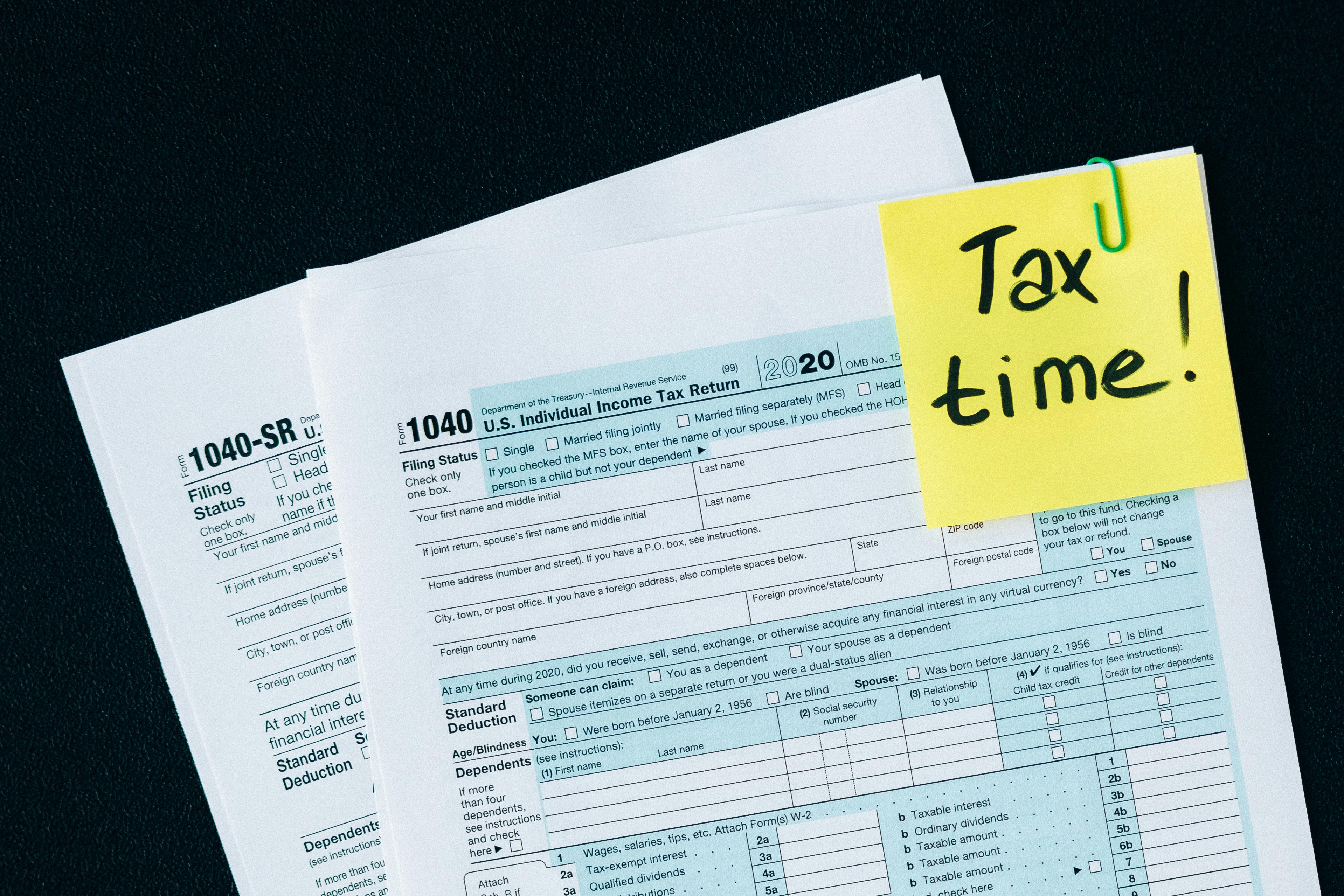
Image Credit: Nataliya Vaitkevich from Pexels
Why This Matters: For Us, Right Now
In recent months, Trump’s tariffs have turned the Dow Jones into its own version of Splash Mountain. As countries around the world counter with their own tariffs on American imports, it will ultimately be the American consumer who is forced to absorb the rising cost of goods.
This past month, the Trump Administration passed the “One Big Beautiful Bill,” which eliminates taxes on tips and overtime pay, increases child tax credits and deductions for some families, and cuts federal spending on programs like Medicaid, Supplemental Nutrition Assistance Program (SNAP),as well as research funded by the National Institutes of Health (NIH), Federal Emergency Management Agency (FEMA), and other climate initiatives. Trump has shifted tax relief to high-income earners, while the lower and middle class will have to struggle harder than ever to buy eggs.
The lower class will be thrown into further abject poverty as taxes take more than a third of their earnings and government support runs dry. Just this week, the jobs report showed a drop in available employment opportunities, a trend that will also surely take the economy into the negatives across the board.
Typically, teenagers in America haven’t been as politically aware as those growing up in Europe and other parts of the world—mainly because the daily ebb and flow of markets has had little impact on their lifestyle. As more families fall below the poverty line and those experiencing the tenuous life that Ian lives proliferates, that could be changing. Nothing is more of a wake-up call than a sudden and widespread lack of food & shelter.
Conclusion
Cadow’s novel Gather taught me that government taxes are more than a number, a line on a graph or bill that comes every so often via snail mail. Too often, taxes signal a power grab that leads to an unfair distribution of a country’s resources, whether that’s housing or food or transportation. For Ian, the overdue taxes cost him all but his life. No child should have to lose their family, their home, and the only community they’ve ever known before being rescued.