



.jpg)

NVIDIA, an American technology company headquartered in Santa Clara, California, recently created history: its market cap, how much the company is worth, broke $4,000,000,000,000.
Today, NVIDIA chips are used in AI development, game graphics, industry digitization, autonomous driving, medical development, and modeling the world in terms of energy consumption. In fact, their chips help power the AI behind Snapchat filters, TikTok recommendations, and even the autocorrect on your phone. The company’s co-founder and CEO Jensen Huang has made countless efforts toward the milestone, and exactly how did he do that?

Image Credit: Energepic.com from Pexels
Let us slide into your dms 🥰
Get notified of top trending articles like this one every week! (we won't spam you)Huang’s Early Life
Jensen Huang was born in Taipei in 1963 to a middle-class family that moved often. At age five, he moved to Thailand, and by nine, he left his parents to live with his uncle in the United States. At the Oneida Baptist Institute in Kentucky, as a foreigner with accented English, he was bullied and cleaned bathrooms.
When his parents arrived and reunited with Huang after a few years, Huang attended Aloha High School in Oregon and skipped two grades to college. Huang learned early how to adapt—and those tough beginnings helped shape the ambition that drives his success today.
After completing undergraduate studies at Oregon State University, Huang worked in Silicon Valley for years while earning a master's degree. Gaining experience at Advanced Micro Devices Inc. and LSI Logic Corporation, he decided to start his own business, designing graphics chips. In April 1993, he co-founded NVIDIA with Chris Malachowsky and Curtis Priem.


Take the Quiz: Religion, Schools, and Equality
Religion in Schools: Teaching Respect, Not Bias.
Why Huang Started NVIDIA
The primary purpose of NVIDIA was “pioneer[ing] accelerated computing to tackle challenges no one else can solve.” When Huang first founded NVIDIA, a significant technical problem arose for the entire industry: regular single-core Central Processing Units (CPU) weren’t powerful enough to handle complex graphics and heavy computing tasks at the same time. Therefore, he set out to develop Graphics Processing Units (GPU), complementing the areas that CPUs can’t cover, and laid the groundwork for modern computer advances, such as AI.
The GPUs that NVIDIA developed are now also used in the gaming industry. The Ray Tracing Texel eXtreme (RTX) series, for example, has powered many of today’s most visually advanced games such as Cyberpunk 2077, Control, Battlefield V, and Minecraft RTX, delivering real-time ray tracing and enhanced realism. Through innovative inventions and filling the market gap, NVIDIA became one of the most successful companies in the world.
Huang didn’t come from privilege, and he didn’t follow a perfect path, but he stayed curious and worked hard. His story proves that where you start doesn’t define where you’ll go.
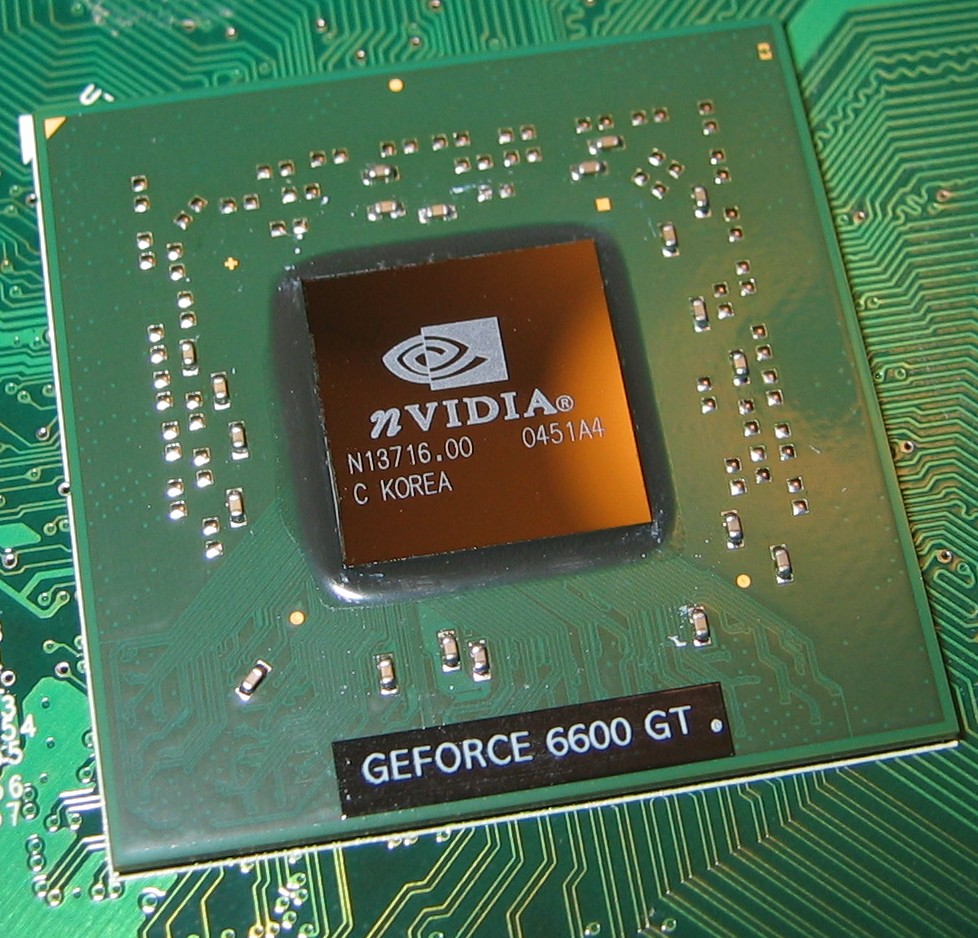
Image Credit: Berkut from Wikimedia Commons
The Struggles
Huang not only scaled the company to a $4 trillion market cap through grit and creativity, but he also remained resilient in the face of challenges. Coming from tech companies in the Silicon Valley such as LSI Logic and AMD, Huang has experience in various positions. Even with this experience in designing and making chips that led to the founding of NVIDIA in 1993, he said there was a 0% chance it would become successful. However, as it eventually came out that he succeeded from that “0%” chance.
When NVIDIA launched its first graphics accelerator, the NV1, in 1995, it aimed to revolutionize computer graphics. But its incompatibility with Microsoft, then the dominant tech company, kept it from gaining traction in the market. Huang quickly refocused the research and released RIVA 128, the first chip to combine 2D and 3D acceleration.
This misstep pushed the company to the brink of bankruptcy, with just enough money in the bank to cover one month of salaries. Huang secured an additional $5 million investment from Sega executive Irimajiri and utilized the revenue from RIVA over the next four months to sustain the company's operations.
The $4 Trillion Rise
Imagine if your favorite YouTuber went from 1 million to 4 million subscribers overnight. That’s the kind of explosive growth NVIDIA had: its stock skyrocketed, nearly a 280% gain over the last two years. Its Market Cap rose from $1.1 trillion to $4.1 trillion.
From 2023, chips became an essential component in producing the most advanced smart devices used by humans every day and in training AI, which is crucial for the human future. From toasters and cars to computers, every company that builds everyday products buys chips from NVIDIA. This demand led NVIDIA to become one of the world's largest companies.
The final push to break the $4 trillion market cap was that Huang lobbied the Trump administration to resume H20 chip exports to China, regaining 13% ($17 billion) of its total sales, according to its 2024 annual report.
Image Credit: UMA media from Pexels
What It Means for the World
As of July 18, NVIDIA’s market cap reached $4.2 trillion, making it the fourth-largest in the world if compared to national economies, surpassing the entire economies of India and Japan.
NVIDIA has also become a bridge between countries. Both the U.S. and China, two of the world’s most powerful nations, rely on their chips to manufacture everyday technology, such as computers, and to advance scientific research. Whether to export or sell products can have an immediate impact on diplomatic relationships between countries.
In conclusion, the AI world is already integrating into our lives. Imagine a child born today: They will be unfamiliar with cash and printed newspapers, viewing them just as we view rotary phones and VHS tapes. The moment NVIDIA broke the $4 trillion mark marked the beginning of a new chapter in human history. Our future jobs are likely to be involved with AI, then, what will you build with AI?

.jpg)


