



.jpg)

According to UN Women, currently as of September 2025, out of the 195 nations in the world, 29 of them are led by women. At the current rate, gender equality in the highest positions of power will not be reached for another 130 years.
Yet, little by little, in different areas of the world, the tides are starting to change.
In the historic turn of Tokyo, Japan has elected its first ever female prime minister. On October 21, 2025, Sanae Takaichi was elected Japan's prime minister by its parliament, making her the first woman to hold the office.
A 64 year-old politician, Sanae Takaichi won by a clear majority. She received a large number of votes: with 237 votes in the powerful Lower House and another 125 in the Upper House.
This moment holds historic value in itself. A woman being elected to the highest power in an unbroken precedence of male leadership is a vital breakthrough for gender in politics. Japan’s poor record on gender equality—ranking low among developed nations—renders this moment particularly symbolic. However, as we celebrate the victory, we must also raise the question of what kind of policy direction she might bring to the nation, especially as Japan grapples with a volatile economic condition and heated public frustration.
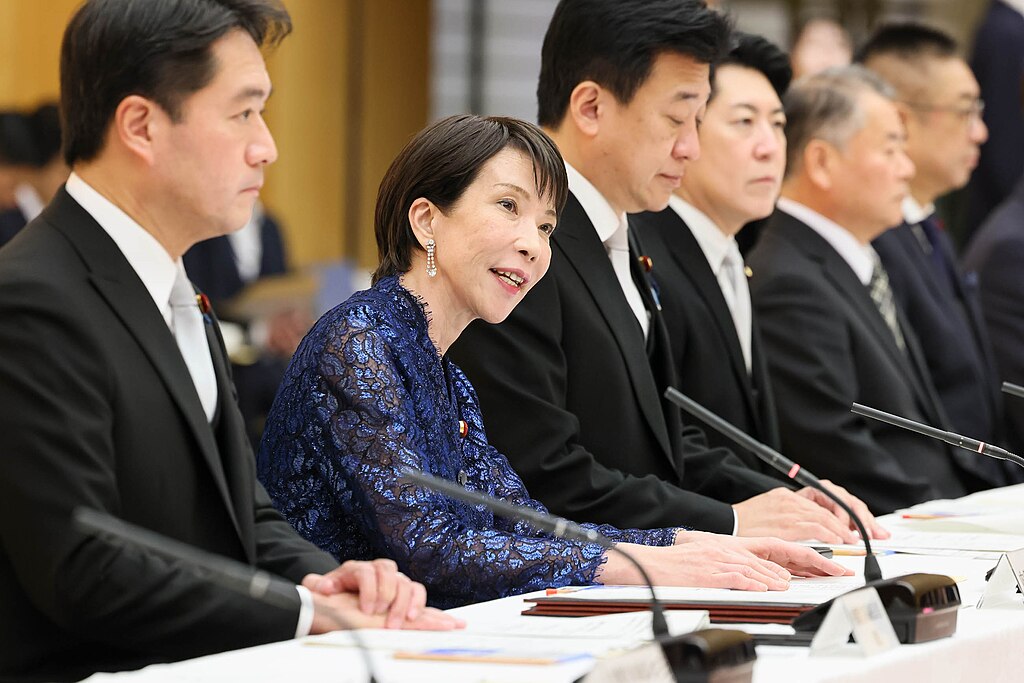
Image Credits: Cabinet Public Affairs Office from Wikimedia Commons
Let us slide into your dms 🥰
Get notified of top trending articles like this one every week! (we won't spam you)Japan’s current political context
For over seven decades, Japan’s politics have been shaped by the near-continuous rule of the Liberal Democratic Party (LDP), a conservative powerhouse that has governed almost uninterrupted since 1955. Despite Japan’s status as one of the world’s leading democracies, no woman had ever occupied the nation’s highest office, even as prominent female politicians such as Yuriko Koike and Renhō Murata rose to national significance.
This changed with Sanae Takaichi, a long-serving lawmaker and protégé of the late Shinzo Abe, who made history by becoming the first woman to win the LDP leadership before being formally elected prime minister. Defeating four other male candidates, her ascent followed a volatile political season: the LDP’s long-standing coalition with the centrist Komeito Party fractured after policy disagreements, prompting Takaichi to forge a new alliance with the reformist Japan Innovation Party (Ishin).
This shift secured her majority and signaled a potential realignment in Japan’s conservative politics.
Take the Quiz: What Kind of Political Personality Are You?
Ever wondered what role you’d play in the political world? Take this fun quiz to find out!
Who is Sanae Takaichi?
In short, Takaichi is a loyal conservative and devoted admirer of the late former UK PM Margaret Thatcher. For decades she has held lead ministerial roles and has also ran for the position of prime minister. She was elected leader of the Liberal Democratic Party after its former president and prime minister, Shigeru Ishiba, stepped down in the wake of sweeping losses for the party in mid-term elections. She is also an advocate for stronger national security, economic stimulus, and has a “Japan First” flavor in her rhetoric.
However, nicknamed the “Iron Lady”, Takaichi is most well known for her extremely conservative beliefs. This has also led to the rising skepticism on her ability to further liberate Japan’s female population as a woman herself.
On a BBC news article, Ayda Ogura, a 21 year old student, said,
“Everyone's like, 'Wow, she's the first female prime minister in Japanese history and that's a great opportunity for women's empowerment'. [But] if you look into her political beliefs and what she stands for, you realise that some of the things are very traditional. Instead of creating structural change, she rather perpetuates the patriarchal system.”
Ogura is not wrong. Most notably, Takaichi strongly opposes same-[censored] marriage and the demand to let women keep their surnames after marriage. She has also long voiced support for traditional family structures.
It has drawn sharp scrutiny from political analysts and activists. Many note her ascent, though historic, does not necessarily signal a progressive shift in Japan’s gender politics. Her appointment of only two women to a 19-member cabinet has further fueled skepticism about her genuine commitment to gender equality.
It has been argued that her leadership may reinforce, rather than challenge, the LDP’s patriarchal framework, reflecting an ideological paradox: Japan’s first female prime minister advancing a platform that could slow feminist and social reforms. To many, Takaichi has been deemed ‘an old man with a woman’s face’, ‘an honorary man’, and ‘not representative of women’. Supporters, however, counter that her rise itself within a rigidly male-dominated party represents meaningful, if symbolic, progress.
Beyond a focus on gender dynamics, Takaichi’s election, accompanied by the loss of more moderate voices (such as those of Komeito) and the rise of strong conservative beliefs, could also affect domestic policies like immigration or social welfare and international relationships.
On the economic front, Japan continues to deal with rising inflation and a persistently weak yen that has driven up import costs and squeezed household budgets. Prime Minister Sanae Takaichi has pledged to implement a sweeping fiscal stimulus package and revive what some commentators are calling “Sanaenomics,” modeled after Shinzo Abe’s Abenomics but with a renewed focus on innovation and regional revitalization.
In terms of foreign policy, Takaichi inherits a volatile regional landscape marked by escalating tensions with China over the East China Sea, ongoing disputes with South Korea, and growing expectations from the U.S.-Japan alliance to bolster regional deterrence. She has signaled for increasing defense spending beyond 2% of GDP and strengthening missile defense. These moves could all position Japan at more assertive power amid geopolitical uncertainty.
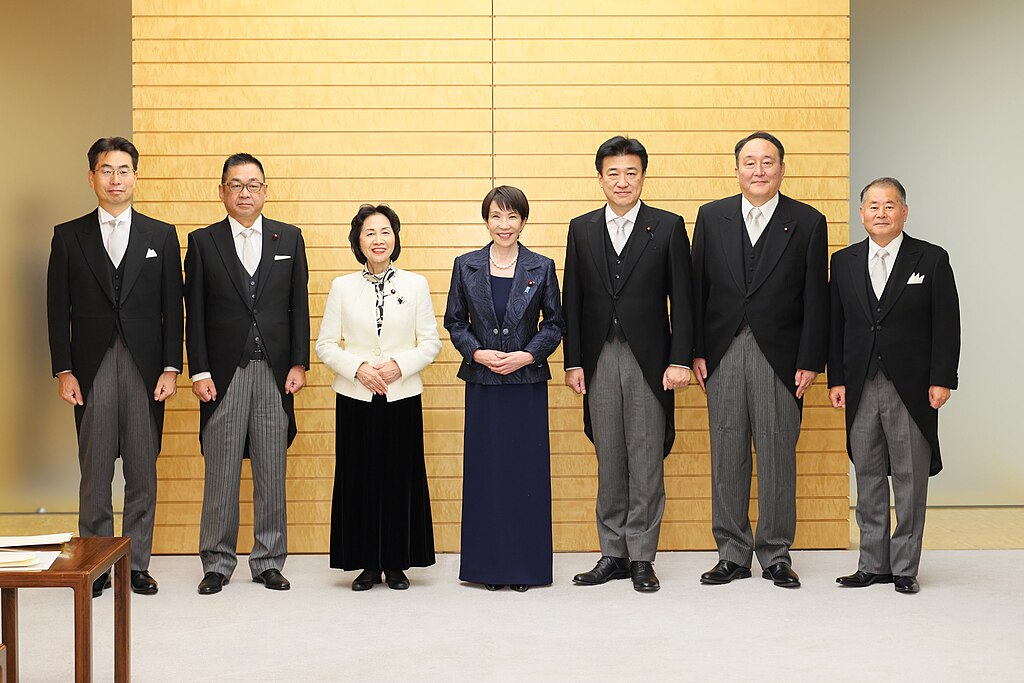
Image Credits: Cabinet Public Affairs Office from Wikimedia Commons
What Sanae Takaichi’s leadership means for the future of Japan
As an article title by the East Asia forum has pointed out, Japan’s first female prime minister seems to be no feminist fanfare. Japan has been at the bottom of the Global Gender Gap index among the G7 nations, partly due to its low score for female representation, and its election of women into power seems not much of a revolution than of a continuation of patriarchal systems, yet this time imprinted on the face of a female. Critics have even further declared that ‘politics can no longer be expected to benefit women’, where you must be the “right” sort of woman in order to be positioned for political success.
Yet, despite her conservative beliefs, Takaichi has aimed for a “Nordic-level” of female representation within her cabinet and has advocated for pro-women initiatives such as funding fertility clinics and women’s health centers. Drawing on her own experience as a caregiver, she expressed a desire to build a society where caregivers can receive tax benefits while continuing their professional careers.
In my perspective, every political figure is complex, and before any substantial policy has been implemented, it would be difficult to postulate their definite stance. Being a woman in high political leadership doesn’t guarantee liberalism, and being a conservative candidate also doesn't guarantee anti-feminism and misogynistic policies.
Takaichi is positioned at the edge of reform and systemic continuation. Regardless of her beliefs, it is still undeniable that her election into power itself is a milestone for gender equality in politics. In a world where gender parity in power remains more than a century away, even symbolic cracks in the ceiling can illuminate the path forward, however faintly.
Another woman is leading a nation today. And that is something worth celebrating.





.jpg)
