



Do you ever feel like your brain has fifty open tabs? Yeah, same. Between school, clubs, and social media spirals, life can be…overwhelming.
Which is why painting is so important: it's a way to mute the unwanted noise. And the bonus? Painting has been scientifically proven to ease anxiety and relieve stress, helping your brain reset. It’s therapy with paint stains.
Even if you are shopping for a paintbrush for the first time or looking to embark on a new artistic adventure, you can follow my lead without turning your room into Oz.
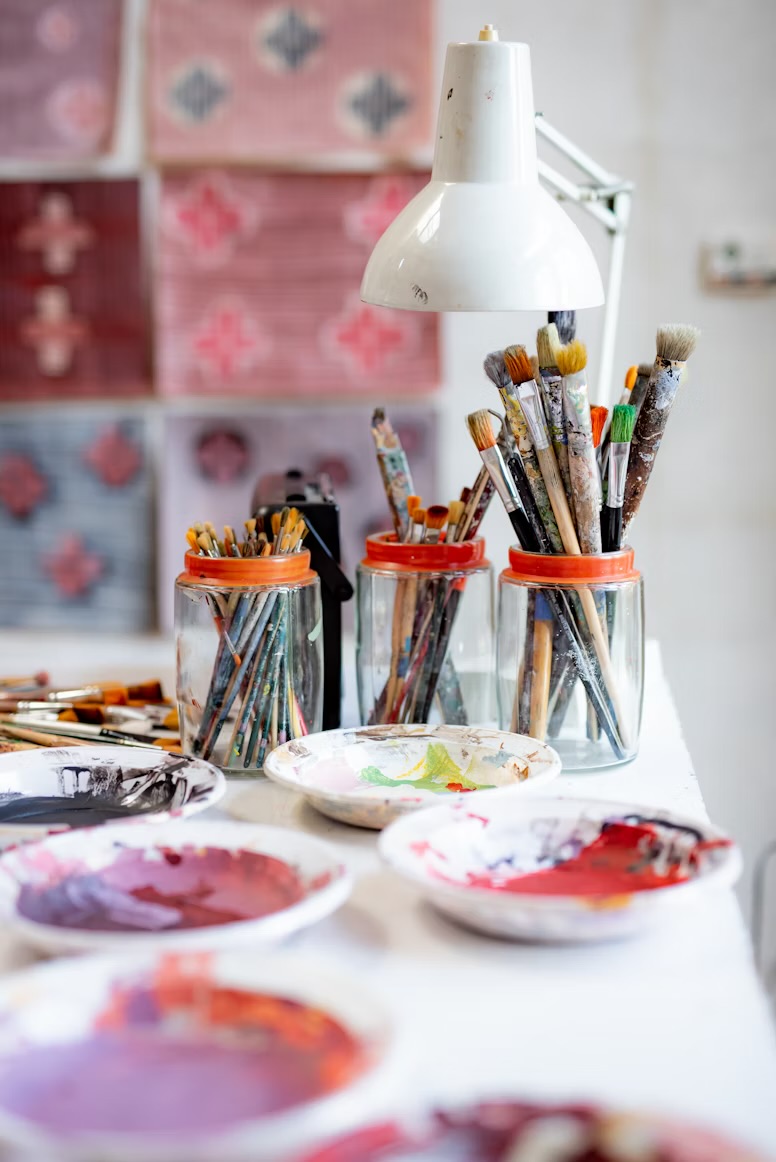
Image Credit: Adai from Unsplash
Let us slide into your dms 🥰
Get notified of top trending articles like this one every week! (we won't spam you)Step 1: The Right Supplies
What if I told you that beginner artists need a Paris apartment and Leonardo da Vinci’s paint colours? Guess what? Not at all true.
This is the first big myth that most people fall for when starting. The process can be…a lot. Like, why are there fifty bottles of pink paint? The basics will do just fine.
Paints: Acrylic paints are great for beginners because they are easy to handle, dry quickly, and not super messy. Watercolours are also a great option if you want something more travel-friendly.
Paintbrushes: Don’t let the never-ending selection fool you. A small set is enough; specifically, look for three types: a flat brush for the large areas, a round brush for the curves, and a fine brush for the details.
White paint (separately): If you decide to go the acrylic route, I cannot stress how important white paint is. You will always run out at the worst time when you absolutely need to lighten a dark red shade that is overpowering your entire work. Which is precisely why you need a large bottle.
Surfaces: I loved using canvas boards when I was just starting painting. It gave me the artist feel without taking up a lot of closet space. Watercolour sketchbooks are also great if you are looking to, well, watercolour. The worst mistake someone can make is to get printer paper (please don’t).


Take the Quiz: Are You a Good Cook?
Think you're a good cook? Well, take this quiz and find out...
Step 2: Learn (Without It Feeling Like Homework)
This is where online courses enter the scene. They are like a cheat sheet for gaining skills.
(Cursa) Acrylic Painting Course: This is the first episode of your art journey. Learn the brushes, colour theory, and basics (for free).
(Skillshare) Anyone Can Watercolour: The Basics for Painting Magical Art Beginner Level: Short and binge-worthy. You’ll get the feel of watercolours without getting lost in the details. Plus, a free trial serves for a “yes, please.”
(Udemy) Watercolour Painting for the Beginner: Mini lessons consisting of brush stroke techniques, blending colours, and more. You will create small projects that you can actually finish.
(Domestika) Acrylic Painting Step-by-Step: Create Incredible Landscapes: An aesthetic Studio Ghibli moment for when you want your painting to look like an actual landscape instead of just stick trees by learning texturing, layering, and more.
Step 3: Get Inspired
Sometimes finding ideas is harder than the actual technical part of painting. Luckily, inspiration is everywhere if you just know where to look.
TikTok and Instagram: Scroll through TikTok and Instagram’s “#paintwithme,” and you’ll find fast-paced tutorials that are like the “Get Ready With Me” of painting.
Pinterest: Mood boards are an artist’s dream tool. Create one like you are planning your dream project. Let the colours, textures, and essence guide you.
Real life: Sunsets, buildings, even your coffee cup. (If Taylor Swift can turn an ex into an album, you can turn your cat into a canvas.)

Image Credit: Christopher Jeffrey from Unsplash
Step 4: Trust the Process
Let me spoil something for you: your first painting will probably not look like a Monet. That’s totally fine. Even Bob Ross said, “We don’t make mistakes, just happy little accidents.”
The goal is not to be amazing at your first attempt, but to practice, practice, practice. Did I mention practice? Each time you pull out your paints is an opportunity to build your style, your colours, and your voice.
You should never paint with the hope of going viral or impressing people. It’s about you and you only. Painting is like a journal entry, just harder to decipher and messier.
If you are stressed or bored, maybe painting can be the next item on your to-do list. Who knows? The empty canvas might just be your new outlet for escaping the chaos.


.JPG)








.jpeg)