




Walk into almost any IB school, and you’ll notice the same rhythm.
The morning bell rings. Students drag themselves into class, laptops half-charged, notifications still pinging from last night’s unfinished assignments. Tabs multiply on screens: Google Docs, ManageBac, PDFs, Word files.
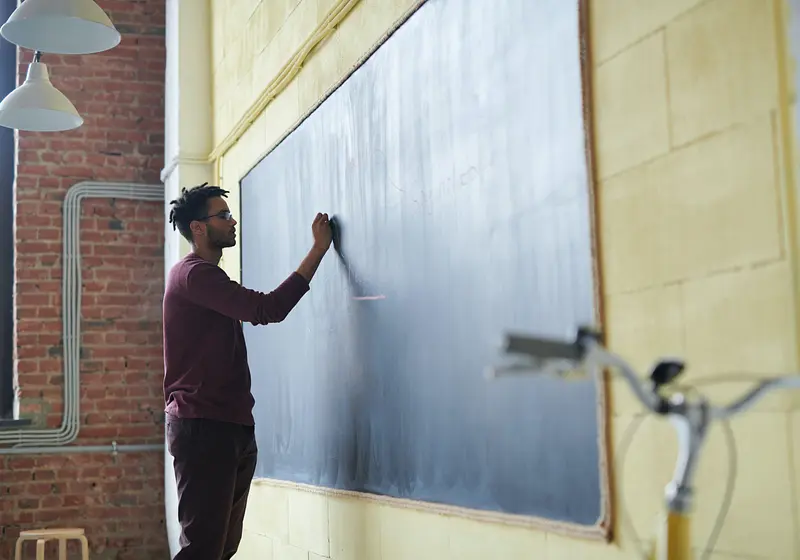
A teacher stands at the front, not with chalk but with a big screen (that doesn't work half the time) or a shared link: “Open the document. Don’t talk. Listen.”
For the next six or seven hours, the subject isn't Economics, History, or Physics. It's obedience.
We're taught that this is "education": that winning is in following the rubric to the letter, formatting citations precisely, turning in on time when midnight passes with the clock striking twelve, and memorizing what's presented in the slides. But I imagine inwardly many of us know something's not quite right. School is supposed to ready us for life, but too frequently it only teaches us to fit into it.
And that is threatening. The future isn't for passive followers who are waiting to be instructed on what to do. It is for those who think, who question, who dare.
If we keep teaching obedience but not how to live, we will end up creating a generation that can take orders but cannot bring change.
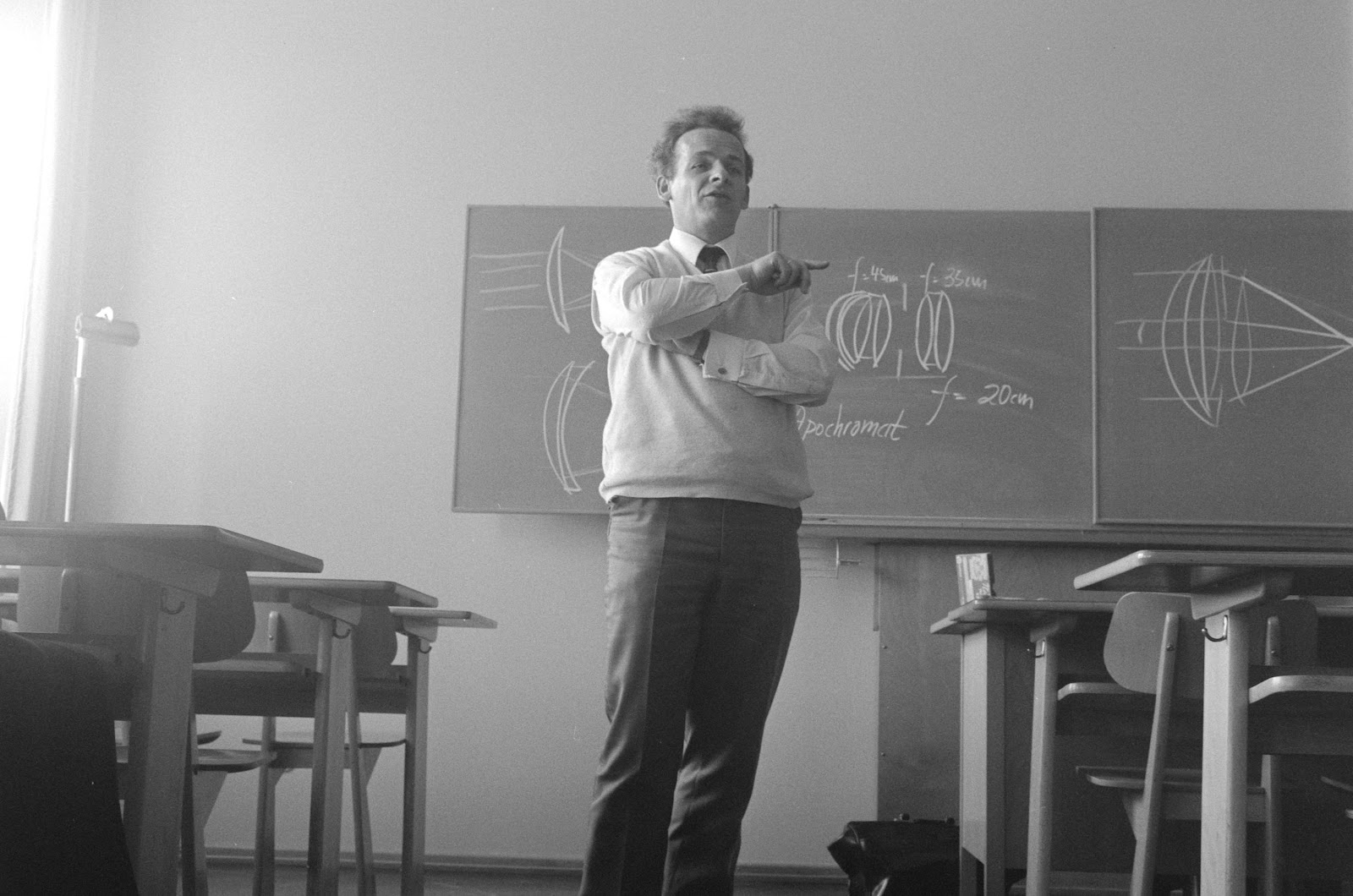
Image Credit: Immo Wegman from Unsplash
Let us slide into your dms 🥰
Get notified of top trending articles like this one every week! (we won't spam you)The Power Game in Classrooms
In IB, there is no always-present yelling. There are more subtle forms: the unspoken rules, the surprise quizzes, the handling of deadlines as a higher priority than learning itself.
I remember one day in math class when we logged onto what we thought was a typical practice session and were told to open a timed test link. No notice, no practice, no prep. Just: "The link is in the Google Classroom. 40 minutes. Begin."
It wasn't about testing understanding; it was about authority. The point was made: we can test you whenever we want, and you can't do anything to stop us. That taste of injustice stung longer than the bad grades.
And then there was physics. We were told to create online graphs, but no instructions were given. We all created something different, some in Canva, some in Excel, some drew by hand and uploaded photos.
Instead of using this as a learning experience, the teacher lectured the class, screaming as if we had chosen to fail. I think sometimes they were right, we do need to be precise, but how it was handled wasn't about clarity. It was about control.
Moments like these add up. They're not discipline, per se. They're small reminders of the power game, in which obedience takes precedence over knowledge. And I think that's the damaging thing: when respect is replaced by silence, and curiosity is replaced by compliance.


Take the Quiz: Religion, Schools, and Equality
Religion in Schools: Teaching Respect, Not Bias.
The Problem: A Curriculum of Compliance
Starting from year one, even IB, the message is consistent: "good students" are quiet, courteous, and punctual. Submitting late work, even for a legitimate reason, is considered a moral offence. Asking too many questions about the rubric is nitpicking. Even collaborating too nicely can be "academic dishonesty.".
The result? We learn to view grades as performance, not development. Achieving good grades doesn't always mean you have understood the content; it means you are skilled at doing what you're asked to do to a perfect level.
I think we've all had moments when we Googled half a response or "formatted" essays to fit the mark scheme instead of mapping out ideas. It works for grades, but it doesn't feel like learning.

Image Credit: Kenny Eliason from Unsplash
And here is the real danger: schools naturalize hierarchy. Teachers dictate rules. Admin sets deadlines.
Students go along. If you push back, you are "difficult." If you ask questions, you are "challenging authority." The message is obvious: keep conforming, or else.
But outside IB, the world is not like that. Employers don't hire individuals because they can have a PDF ready in advance. Friendships do not survive on rules and quotes.
Life doesn't give you mark schemes. The abilities that matter, creativity, perseverance, compassion, and taking risks, are not always the ones for which we are rewarded at school.
Walk into any IB classroom, and you’ll notice the same rhythm. Laptops flip open, teachers project slides, deadlines flash across Google Classroom or ManageBac. The tone is professional, even clinical. Yet beneath the polished digital surface, something more old-fashioned is at play: control.
Early on, students discover that "discipline" is more than being assigned homework or being attentive. It means following an unwritten script: submit at 11:59 PM on the dot, do not argue about surprise tests, do not ask why a project is required. Good students comply, great students comply faster. Is that really what school is like?
When Rules Become Power Moves
I'll give a personal example. Our mathematics facilitator surprised us with an exam one semester, no preparation, no warning, not even the suggestion that it was coming. We showed up for class anticipating a normal lesson.
Then the announcement: "Clear your desks, this is a graded test." My gut hit the floor. It wasn't that we weren't prepared, but the message: we decide when you're going to be tested, not you.
The same applies at smaller levels as well. In physics, we would previously have to make a complicated chart. Some students got the layout incorrect, and the teacher lost it, yelling like we had committed some crime.
The funny part? I later realized the teacher's anger was not even that we got the chart wrong, but that we defied authority just the way they had envisioned. Sometimes I actually agree with the reasoning behind the teacher's actions, but the way in which it is done, yelling, shaming, makes it not very much like teaching, but more like tyranny.
These are instructive moments: school policy isn't so much about learning, it's about who rules. And how that power is exercised, approximately, abruptly, without negotiation, can leave us speechless.
Digital Doesn't Mean Free
Some adults think that laptops give IB students more independence. We write fast, get things done first, and get information in a snap. But in practice?
The screen itself ends up as another leash. Teachers track "last edits" on Google Docs. Plagiarism scanners scan through our work as if we're presumptively guilty until proven innocent. Online deadlines enable the system to literally close you out if you're late.
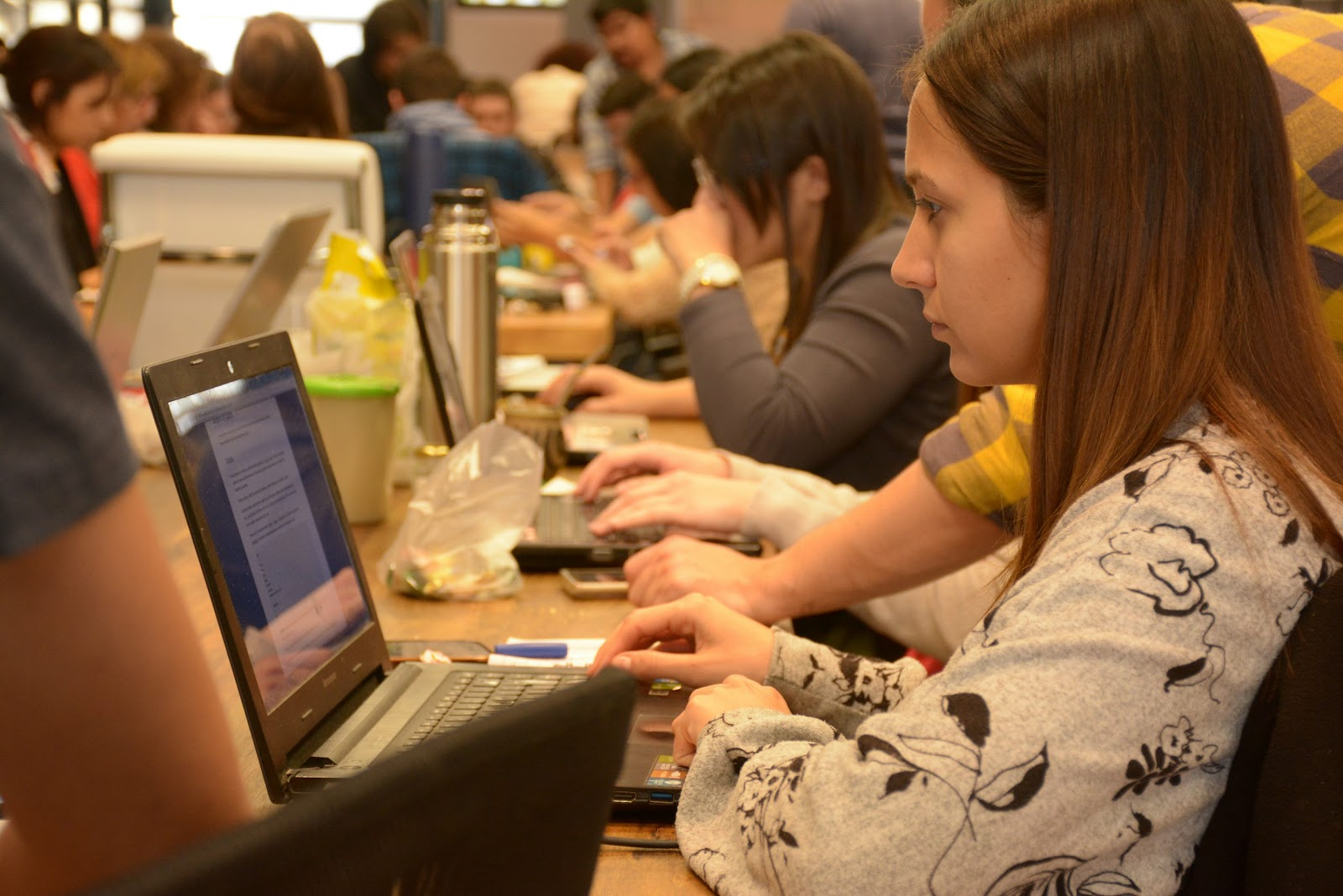
Image Credit: Fran Innocento from Unsplash
Even participation has evolved. In group work, some teachers demand that we have cameras on for online classes, even if our internet connection is poor or we are exhausted. The laptop is no longer an instrument but a monitoring device, making school more of a surveillance than a learning experience.
At times, I ask myself: Is this really 21st-century education, or just compliance disguised as digital attire?
Why Obedience Feels Comfortable
To be fair, there’s a reason teachers lean on strict rules. Order makes classrooms manageable. When 15 students have laptops open, chaos is always one click away: YouTube, games, or chatting with friends.
Teachers probably fear losing control, so they tighten the leash. And yes, I’ll admit: sometimes, without discipline, IB would collapse into a mess of missed deadlines and endless excuses.
Obedience brings order. Obedience brings justice. If we must all submit simultaneously, no one has an edge.
If we all follow the same rules, the system works. That is the argument. And sometimes I even find myself agreeing with it.
But the issue is this: the way obedience is enforced has the tendency to sidestep killing motivation. Instead of wanting to learn, we learn to survive. Instead of curiosity, we get compliance. And once that takes hold, school stops being preparation for life and becomes training for obedience.
When Teaching Turns into Power Play
The worst of all is when authority is mistaken for respect. Respect is earned by being fair, patient, and through dialogue. Authority is claimed by yelling, unexpected rule enforcement, or shaming in front of others.
Let's examine the physics chart scenario. Did we require feedback? Yes.
Did we require to be yelled at in front of the whole class? Not probably. That's not instruction, that's a power trip. It's saying: "I'm in charge, and you'll know it."
What most teachers overlook is that IB students are not kids who do not know how to think. We're expected to do essays criticizing global politics, compare ethical systems, and analyze literature. But in class, we're treated as if we cannot cope with being part of decision-making. That contradiction is exhausting.
The Hidden Curriculum
Aside from classes like math or English, there is one other class that all schools instil without labelling it a class: the hidden curriculum. It's not on any list of courses to study, but it's in every rule, every command, every discipline.
The hidden curriculum teaches you:
Don't question authority, even when authority is wrong. Deadlines are more important than creativity.
Silence is better than courage.
Your sanity is less vital than obedience.
And gradually, without even realizing it, students learn these things. We start to prize doing things over wondering if they matter or not. We no longer protest when something isn't fair. We even dull our own creativity, because obedience is safer.
The Emotional Cost
This power struggle is not one of rules; it has a price tag. Surprise quizzes cause terror. Screaming teachers cause you immense shame.
Continuous deadlines cause exhaustion. And when all of these are piled up, most students forget that school is a place of growth and start seeing school as a place of survival.
I've spent nights lying awake thinking about a deadline so much that I wouldn't go to bed until 2 AM, only to discover the next day that the work wasn't even properly reviewed. That feeling, where effort doesn't count, hurts worse than failure. It causes you to question why you even try.

Image Credit: Afif Ramdhasuma from Unsplash
Teachers Don't Work Together
One of the most peculiar things I've noticed is how few teachers really work together as a team. They're supposed to be coordinated in theory so that students aren't swimming in double deadlines or contradictory orders. But in reality, it's like every subject is on an independent island.
One week, I had a pop social quiz on Monday, an English paper due Wednesday that I hadn't known about until the day before, and a review of the physics project on Friday, completely uncoordinated. None of the teachers even seemed to have a clue what the others were requesting. I think that's the reason school so often resembles anarchy disguised as order. The "system" isn't a system, it's an ad hoc mess of separate power games.
The Problem of Favorites
And then there is favoritism.
I think all students see it, even if no one ever speaks of it aloud. Some teachers clearly have their favorites, the ones who always get picked for group leaders, always get the benefit of the doubt, and always get praised even for average work. Meanwhile, the rest of us sit there wondering if we’ll ever be noticed.
It’s not that the favorites are bad students; it’s just that partiality chips away at everyone else’s motivation. Why try your best if effort does not count as much as popularity? Favoritism in action: I remember during physics class, there were two students who forgot to submit their presentation on time.
One was a "favorite," and the teacher simply smiled and said, "Bring it tomorrow." The other was not, and they were publicly scolded for being irresponsible.
I think that's when it struck me that school doesn't so much inculcate obedience. It teaches you what arbitrary authority tastes like. You might get punished and you might get rewarded, and it isn't always because of what you've actually done.
What Could Be Different
I do not think that teachers are evil. They actually care about us, most of them. But how they present it is everything.
A surprise test can be reworked into a low-stakes quiz to keep an eye on progress, instead of a high-stress grade. A correction can be made with calm feedback, instead of yelling. Deadlines can have a little reasoning: "Here's why it matters." Even minimal variations would carry considerable importance. Openness instead of concealment. Dialogue instead of dictation mandates. Cooperation instead of compliance.
Because the fact is, students do want to learn. We do want to be pushed. But we also want to be respected in the process.
Learning Beyond Obedience
In the end, I do not think education has to be a power struggle. It should not always be a matter of learning to conform but learning to question. It should prepare us to challenge, to innovate, to lead and not just to follow.
And seriously, isn't that what IB is all about? International-mindedness, critical thinking, creativity? If schools do actually subscribe to this mission, they can't just keep on treating obedience as the core subject.
What we need isn't less structure, but better structure. Not fewer rules, but fairer rules. Not mindless obedience, but shared responsibility.
Finally, all our IB experiences are not the same; it is one shared with thousands of schools around the globe, IB or not. Laptops, presentations, and deadlines might appear independent in modern guise, but the lesson is frequently one of compliance.
In order to actually prepare students for life after the classroom, schools must do better than govern with discipline; they must educate thinkers, not conformers. Our dilemma with surprise testing, inflexible rubrics, and electronic leashes is one of systems, one with which most schools are loyally laboring each day.
Because if the future is for the thinkers, then schools need to start teaching us more than obedience. They need to teach us how to live.