


College counseling should ideally be a plan, a calm and comforting presence during the storm of applications, essays, and submission dates. In a perfect way, it is the tool that brings one's dream to one's ability. Unfortunately, it is often a silent dissatisfaction about injustice; a discontent that decides those who can occupy the coveted place and those who cannot.

Image Credit: Unseen Studio from Unsplash
Let us slide into your dms 🥰
Get notified of top trending articles like this one every week! (we won't spam you)The Gap
The system behind every letter of acceptance is not the one that is regulated by ability or grades, but by those who know information, those who get advice, and those who have the right contacts. Some are already beginning with a map, while others are simply left to wander an invisible maze by chance and guessing. The result? A process that appears to work at the same level from the outside but is actually working on an uneven playing field.
The college advisors really played a trick on us with that move. It is always the case that knowledge is power and that it is passed down in schools, but not in the same way to every student. Those students who attend the most selective schools get individual mentoring even several years before.
Not even after submitting an application, are they told what the colleges like. They learn to be one step ahead of "academic narratives," and, to be quite frank, they are actually imagining themselves as the applicant way before the real application.

Image Credit: Getty Images from Unsplash

Take the Quiz: Which Halloween Costume Should You Match with Your Bestie?
Take our quiz to discover which Halloween costume theme you and your bestie should rock this year!
The Quiet Face of Inequality
What if pretty much every school considers college counseling as something that is just briefly done in the senior year – a few stressful meetings, a short conversation, and some not very good pieces of advice given too late? Freshmen are on the right track to success. Sophomores are already in a position of weakness without the competition having started yet.
The difference in treatment of college counseling is barely visible, but it still has a negative impact is barely visible. It does not park inequality; it whispers. It is a reflection of a student who is not attending a very competitive school because he thinks he will be rejected.
It is a forecast of a person who hands in an essay by chance, but is neither strategic nor fully comprehends the extent of storytelling involved in admissions. It is the unawareness of those who do not know that there are scholarships which would have been able to distract them.
The reality is that the admission process is not only beneficial for diligent students but also for those who know the correct method of working hard. The privilege of how it is done then is a school space, therapy, or simple knowledge of the system.

Image Credit: Nick Morrison from Unsplash
Redefining Opportunity
From experience, I can say I’ve seen both sides. I’ve seen students whose essays were read five times and drafts were submitted seamlessly. I’ve also seen students who had no idea what a personal statement was until the deadline was long gone.
Some students were told to “dream big,” while others were discreetly prompted to “be realistic.” It’s not that one group is more worthy than the other; it’s just that one group has been taught to believe that elite spaces are for them. The other group has not. Over time, these invisible lessons build up and determine the pool of applicants, the ones who believe they belong and the ones who don’t even try.
One could simply say that this situation is unavoidable and that “life is not fair.” However, that only continues to let the imbalance continue for longer. The issue is not simply about getting into a good university. The bigger issue is about defining the distribution opportunity.
Access to quality college advising can literally change the course of a person’s life. It can be the vehicle through which college opportunity is obtained, leading to jobs and ultimately long-term success. If this opportunity is only available to the elite, then education is not the great equalizer that we would like to think, but rather a means to exclude people.

Image Credit: Getty Images from Unsplash
Building Fairer Futures
We often speak of meritocracy as if it were a system where everyone works hard, and all efforts are adequately rewarded. Yet, even in a system of meritocracy, achievement as a reward does not exist. Merit is a social construct, and it is your surroundings, your people, that your social circle and network will build it.
You will always deal with a young person whose potential will either be a great success or a failure. The people around them, their helpers, supporters or even the people that they trust will determine what will shine and what will be kept in the dark.
I have seen students and their lives be transformed, simply because people understood them, worked with them, and took them to opportunities they didn’t even know existed. I have seen equally great talent be left behind because they thought the doors that they had to walk through were already closed. The college admission system is set up so that highly talented people are left behind in the system, and the educated people are the ones who suffer.
So, what can we do? The first step is to get more open. Colleges and high schools ought to demystify the college process and make clarity a priority.
The expectation should be for workshops, mentoring, and open access to resources. The survivors need to be able to transfer whatever type of knowledge they have to those who are not yet forward.
Communities can facilitate peer-to-peer mentorship networks to support this, making experience a collective resource instead of a commodity we hold for ourselves. Most importantly, we need to reimagine what we think of counseling as counseling. It will not be the privilege of some; it must be part of the education of every student.
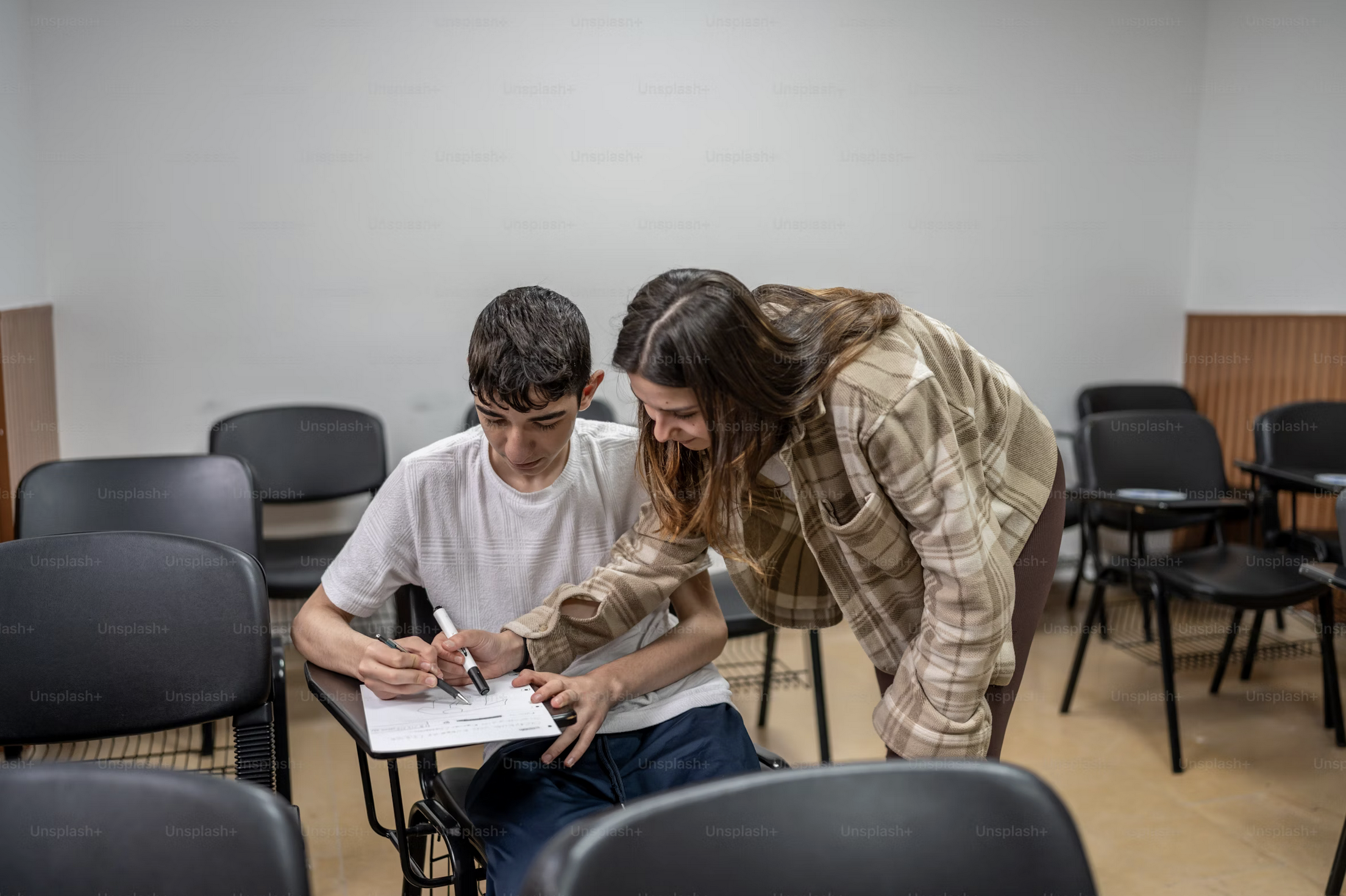
Image Credit: Ahmet Kurt from Unsplash
The Power of Sharing
We can't always fix all structural injustices, but we can determine how we respond to them. One of the easiest and most powerful forms of equity that we have is sharing information. When we let go of what we have and share it with someone else, we are breaking down a system based on isolation and silence. For when it really comes down to it, college guidance politics aren't about systems or schools; they are about people.
If you encounter a student who is struggling with the application process, don't just say "good luck!" If you can help, that is the next best thing. Whether that is passing on a link, reading through their essays, or being the support that they haven't had before. The reality is that sharing knowledge is sharing access.
What if we all acted this way? Advising for college would go from a function of class to a function of opportunity!