







Imagine two high schools in the same city, just a few miles apart. One has state-of-the-art facilities, small class sizes, and a large number of teachers. The other high school struggles with overcrowded classrooms, outdated textbooks, and a leaky roof.
You may be asking: Why the major difference? The answer lies in money, specifically, how school districts are funded. In the U.S., local property taxes are a major source of public school funding.
If your neighborhood has expensive homes, the tax base is strong, and the schools benefit. If property values are low or households have lower incomes, the schools receive less funding.
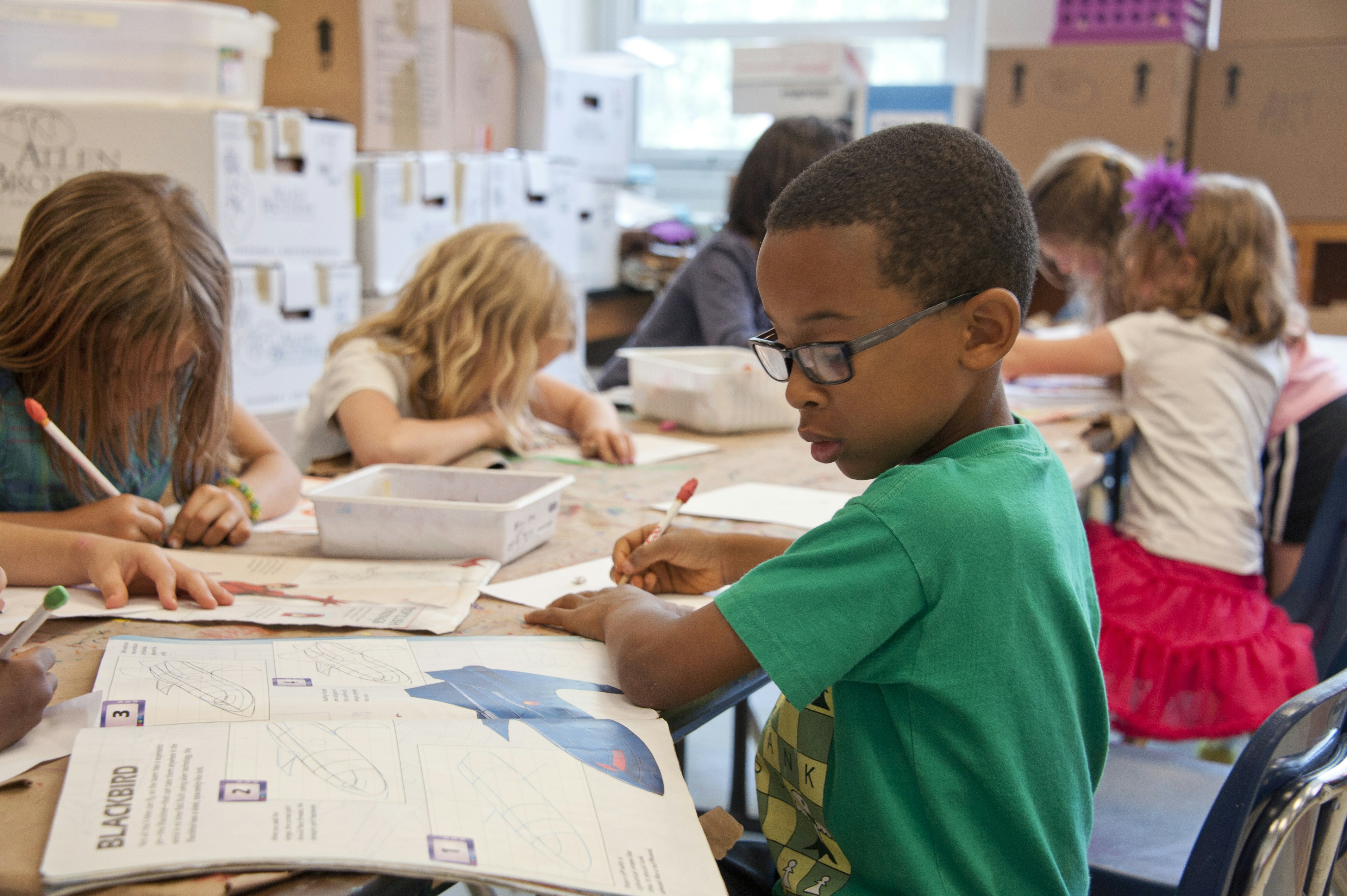
Image Credit: CDC from Unsplash
Let us slide into your dms 🥰
Get notified of top trending articles like this one every week! (we won't spam you)Local Property Taxes
In the U.S., public schools are funded by a mix of local, state, and federal money. The exact percentages vary by state, but on average, almost half of the funding for public education comes from local sources, which are local property taxes.
That means your community, through the taxes paid on local homes, businesses, and land, provides a huge portion of the money for your schools. The rest usually comes from the state government (often around 45% or so) and a smaller piece (typically under 10%) from the federal government.
Now you may be wondering, What exactly are property taxes? If your family owns a home, they pay a property tax bill each year (or it’s built into the mortgage payments). This tax is based on the value of the property.
For example, a house in a wealthy neighborhood with high market value gets taxed more, and a house of lower value is taxed less. Those tax dollars go into local governments to pay for things like police, fire departments, libraries, and, importantly, public schools.
In many places, each school district can set a property tax rate, and the money collected is used for that district’s schools. This system has been around for a long time. Historically, property taxes were one of the first ways communities funded schools, dating back to the 19th and early 20th centuries. The idea was that property owners would invest in local services (like schools) to benefit their community.
You may be thinking, What’s so wrong with this? At first glance, it seems like a relatively stable source of revenue for the school and a good example of local accountability. These upsides sound nice in principle, and many wealthy communities are happy with how their locally funded schools operate.
However, all these positives come with a huge catch: not all communities have the same ability to raise money. And that’s where the property tax system shows its dark side.

Image Credit: Egor Myznik from Unsplash
Take the Quiz: What Type of Notes Should I Take?
Discover the best note-taking method for your learning style!
Dark-Side
The major downside of local property taxes funding schools can be summed up in one word: inequality. Because property wealth varies so much from place to place, the money available for schools varies too, sometimes drastically.
This means students in low-income neighborhoods often get shortchanged from the very start. If a community is wealthy, its schools are likely well-funded. If a community is poor, its schools are likely underfunded.
Relying heavily on property taxes creates funding gaps from the beginning. It’s built into the system. Wealthy areas end up with more money for teachers, facilities, and programs, while low-income areas struggle to keep up. Even though states try to even things out by giving extra aid to poorer districts, it usually isn’t enough to close the gaps.
A study from Education Week found that predominantly white school districts receive $23 billion more in funding than districts having mostly students of color, even though the total number of students is about the same.
This is partly because many district lines are drawn in ways that isolate small, wealthy (often majority-white) communities from larger, less wealthy(often majority-Black or Latino) ones. Twenty-three billion dollars is a massive difference, and it translates to fewer resources for less wealthy districts.
Another study found that nationwide, we are underfunding K-12 public schools by nearly $150 billion annually. This shows that millions of students (over 30 million, by one estimate) are being robbed of resources they need to succeed because of funding gaps.
Another disadvantage is the class size difference. One of the first things affected by a tight budget is the number of teachers a school can hire. In underfunded schools, it’s normal to see larger class sizes, usually 30 or more students in a classroom. When there are over 30 kids in your class, you get less one-on-one help from the teacher than if there were 18 kids.
In wealthier schools, because they can afford more teachers, class sizes tend to be smaller, especially for core subjects. Smaller classes, especially in early grades, help students learn better. But underfunded schools have to deal with overcrowded classes because they simply can’t pay enough teachers to reduce the number of students per class.

Money influences what classes a school can offer. Advanced Placement (AP) courses, art, music, foreign languages, and extracurricular programs all cost money (for specialized teachers, equipment, etc.). Well-funded schools might offer a bunch of AP courses, multiple foreign languages, and extracurricular activities. Underfunded schools might only have the basics.
For instance, a low-funded high school might offer just Spanish as a foreign language (or none at all) and have cut art or music due to budget constraints. They might not be able to afford advanced classes or electives, which means students there have fewer opportunities to explore interests or earn college credit in high school.

In a wealthy district, each student might get a take-home computer and new textbooks (or online subscriptions) updated every few years. In a poorer district, students may be using textbooks that are 15-20 years old (with frayed covers and outdated info) while sharing (not individual) a few old computers they can't take home, and lacking access to current educational technology.
There have been cases where students can’t do homework because there aren’t enough textbooks to send home, or the school can’t afford proper Wi-Fi infrastructure for digital learning. These disparities have become even more obvious with things like remote learning in 2020. Some schools could distribute devices and set up online classes easily, while others struggled to connect students at all.

The physical condition of a school building impacts safety and learning. Well-funded schools usually have well-maintained buildings: no peeling paint, clean hallways, functioning heating/cooling, etc. Underfunded schools might have leaking ceilings, broken lockers, or inadequate heating. There are cases where kids have to wear coats in class in winter because there is no heating.

Alternatives
If the current system is problematic, what are the alternatives? How can we fund schools in a way that doesn’t depend so heavily on the wealth of a neighborhood? People have come up with lots of ideas, and some have been tested. Here are a few major approaches to changing school funding
The first option is to increase state funding. This is the most common strategy already in use in some places. The state can collect taxes (like income tax, sales tax, or even a state-level property tax) and then distribute money to school districts in a way that helps the poorer ones more. Essentially, the state gives additional aid to districts with less property wealth.
Many states have funding formulas that attempt this. They calculate an “expected local contribution” based on property values and then give more state money to districts that can’t raise much locally. For example, a state might guarantee that every district can spend $10,000 per student; if the local taxes only generate $7,000, the state kicks in $3,000 to hit the target.
Utah is one state where the formula results in low-income districts getting about 21% more funding per student than high-income districts (through extra state aid). Ohio, South Dakota, and Georgia also give more money per student to high-poverty districts. These kinds of formulas, when well-designed, can significantly narrow the funding gap.

Image Credit: Danny Burke from Unsplash
The second option is to pool all of the taxes together. All property tax revenue would go into one big "pot" and then be distributed evenly (or based on needs) to all schools in the state. This way, wealthy areas would help support schools in poorer areas.
Michigan essentially did this in 1994 with its Proposal A, creating a statewide property tax. Hawaii goes even further: it has no local school districts at all, just one state-run school system, so funding is completely centralized.
Vermont also changed its system to pool local taxes statewide so that each district can spend roughly equally. This idea greatly reduces inequality because rich districts can no longer hoard their own tax base exclusively.

Image Credit: Towfiqu Barbhuiya from Unsplash
Finally, we can completely redo the school system. Some people say we should guarantee a national minimum funding per child, like a federal right to equal funding. That would require either a new interpretation of the Constitution or a major federal law. Others point to countries where funding is more centralized and equal.
For example, in Canada and many European countries, schools are funded at the provincial or national level mostly, so there’s less difference between rich and poor areas.

Image Credit: Anthony Garand from Unsplash
Conclusion
The way we fund schools in America, heavily through local property taxes, has big consequences for fairness. It has some benefits (local control and stable funding), but it mostly reinforces inequality, which hurts low-income and minority students the most. The result is that not everyone gets the same quality of education, even though we like to think of education as the great equalizer.
Changing this system isn’t easy, but it’s possible. It might involve bold moves like statewide funding models, steady increases in state aid, or federal support targeting the poorest communities. Whatever the path, the goal is clear: to ensure that every student, no matter where they live, has access to an excellent education.