



Remember your last biology class, scribbling diagrams into the margins of your notes of cells and DNA? For today's students though, those doodles may be a design for a new medical tool that can diagnose cancer, or a groundbreaking drug that could treat dementia. From local science fairs to global competitions like iGEM or ISEF, some teenagers are thinking of biology class not just as homework, but as a starting point for the future of biotechnology.
Let us slide into your dms 🥰
Get notified of top trending articles like this one every week! (we won't spam you)Where It All Began
Some of history's greatest scientists actually started their work as teenagers. Blaise Pascal, for example, built a mechanical calculator at just 18 years old to help his dad calculate their taxes. Mary Anning found fossils on the cliffs of Lyme Regis before she was even a teenager, helping to create the foundation of paleontology.
Albert Einstein, much before he became the famous genius he is today, was sketching out experiments about light beams as a teenager in school. These stories show us that many times, curiosity and creativity start early, and sometimes "student experiments" are just the first step of discoveries that can change the world.
Biology classrooms may not seem like the most inspiring place to be, but for many students, they are where they get the inspiration for their ideas. Unlike professional researchers who have to worry about deadlines and money problems, teenagers have the freedom to be creative. They ask questions adults might not: What if a paper strip could detect cancer?
What if bacteria could be programmed to deliver medicine? The ability to imagine, along with the tools of modern biology, gives young scientists a really surprising advantage. History shows that lots of scientists started out young, sometimes only with a notebook, a classroom, and endless curiosity.
Image. Credit: Kelly Sikkema from Unsplash

Take the Quiz: Which Halloween Costume Should You Match with Your Bestie?
Take our quiz to discover which Halloween costume theme you and your bestie should rock this year!
Teen Innovations
Take Jack Andraka, for instance. At just 15 years old, he created a paper-based sensor that could detect pancreatic cancer proteins faster and cheaper than anything existing now. Or Brittany Wenger, who taught herself coding and built a neural network that helped doctors tell the difference between malignant and benign breast tissue samples. These aren't just some fun experiments, they're real life examples of what our generation can accomplish, if only we are given the chance.
More recently, iGEM teams have pushed student innovation even further. A UC San Diego team made a liquid biopsy test that detects cancer. In Mexico, Team BUAPMX made biosensors that can spot pancreatic cancer early. In Paris, a student biotechnology team made something called "ExoSwitch," which is a chip that can detect cancer biomarkers with synthetic biology tools. Each one of these passion projects were totally created by driven students who work just as hard as professionals in biotech labs, just with less resources and more imagination.
The amazing thing about these projects isn't just that they are made by such young people, it's that they are making products that are just as good as some of the true professional ones out there. Students experimenting with genetic circuits are actually really close to CRISPR gene editing. Teenagers building biosensors can contribute to the field of personalized diagnostics.
Even high school projects using AI to analyze medical data is as valuable as pharmaceutical companies designing new drugs with machine learning. The differences between classroom experiment and biotech is thinner than ever.
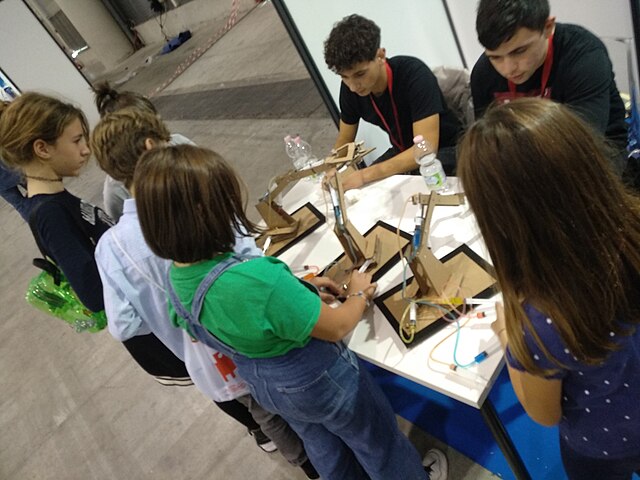
Image Credit: Giacomo Alessandroni from Wiki Commons
Beyond The Textbook
Of course, students face obstacles. Lab equipment is expensive, and mentors are not always easy to find. Many projects exist only on paper or in prototype form because schools can’t provide the resources to test them fully.
But opportunities are growing. Community labs have become more available to young scientists, nonprofits sponsor competitions, and many companies now give students opportunities to be collaborators. Programs like iGEM or the Google Science Fair have already proven that with a chance and a platform, student ideas can be as good as those of professional researchers.
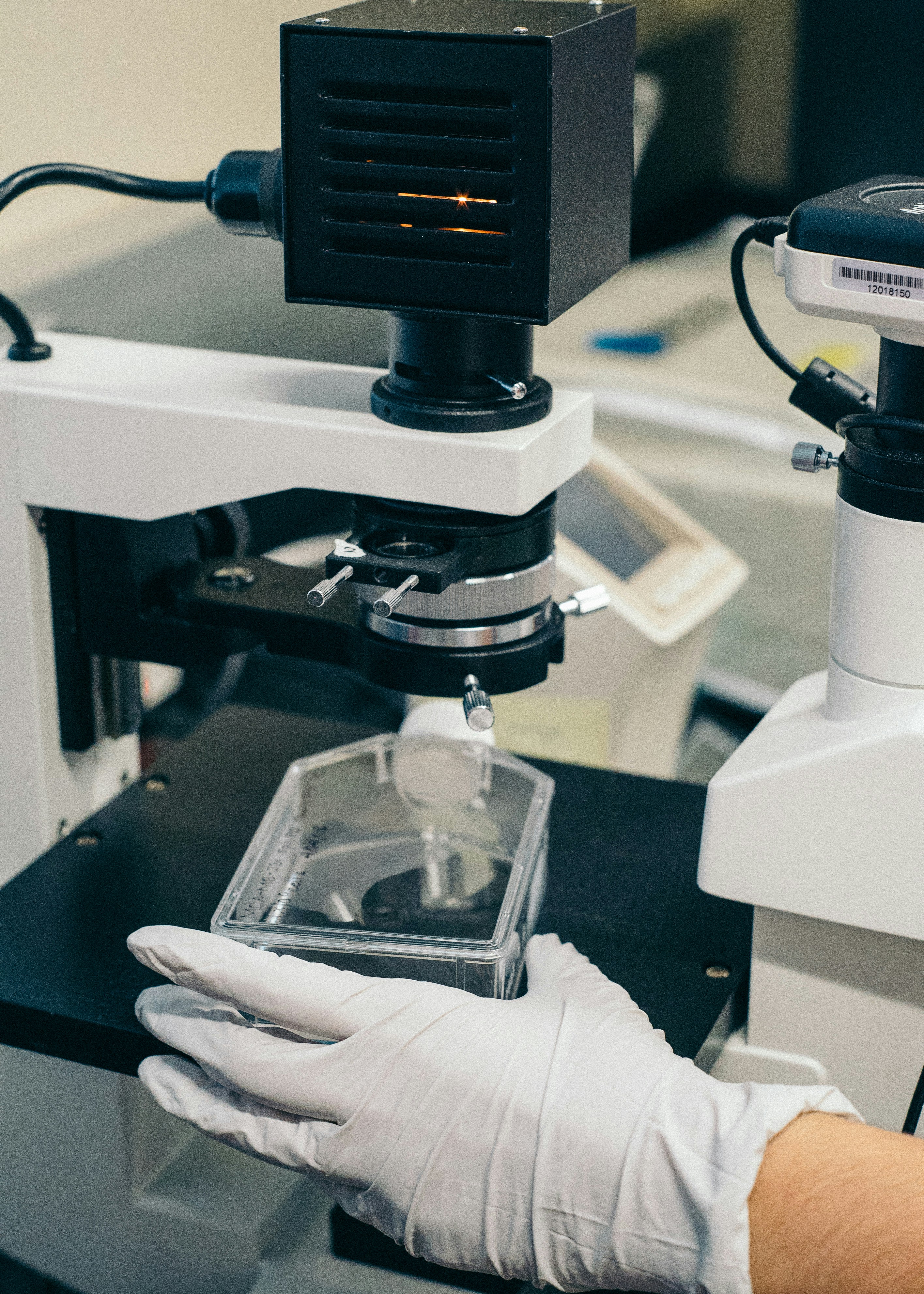
Image Credit: Jaron Nix from Unsplash
Prospects
So, what about you? Maybe right now, your biology notes are filled with diagrams of cell membranes or DNA replication. But what if you could turn those doodles into something special, something crazy and innovative?
Who knows, maybe your lab report will inspire an app that tracks mental health, or your idle curiosity about bacteria could one day lead to a startup creating eco-friendly medicines. Every great scientist began with the same thing you already have: questions, imagination, and a notebook. The only difference is what you decide to do with them. Remember, it only takes one idea to change the world.
For students sitting in biology class right now, these stories are a reminder that the notes you write down today could evolve into the inventions of tomorrow. For parents and teachers, they’re a call to encourage the crazy ideas scribbled in the margins of homework. And for the rest of us, they’re proof that the new medical innovation may not come from high-tech companies, but from curious young people finding out what’s possible.