





Dying is usually associated with a greeting from ethereal light, or perhaps a fiery foray into the underworld. But at the Alabama Corrections Department, the angel of death takes the form of three state officials--one in red scrubs, one in green scrubs, and one in blue scrubs. Inmates awaiting their final breaths are ushered into a white holding cell while strapped down to a narrow table.
Their last view is of needles pointed towards the fluorescent lights bathing the room and whatever panic fills the peripheral vision. Ordinarily, those sentenced to death don’t live to speak about this experience. But in recent years, more than one execution has been botched, leaving the criminal in excruciating pain--and still very much alive. "They were just sticking me over and over, going in the same hole like a freaking sewing machine," said Kenneth Smith, whose lethal injections failed in November of 2022. Smith was prepared to face his end after 33 years on death row, but instead he faced a more painful fate: being shifted into multiple uncomfortable positions as needles punctured him all over. This is utterly inhumane, and no one should be subjected to such a fate.
Let us slide into your dms 🥰
Get notified of top trending articles like this one every week! (we won't spam you)Dangers and Inhumanity of Lethal Injection
But lethal injections need not be botched to be cruel and unusual, even torturous. Among the kinds of capital punishment, lethal injections have become by far the most common. They take many hours to perform and require three drugs: one to anesthetize, one to paralyze, and one to stop the heart.
Oftentimes lethal injections are thought of and described as quick and painless deaths--one shot serving justice, as it plunges the criminal into terminal and eternal darkness. This is not the case. New findings have shown that midazolam, the first drug given during these executions, does not serve its purpose as it’s supposed to. Dr. Joel Zivot of Emory University Hospital in Atlanta conducted autopsies on several bodies killed by lethal injections and found that most of their lungs were almost double the average weight of a human lung. 84% of autopsies studied in Georgia revealed that inmates suffered from severe cases of fluid in the lungs, known as pulmonary edema. Pulmonary edema is incredibly painful and causes a sensation of drowning which then triggers panic and terror. Suddenly these injections did not seem so quick and painless: "I began to see a picture that was more consistent with a slower death… A death of organ failure, of a dramatic nature that I recognized would be associated with suffering," Dr. Zivot says in an NPR investigation. While an inmate's fate is left in the hands of the state, the power to inflict great ‘suffering’ and ‘drama’ should not be.
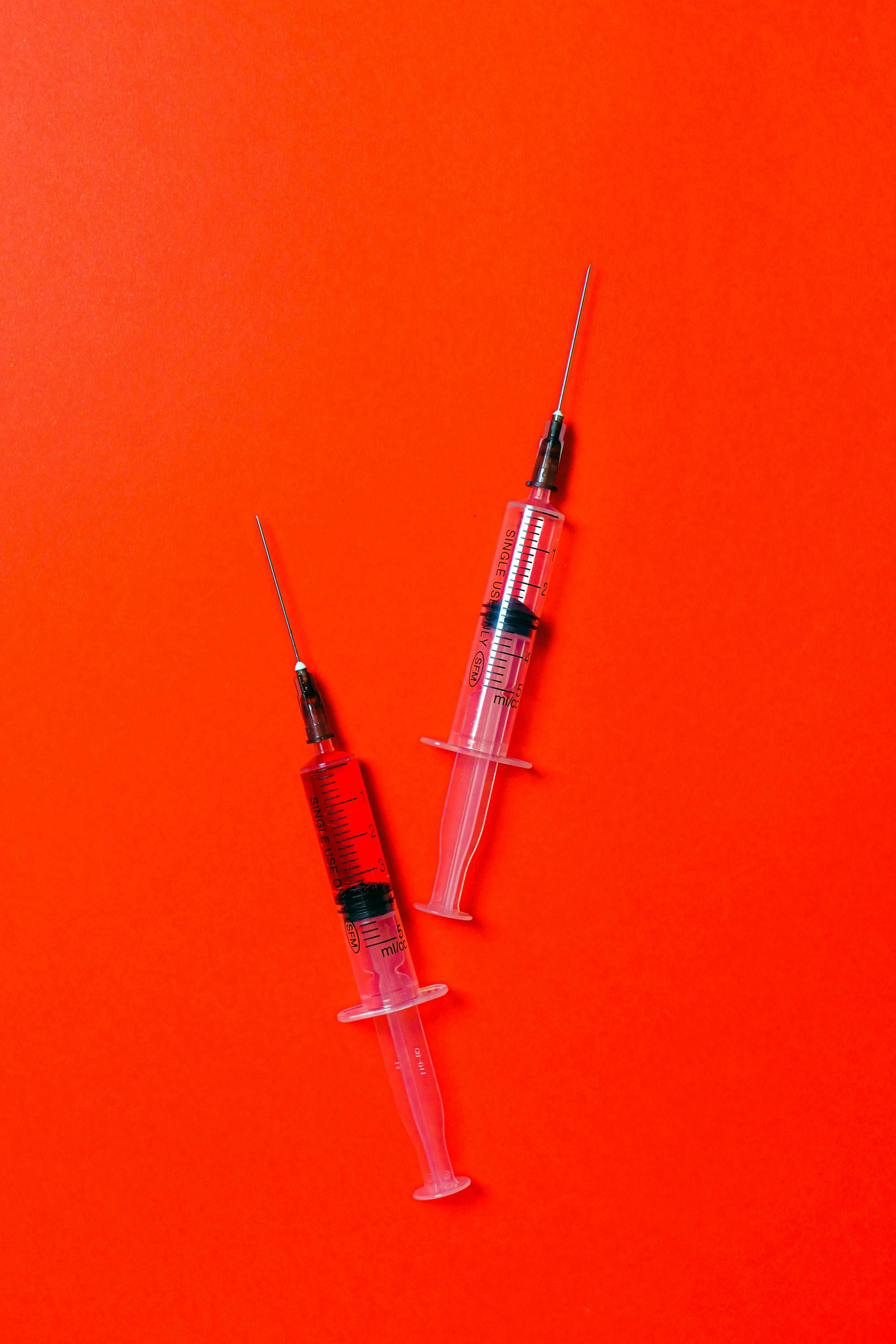
Image Credit: Shvets from Pexels
Not only this, but froth was also found in the airways of the inmates, which means they struggled for breath and choked violently as they met their ends. NPR reports that, “The froth was a clue: It meant that the inmates were still alive and trying to breathe as their lungs filled with fluid, because froth could form only if air was still passing through the lungs. It also meant that the pulmonary edema was being caused by the first drug given during a lethal injection, since the second drug, a paralytic, stops the inmate's breathing altogether.” Midazolam, a relatively new drug for these purposes, is the culprit for this extreme suffering.
This sensation is almost completely equivalent to waterboarding, an interrogation tactic illegal in the US and widely regarded as cruel and inhumane. If waterboarding is illegal, why isn’t midazolam?


Take the Quiz: Religion, Schools, and Equality
Religion in Schools: Teaching Respect, Not Bias.
The High Risk Culprit: Midazolam
The 8th amendment to the Constitution prohibits “cruel and unusual punishment,” including excessive suffering in capital punishment. Dr. Zivot brought his findings to federal courts in Arkansas, Ohio, Georgia, and Tennessee where “...a federal judge ruled that pulmonary edema, as shown in autopsies, reached the Supreme Court's standard for cruel and unusual punishment," according to the NPR article.
But in almost all cases when this subject matter has made its way to the Supreme Court, arguments that this form of capital punishment is unconstitutional have been rejected. In Bucklew v. Precythe, a 2018 Supreme Court case, Russell Bucklew had a rare congenital condition that caused pouches of blood on his organs including his brain. There was a high risk that Midazolam would cause the blood clots to burst, forcing Bucklew to choke on his own blood as he died in a sea of red. He argued that this constituted cruel and unusual punishment, but ultimately the court decided that this was not the case. Justice Neil Gorsuch authored the majority opinion that: “…the constitution prohibits only executions that intensify the sentence of death with “superadd[ed] … terror, pain, or disgrace” and “The Eighth Amendment,” [he] wrote, “does not guarantee a prisoner a painless death.” This reasoning, suspect at best, is morally unacceptable. It is not the state’s job or right to inflict suffering on human beings, regardless of why they ended up on death row. These criminals living in purgatory, have already lost their lives, even before the needles pierce their skin. While the death is not in fact guaranteed to be painless, suffering goes against our ethical responsibility to humanity and society.
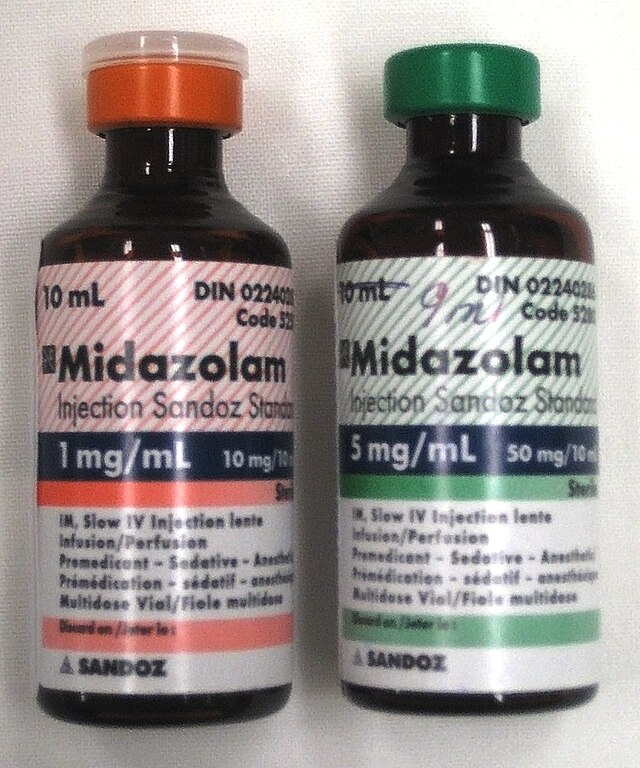
Image Credit: Heilman from Wikimedia
Even for those without special conditions, this mode of execution violates our Constitution. For these prisoners, midazolam is the mask and cloak worn by death. Clayton Lockett was executed in 2014, using the common three-drug cocktail, starting with midazolam.
He awoke after the procedure was completed, and struggled to his end in a slow, agonizing 40 minutes following that. In Glossip v. Gross, other inmates sued state officials claiming that the use of midazolam was wrong. In a narrow decision authored by Justice Samuel Alito argued that, “...that Oklahoma prisoners ‘failed to establish a likelihood of success on the merits of their claim that the use of midazolam violates the Eighth Amendment.’” Justice Ruth Bader Ginsberg among some of her colleagues wrote sweeping dissents to the opinion.
Banning the Death Penalty
Despite the unconstitutionality and immorality of the three drug cocktail, most Americans find the death penalty ethically acceptable, but by a margin of only 5%--which is far lower than it has been in past years. Perhaps this is due to a lack of knowledge surrounding the intense suffering before execution. It’s easy to view the debate on the death penalty from a legalistic standpoint, but the human aspect at its core is harder to confront.
In 2022, there were 18 executions performed in the United States, all of which were done by lethal injection. That’s a significant decrease compared to the 85 executed in 2000.
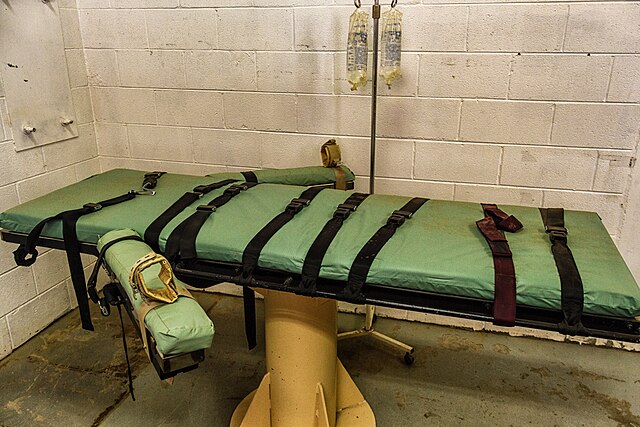
Image Credit: Piorkowski from Wikimedia
The decades-long wait on death row is torture enough. It is unthinkable that these inmates should have to endure long, brutal ends. From the ill-equipped staff that have been known to botch the procedures, to the faults with the drugs themselves, serious changes must be made to lethal injections and capital punishment as a whole.
If the state is given such a fateful power--the ability to manipulate the fine line between breath and a stillness of the heart--then by no means should they be turning a blind eye to the convicts pleading for humane deaths. Kenneth Smith's life didn’t end as scheduled in a hospital-like holding cell; rather he suffered a great deal. And many others executed died not just with heavy burdens but heavy lungs too. It’s hard to grapple with the dark realities of our country's flaws… but the answer is simple: We must take a breath for those who cannot and speak against their suffering.








.jpg)