





There’s a moment—rare, chaotic, and strangely thrilling—when a pop star becomes more than a pop star. When they become a question mark, the topic of the media debate, not just a voice on the radio or a face on a billboard but rather a battleground for reporters. Sabrina Carpenter, our espresso queen, has now become exactly that.
In the chaotic world of today, one user on X wrote:
“My entire timeline is either people talking about Israel and Iran or Sabrina Carpenter with the exact same level of intensity.”
So, what is the fuss about? Why is the internet so mad about Sabrina? What has she done this time to [censored] everyone off? Let’s dive in.

Image Credit: Phillip Mansfield from Wikimedia Commons
If you don't know, Sabrina Carpenter — once the Disney girl with the high ponytail and an earnest voice — has officially stepped into her most provocative, rebellious, and perhaps most brilliant era. Now 26, she signed her first record deal at age 12, built a steady career over a decade, and is only just now dominating the conversation like never before. “Espresso,” her dementedly catchy single that took over the summer of 2024, is the culmination of ten years and five albums’ worth of hustle, sweat, and sharp lyrical pen. And with it came the beginning of her lore – her it-girl aesthetic.
She writes — or co-writes — all of her music. If you have heard her songs, you would know she gets cheeky and flirty pretty often. In the recently dropped single Manchild, she gets very savage with her pen:
"Why so sexy if so dumb? And how survive the Earth so long?
If I'm not there, it won't get done; I choose to blame your mom"
Some reporters even asked her who this song is about, and Carpenter replied with classic brilliance: “It’s about your dad.”
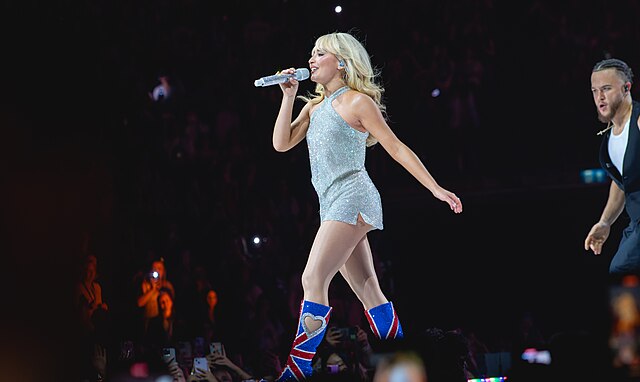
Image Credit: Raph_PH from Wikimedia Commons
Then came the announcement of her next album, Man’s Best Friend, and the image that set the internet ablaze. On the cover, shot by Bryce Anderson, Carpenter is crouched on the floor, dog-like, while an anonymous suited man tugs on her platinum hair. If you haven’t seen it, you’ve definitely heard about it — or been accidentally sucked into the discourse it created.
The backlash was immediate and intense. Some feminists called it degrading. A domestic abuse advocacy group in Glasgow labelled it “a throwback to tired tropes that reduce women to pets, props, and possessions and promote an element of violence and control.” Conservative influencers saw it as an excuse to be misogynistic under the guise of morality.
Meanwhile, her die-hard fans hailed it as empowered, artful, and subversive. She wasn’t being objectified — she was playing with objectification like a toy.
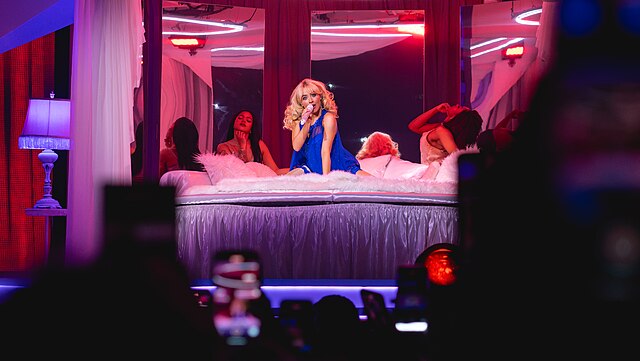
Image Credit: Raph_PH from Wikimedia Commons
TikTok, of course, took the bait. Suddenly, the cover was folded into endless one-woman explainers, many of which proclaimed the image as the opposite of empowering. Others dove deep into the lack of media literacy and context online.
And then came the semi-convincing theory: that Carpenter will eventually reveal she’s also the man in the photo, altering the narrative. A metaphor and a meme, all in one.
There’s no doubt the discomfort is real and predictable. Female sexuality in pop is nothing new. What still unnerves people is a woman embracing her sexuality, her way, and doing it while looking like the punchline.
The image of Sabrina on all fours rubs against every modern idea of female empowerment. In our culture, female submissiveness — even when chosen — still reads as a weakness.
This is hardly Carpenter’s first brush with controversy. Last year, a New York City priest was disciplined after she filmed a music video at his church. Critics decried it as disrespectful. Her other performances, especially on her tour, have routinely sparked backlash for being "way out of line“.
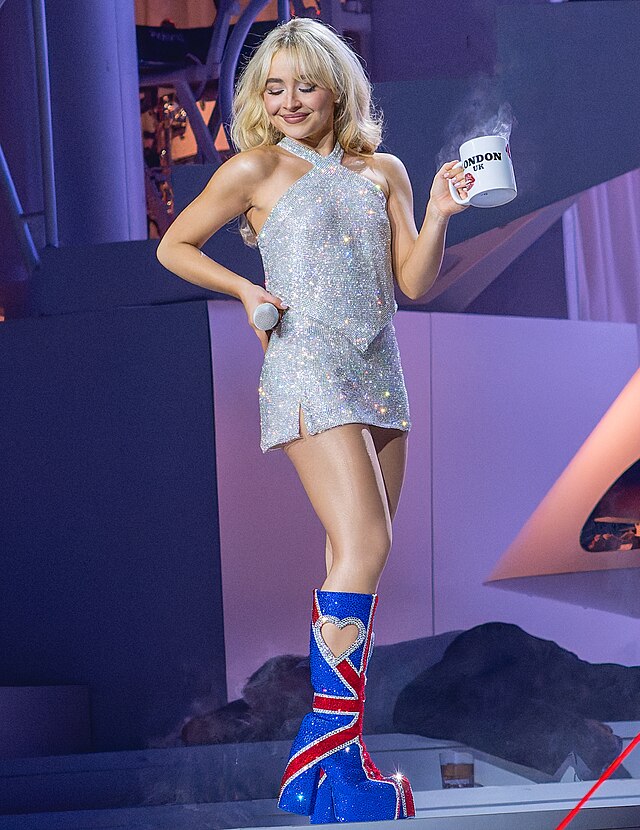
Image Credit: Raph_PH from Wikimedia Commons
And here’s the thing: this reaction isn’t new. Pop has always been this messy. In the 1950s, Elvis Presley’s hips on TV were enough to send America into a moral meltdown.
Nicki Minaj’s Anaconda, or Miley Cyrus’s Bangerz era, sent men into rage. These weren’t just scandals. They were wars over identity, over power, over what art is allowed to say — and who’s allowed to say it.
Carpenter is in that lineage now. Whether you see the Man’s Best Friend cover as art, provocation, or misstep, I don't really care about it. It’s made people think, argue, and reflect.
Or at the very least, it’s made them feel something. And maybe that’s the whole point.
Because pop, at its best, is messy. It offends, delights, confuses, and provokes. It breaks rules, tests limits, and refuses to be easily categorized.
Sabrina Carpenter’s latest move isn’t clean-cut feminism. It’s not a perfectly packaged rebellion. It’s something harder to digest — and therefore more important.


_(cropped).jpg)


.png)


.jpg)