




“I am not free while any woman is unfree, even when her shackles are very different from my own.” Audre Lorde.
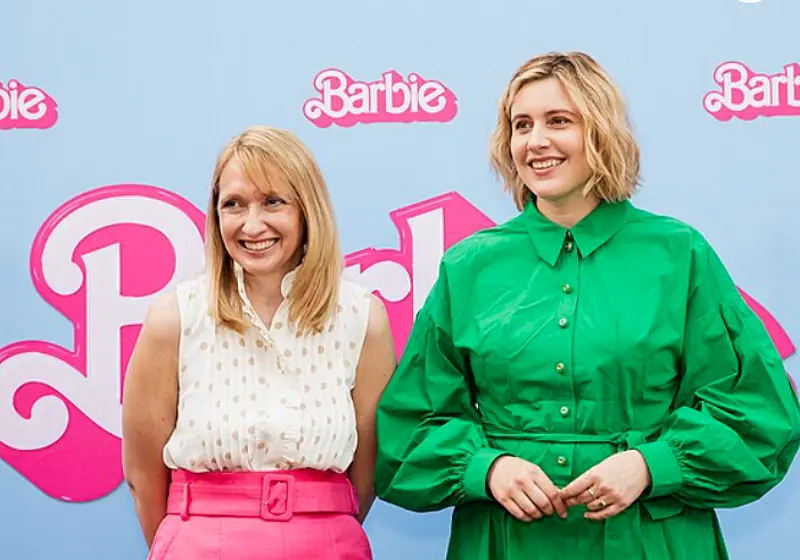
Neo-feminism resides at the intersection of the ’90s riot grrrl and Barbie. It’s rebellious, hyper-feminine, and unapologetically loud. But as it gains power, a crucial question arises: is this still about equality, or something else?
As a young woman who is very much a feminist, a concerning trend has been emerging in the wake of fourth-wave digital feminism.
Neo-feminism.
Neo-feminism, as defined in ‘Feminist Interpretations of Simone de Beauvoir’, is ‘an emerging view of women as becoming empowered through the celebration of attributes perceived to be conventionally feminine, that is, it glorifies a womanly essence over claims to equality with men’.
Whilst this sounds almost picturesque — women finally reclaiming femininity whilst not sacrificing defiance — the true face of this new wave has recently reared its ugly head.
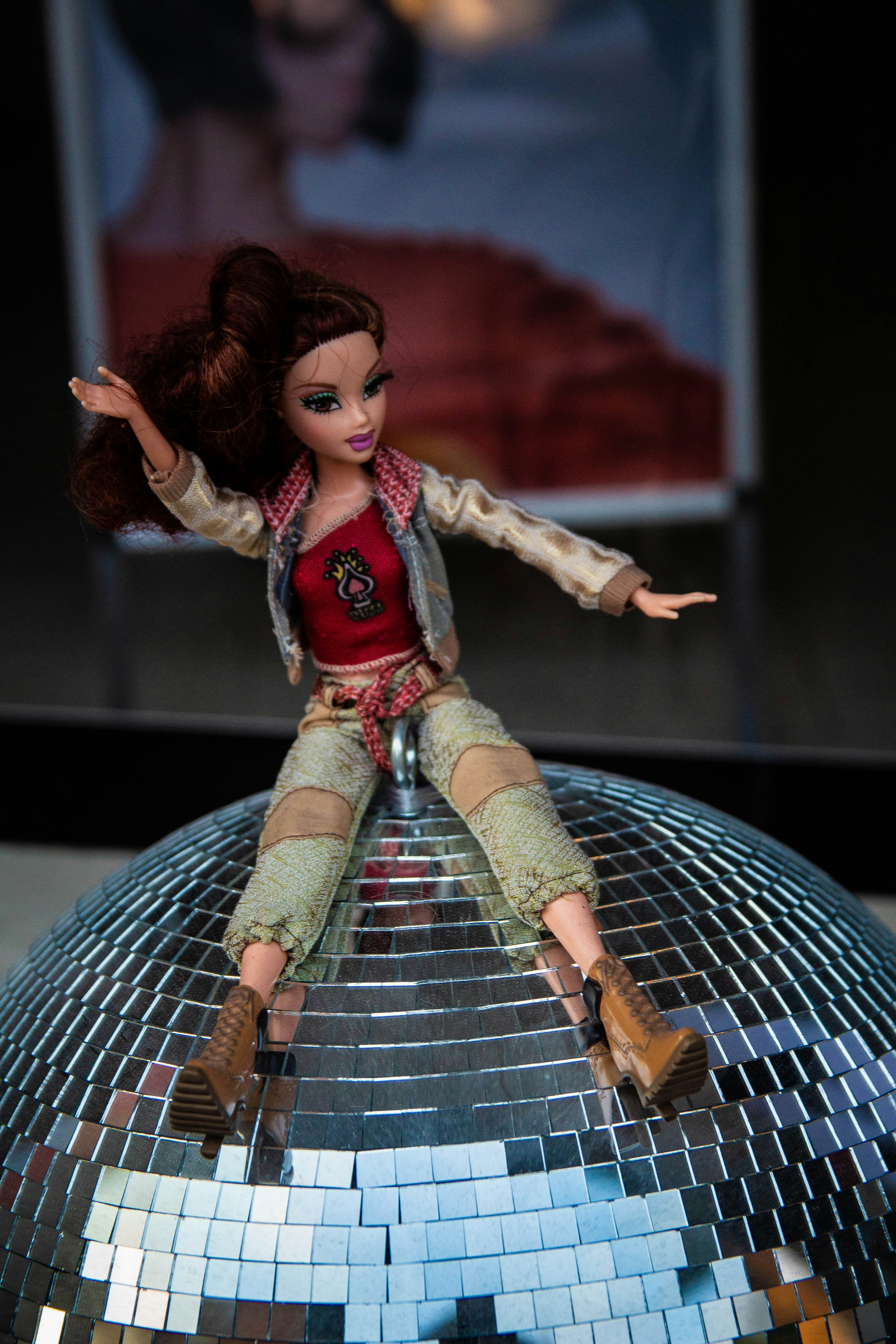
Image Credit: Etienne Assenheimer from Unsplash
What this definition truly is, in its utmost simplicity, is glorified misandry.
Now, I know — misandry is a word often weaponised by uneducated sexist incels online.
Yet neo-feminism has twisted the original face of feminism, whose sole intention was equality, and has turned it into female supremacy. Social media has metamorphosed feminism into a celebration of the superiority of women to men, as if degrading men minimises the discrimination women have faced, which, spoiler alert, it does not.
This article will discuss two central themes: the empowering side of neo-feminism and the backlash and complexities.
Let us slide into your dms 🥰
Get notified of top trending articles like this one every week! (we won't spam you)Reclamation, Representation, and Raw Power
Neo-feminism has introduced some incredible new aspects of what it means to be a woman, celebrating this fact. Social media has opened up a whole new world for expressing viewpoints, stories, and collaborating on mass protests and defiance.
Celebrating femininity is a core principle of neo-feminism. This ideology has birthed trends like body positivity, self-acceptance, and mass awareness of abuse and protest to young people and older people alike, opening whole new worlds of critical discussion.
Through social media, beauty is beginning to be redefined, challenging impossible standards, which seems ironic, I know, considering social media is often the root of body dysmorphia for many.
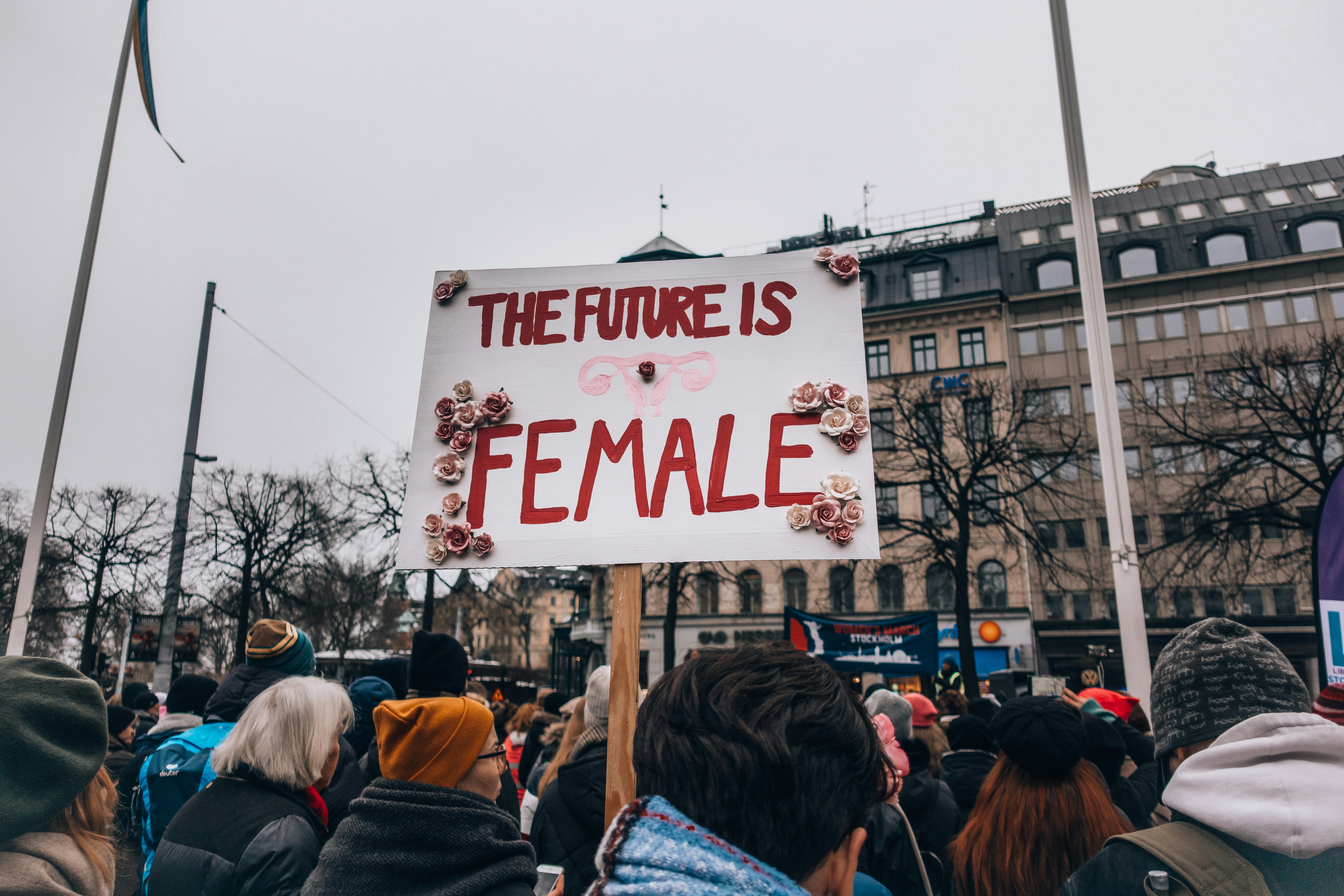
Image Credit: Lindsey Lamont from Unsplash
However, with the rise of ‘body neutrality’, where influencers shift the sentiment of body positivity and negativity to the body simply being what enables us to live, women are beginning to feel as if they do not have to care about how they look or their bodies.
This is in direct opposition to the patriarchal view that a woman’s worth solely lies in her extrinsic beauty; how much she appeals to the eyes of the male beholder, and any other trait she possesses, diminishes this appearance.
Whilst this view is idyllic, it is simply just that; an ideal. The central criticisms of body neutrality are that many believe it is challenging to adopt, and it does not account for the experiences of people with differing body types (such as discrimination and hate). It is also intrinsically ableist due to not being inclusive of people with disabilities. Here is an in-depth video discussing this topic:
However, body neutrality does not exist within a vacuum, and instead belongs to a whole other principle of neo-feminism: empowerment and protest.
This new wave of feminism has given rise to an increased amount of importance placed on education, leadership, and reproductive rights through the destigmatisation of discussing misogyny and the female body.
The increasing globalisation and connectivity of the world have meant that more people have access to more information, learning about the different conditions others have been placed in, and giving platforms and voices to women who have faced all manner of discrimination.
This has resulted in global protests, such as #MeToo, which aimed at addressing sexual assault, condemning abusers and giving rise to justice, consent education globally introduced to high schools, increased awareness about the inequality between men’s reproductive rights and women’s (for example the revelation that the trial for men’s birth control was stopped after a few men reported headaches, whilst one of the side effects for women is quite literally death), and protests about the overturning of Roe v Wade, where American women’s constitutional right to abortion was dismissed.
Neo-feminism has also created a newfound intersectionality not previously observed in preceding waves of feminism. Silence has been broken regarding marginalised women, shifting the narrative away from ‘white’, ‘liberal’ or ‘girlboss’ feminism, primarily focused on the experiences and concerns of middle-class, white, cisgender, heterosexual women.
Previously, feminist thought has been saturated by the same group of women sharing their experiences, which in no way should be diminished. Yet, more must be heard about marginalised groups within this already marginalised group.
Neo-feminism, in this regard, is positive. Through celebrating women and divine femininity, other forms of femininity have begun to be celebrated, too. For example, BIPOC (Black, Indigenous, and People of Colour) women have founded protests such as ‘Black Women Matter’ and increased awareness around the thought that feminism has not and even still is not for all.
LGBTQ+ women have also started sharing their experiences and concerns about feminism online, with what it means to be a woman being redefined in neo-feminism through the acceptance of not only being a typical average girl being what it means to be female but also embracing your womanhood and being proud of it.
Neo-feminism is a wave of feminism built on power, celebrating girlhood, being a woman, loving yourself, representation, rejecting the patriarchy, promoting women, and rejecting misogyny.
However, as with any good, powerful thing, it’s bound to meet an ugly demise at some point.

Take the Quiz: Which Studio Ghibli Character Are You?
Are you a brave warrior, a free-spirited dreamer, or a gentle guardian?
Equality or Extremes? The Growing Grey Area
Celebrating being a woman is a positive idea. It’s great. Truly. However, when that passion, when that love turns into hatred and misdirected intolerance, that’s when a problem occurs.
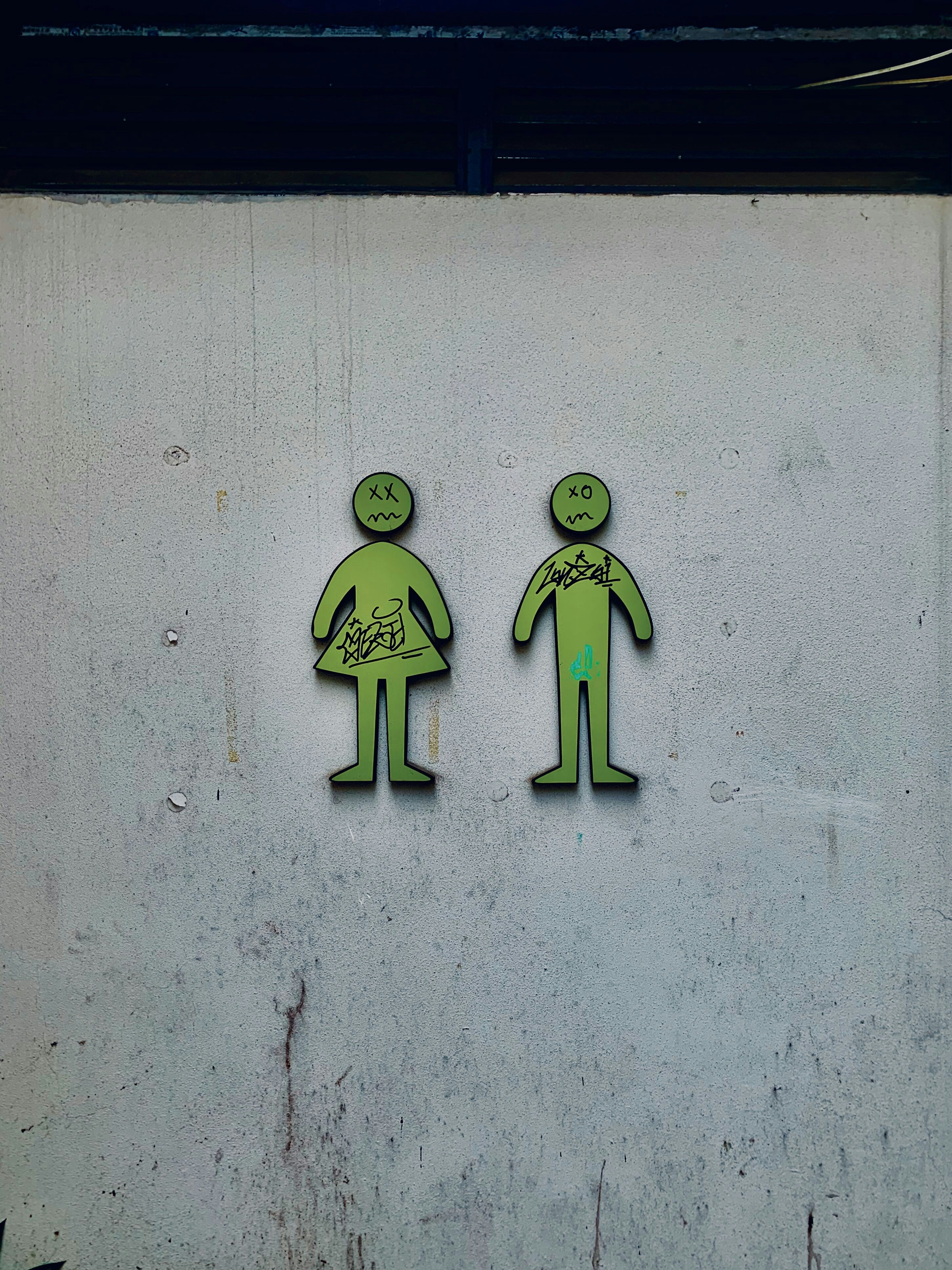
Image Credit: Loren Lee from Unsplash
Neo-feminism has shifted away from that initial picturesque ideal, to anti-men sentiment, justification of women, toxic ‘girls support girls’, and how this gives misogyny excuses.
Lately, there has been a rise in feminist rhetoric online from young, impassioned women who want to create immediate resounding change, that ‘all men are trash’. Examples may be the ‘man or bear’ question; if you were alone in the woods, would you prefer to be with a man or a bear? (which, I’m not going to lie, I would choose the bear), and posts on how all men are abusive.
This has been balanced with the statement ‘not all men, but always a man’, yet the media has become so saturated with the few women saying that all men are horrible that this has become a justification for the patriarchy and misogyny by sexist men online. It is genuinely disgusting how much I see all over the internet this propagation of the idea that feminism has become a sort of oppression for men - that a woman seeking rights inherently diminishes the rights of a man.
This particularly comes from red pill podcasters (and even some women, e.g., the infamous Pearl), who now believe that feminism is about hating men, when it actually aims to provide equal rights to women. If you would like to hear this in depth, below is a great video discussing misandry online:
This rhetoric around the abusive nature of all men generalises men as violent, oppressive, or emotionally inept, reinforcing sexist stereotypes about men themselves — that they cannot express emotion, must be strong, and must be ‘masculine’. This, to me, sounds like pure hypocrisy.
All this does is reinforce division and alienate potential allies, especially with men who actively support gender equality.
Some very extreme neo-feminists even came up with new words for women and females as they contain the words ‘man’, ‘men’, and ‘male’ in them. ‘Wimmin’, ‘wymyn’, or ‘womyn’ are just a few.
The blatant hypocrisy and irony of this is simply laughable — these are the same women tweeting all over X about the ‘hate crimes’ a man commits against her daily (which usually are not so), and yet the sexism they are perpetuating is still hateful?
Bad behaviour from women is also often excused by neo-feminists due to ‘feminism’. A woman can do no wrong because she is a woman. This raises the issue of double standards and moral inconsistencies — it is inexcusable to be sexist to a woman, but the instant a man does something wrong, he is horrible and must be cancelled.
This ties into the toxic development of ‘girls support girls’. In some circles, what started as a positive extension of sisterhood has become cliquey, performative, or even mean-spirited. Below is another really comprehensive and interesting video on this topic.
If a girl does wrong, this should not be excused simply because she is a girl. Everyone can do wrong, and everyone can do right — no matter your [censored] or gender, you should always be supported.
I love the idea of girls supporting girls in the context of a world where women are pitted against each other, and it is rare to find this. Yet when women start only helping women and putting down men, that’s where this becomes a problem.
Additionally, on the opposite end of the spectrum, the rise of women shaming women for being ‘pick me’s’, where a woman aims to garner male attention at the expense of other women, has become a massive issue online.
Extremist neo-feminist women will call any girl who breathes in the direction of a man a pick me, especially when they are seen to be supporting a man, as to many neo-feminists, this can be seen as an affront to the ideology that women are incredible and men aim to harm women all the time.
Shaming women and unconditionally supporting women’s wrongs are equally as bad as each other, and should not be endorsed, yet there has been little to no awareness on a large scale of the detriments of these sentiments.

The ‘pick-me’ insult, once used to call out internalised misogyny, is now hurled at any woman who dares to express a different kind of femininity — one that doesn’t fit the dominant neo-feminist aesthetic. This creates a new kind of shame culture, policing how women relate to men and to each other.
Now for the title of this article.
Is Misogyny Becoming Justified?
Well, certainly from the viewpoint of the patriarchy. At the end of the day, misandry, hatred of men, female supremacy, and shaming and excusing women give ammunition to incel keyboard warriors who desperately want to give reasons for why men are the best and the patriarchy is necessary, even if only a few women online are actually participating in this form of feminism.
Now that the world has shifted to becoming increasingly online and connected, the question of ‘what even is equality’ must be raised. Has feminism moved away from equity and veered into retaliation? Or are these reactions a necessary rebalancing of long-standing injustice?
The media has a reputation for oversimplifying women and feminism, skewing public opinion, cherry-picking examples of women saying ‘men suck’ and spreading rhetoric that women no longer deserve rights due to abuse of them.
If we are truly to achieve equality, the world must know that feminism ≠ female body superiority. It’s about justice, empathy, and nuance. Hatred and discrimination cannot be fought with more hatred and discrimination. Attempting to balance the scale of extreme sexism toward women with hatred toward men only makes the situation worse, and ultimately creates more division, stigma, and polarisation.
The survival of feminism relies on remaining sharp, self-critical, and radically inclusive — not just of women, but of justice itself.