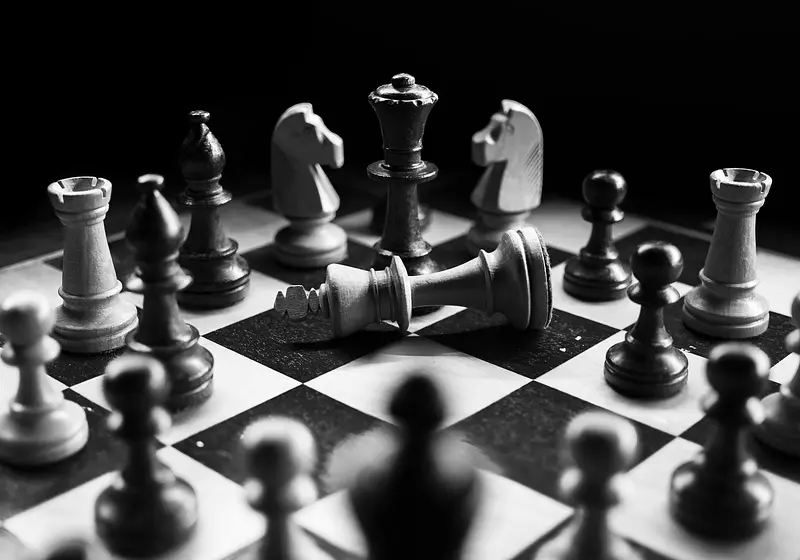




Whether you are a beginner or an advanced chess player, this guide will teach or review some crucial foundations of chess. Keep reading to find out more!
Let us slide into your dms 🥰
Get notified of top trending articles like this one every week! (we won't spam you)Chess Openings
The opening phase of a chess game involves setting up pieces to control the center of the board and prepare for an effective midgame. A strong opening can lead to a significant advantage, while poor development can leave you at a disadvantage. 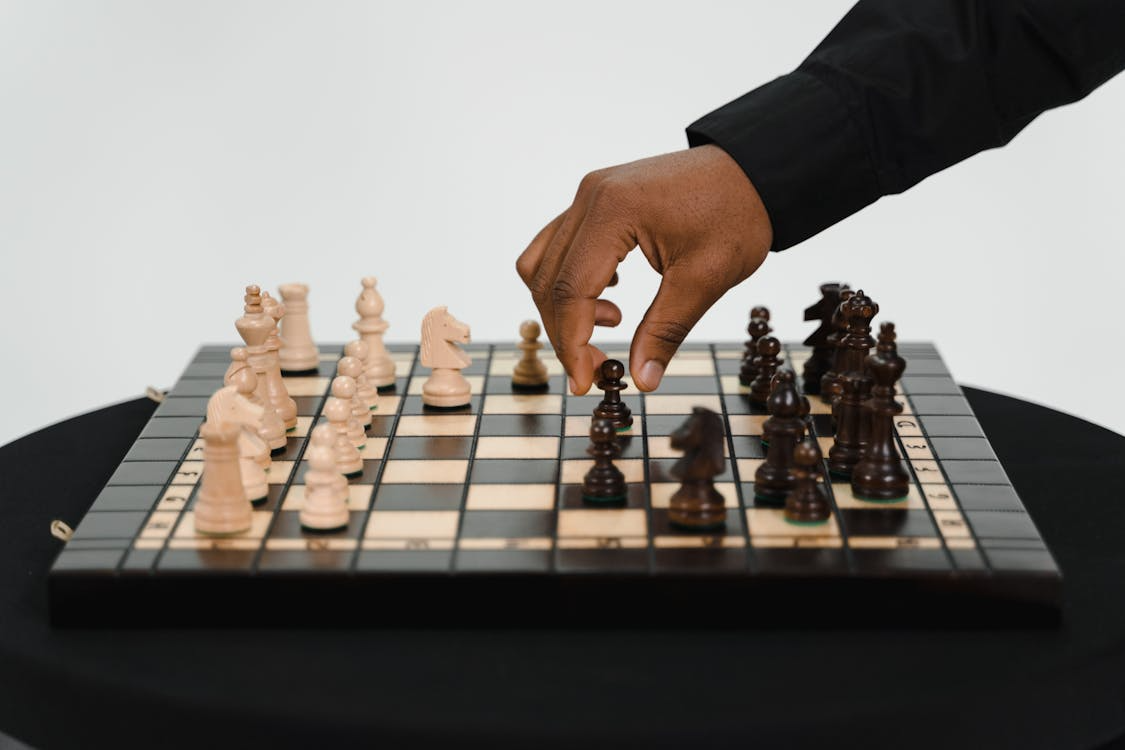
Image Credit: Tima Miroshnichenko from Pexels
Some key things to remember:
- Focus on controlling the center. Place pawns and other pieces towards the center of the board.
- Develop your pieces: Move knights and bishops early to active squares (a pawn is not considered a piece!).
- Avoid moving the same piece multiple times. This takes away chances from other pieces to develop and become active.
- King safety: Prioritize castling to protect your king from attacks by your opponent.
Classic openings like 1.e4 (the King's Pawn Opening) often lead to an exchange of pieces and an open board. Other openings, like the 1.d4 (the Queen's Pawn Opening) tend to produce a more closed game, which leads to a bigger focus on positional tactics. Some of the most famous systems, such as the Ruy Lopez, Sicilian Defense, and Queen’s Gambit, can arise from any unique combination of first moves.


Take the Quiz: What Type of Music Should You Listen to While Studying?
Not sure what music would help you focus best while studying? Then this is the quiz for you!
Chess Endgames
At the end of a chess game, there are fewer moves and fewer pieces on the board. The king becomes an active piece on the board, often bringing itself to the center. Many things happen during the endgame.
If there are pawns on the board, the player might attempt to promote them to a piece of higher value, like a queen or rook. Pawns can make a huge difference between a victory and a draw. Another important term to know for the endgame is called Zugzwang. Zugzwang is when a player is forced to make a move that puts their position at a disadvantage. Zugzwang usually does not happen in the opening or midgame. Some important endgames to study are the pawn and king endgame, the rook and king endgame, as well as the standard queen and king endgame.
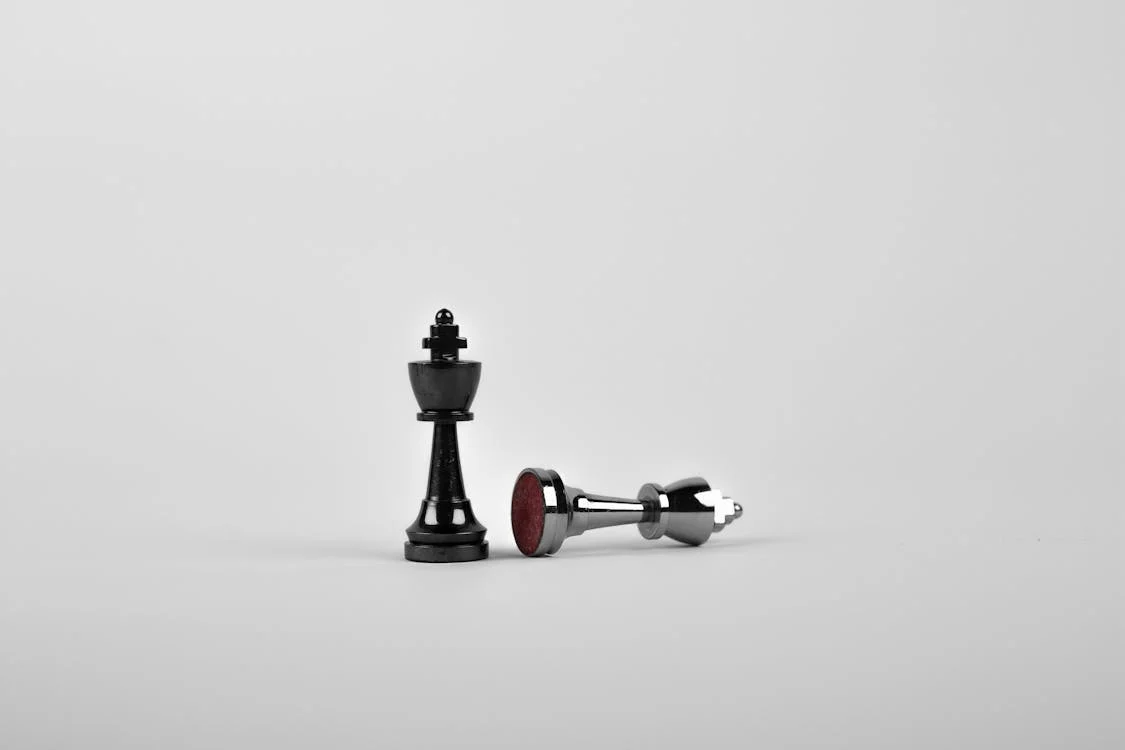
Image Credit: Sebastian Voortman from Pexels
Famous Games
One famous match is Game 6 of the 1972 World Championship, where Bobby Fischer, with the black pieces, defeated Boris Spassky. In this game, Fischer used brilliant tactics and strategy to win the game. Another notable game is Garry Kasparov vs Deep Blue in 1977.
This is the first time a grandmaster like Kasparov was defeated by the IBM supercomputer Deep Blue. The final important match I’m going to mention here is Anatoly Karpov vs Garry Kasparov in the 1984 World Championship. Here, Karpov, in a spectacular game, won over Kasparov through positional mastery.
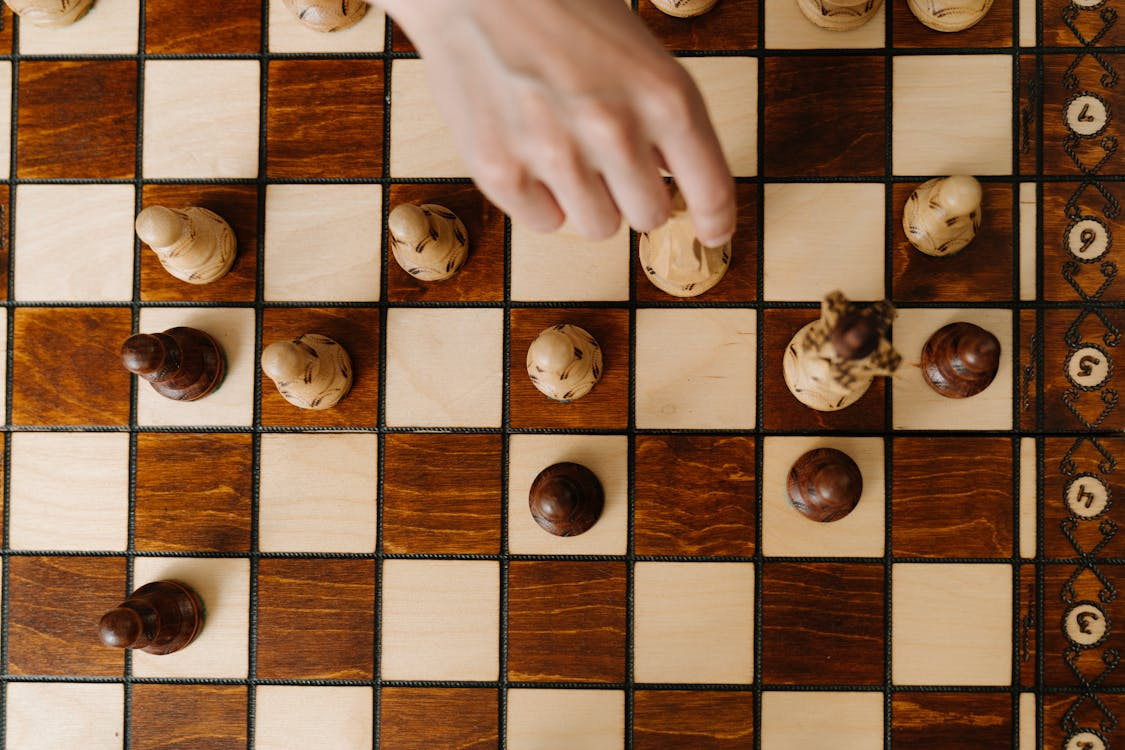
Image Credit: cottonbro studio from Pexels
Grandmasters
Some of the most famous grandmasters include Garry Kasparov, known as one if not the best chess players in history. Bobby Fischer, though less prolific, revolutionized American chess in the early years and was the 11th World Champion. Anatoly Karpov, another chess grandmaster, was known for his endgame play and also for the many textbooks he wrote, teaching younger chess players to this day. Today, Magnus Carlsen, one of the best chess players, is known for holding multiple world championship titles and having the highest FIDE rating of all time.
Image Credit: JEShoots from Pexels
Tactics
Beyond opening and end games, tactics are crucial during the midgame. We will be going over some now. A fork is when one piece attacks two or more of the opponent’s pieces at the same time.
A pin is when a piece cannot be moved without exposing a more vulnerable piece behind it. A skewer is the opposite of a pin, where the higher value piece is in front. A discovered attack is when one piece is moved to reveal another piece attacking an opponent's piece.
To practice searching for these tips, you can complete various chess puzzles through textbooks and online websites like chess.com. Learn to always think 2-3 moves ahead, and to adapt to new opportunities. Also, avoid blundering (losing) pieces by double-checking moves.
Conclusion
Chess is a very fun and intellectually stimulating game. I very much enjoy playing it as a hobby during my free time. I hope everyone can start playing chess, learning from historical games, and using online resources.
Chess will teach you to refine your critical skills in moments of pressure. Have fun playing chess!