





As we move through life, we consider what our legacy will be and discover what lengths we will go to in order to attain one.
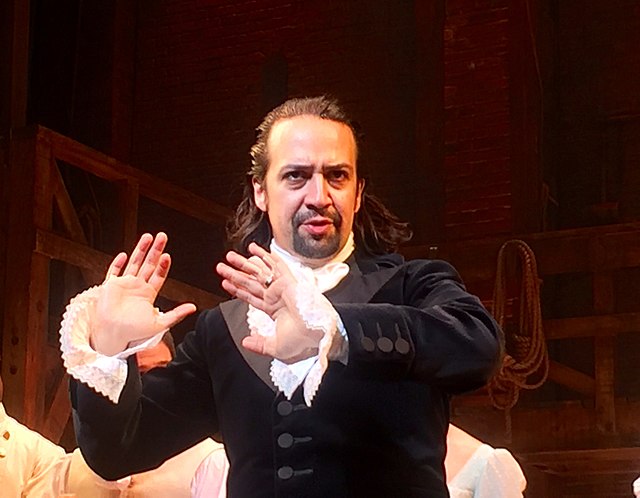
In the Tony Award winning musical, Hamilton, Lin Manuel Miranda poignantly discusses legacy through his character: Alexander Hamilton. Throughout the musical, Hamilton rises from being an orphan immigrant with nothing to the accomplished founding father we know today.
Let us slide into your dms 🥰
Get notified of top trending articles like this one every week! (we won't spam you)Hamilton’s Unstoppable Rise to the Top
In the beginning of the show, Hamilton arrives in New York from an insignificant town in the Caribbean destroyed by a hurricane. He has no family, no money, no education–nothing but an insatiable hunger, a desperation to rise to the top. This determination guides his every decision; from the friends he makes to the woman he marries, everything he does is to ensure his place in history.

Jurvetson from Wikimedia Commons
Hamilton works tirelessly and writes like he’s running out of time, refusing to take breaks to be with his family or merely enjoy the fact that he is alive. His curse is that no amount of success will ever be enough, or as Angelica Schuyler says: he will never be satisfied. Aaron Burr makes a similar remark, that Hamilton faces an endless uphill climb; he will always be chasing the next thing until the day he dies.
That day came sooner than Hamilton anticipated. In a duel with Burr, Hamilton is shot and his first thought as the bullet comes at him in slow motion is “What if this bullet is my legacy?” To what would have been his relief, his legacy is much, much greater than his death.

Take the Quiz: What’s Your Secret Superpower? This Quiz Will Reveal Which Singer Icon You Resemble
This fun quiz will unveil your unique qualities and reveal which music icon you resemble the most.
Who Tells Your Story?
However, Burr’s legacy is largely Hamilton’s death. After the duel, Burr reflects on how “history obliterates, in every picture it paints, it paints [him] and all [his] mistakes.” He became the villain in our history, that is his legacy. All of his impressive attributes as a lawyer and a politician have been widely overlooked, but, after all– we have no control over who tells our story.
Burr is an example of those in history whose stories have been misinterpreted, forgotten, and untold. This has happened throughout history because we often only hear one perspective while so many other voices go unheard.
As readers, we must remember what biases taint the writing and what sides of the story are missing. As storytellers, we have the power to elevate overlooked stories everyday through small acts like writing, activism, art, education, and discussions.
A Moment For Eliza Hamilton
Now, I would like to give credit to someone who rarely gets the credit she deserves: Eliza Hamilton. It is because of Eliza that the legacies of Alexander Hamilton and George Washington are remembered today.
After Hamilton died, she “[interviewed] every soldier who fought by [his] side” and tried to “make sense of [his] thousands of pages of writing” in order to accurately pass down his story. Not only that, but she raised “funds in DC for the Washington Monument” which still stands today, reminding us of George Washington’s brilliance as America’s first President.

Erickson from Unsplash
Despite all of those things, Eliza is most proud of “the first private orphanage in New York City” because in every orphan she raises, she sees Alexander. At the end of the musical, Eliza wonders if she has done enough, if we will tell Alexander’s story. And we do, because of her.
Legacy, what is a legacy?
By upholding Washington and Hamilton’s legacy, Eliza created her own. Her legacy may not be one that we read about in history textbooks, but her impact can be felt every time you hear Hamilton's story or go to DC and see the Washington Monument.
On the other hand, Hamilton’s relentless pursuit of a legacy reminds us that we cannot live solely for the sake of how others will remember us. We must live for the sake of ourselves and for those we love. We must live in the fleeting, precious time that we have, not for a time we will never see.
Washington understood this notion. When he decides to retire, he expresses to Hamilton that he simply wishes to sit under his own vine and fig tree as scripture says, unafraid, at home in the nation they’ve made. Unlike Hamilton, he knew when it was time to stop fighting and simply live.
And what Burr said in “Wait For It” rings true:
“Death does not discriminate between the sinners and the saints, it takes and it takes and it takes.”
We do not have control over who lives, who dies, or who tells our story. What we can control is how we live–what we stand for, the decisions we make, and how we shape the people around us. This sort of legacy may be quiet, invisible even, but it is enough to change a life–and that, too, is history.