

.png)
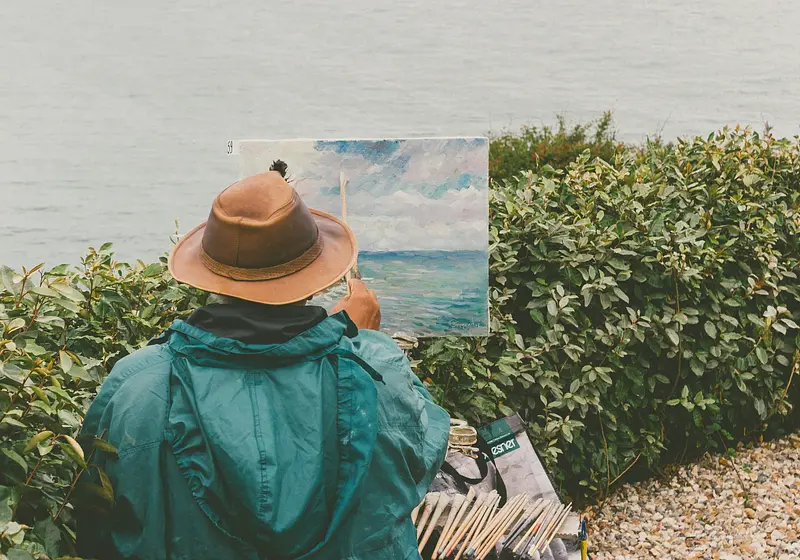
When we think of art, we often imagine the classics: paintings behind glass, marble sculptures, symphonies played in velvet-lined concert halls. But art isn’t always polished. It doesn’t always arrive in gilded frames or on curated walls.
Sometimes, art is loud and raw. Sometimes it’s digital, fleeting, homemade, or anonymous.
So... what defines art?
It’s a question that artists, philosophers, and critics have wrestled with for centuries. Art can be technical or messy, beautiful or ugly, traditional or rebellious. But above all, art is an attempt to say something, to connect, to provoke, to make sense of the world or reflect its chaos back at us.
Art is defined not just by its form, but by its intention and impact. According to art historian Cynthia Freeland in But Is It Art?, art is “a cultural expression intended to elicit a response,” emotional, intellectual, or even uncomfortable (Freeland, 2001).
In other words, if it makes you feel something or think differently, it’s art. Whether that takes the shape of a performance, a protest mural, or a TikTok dance isn’t the point.
So why does this matter?
Because when we cling to narrow definitions of art, we miss out on the work that exists beyond the spotlight: work that’s just as daring, just as skilled, and just as necessary. Non-typical forms of art often come from the margins: the unheard, the underfunded, the radically creative. They challenge us to expand not only our taste, but our empathy.
Here’s how to begin appreciating the full range of artistic expression in the world around you.
Let us slide into your dms 🥰
Get notified of top trending articles like this one every week! (we won't spam you)Redefine What Art Means
Start by releasing the idea that art must be "high culture." A sand mandala, a protest sign, or an interpretive dance can all be art when made with purpose and vision. Even the dictionary keeps it open: Merriam-Webster defines art as “the conscious use of skill and creative imagination.” That leaves plenty of room for the unexpected.

Take the Quiz: Which Popular YA Novel Series Should I Read Next?
Find out your next great read after this quiz!
Learn the Story Behind It
Every piece of art has a context, and the more you understand that context, the deeper your appreciation. Street art, for example, is often more than decoration. It’s resistance, storytelling, and social critique. Look at Banksy’s work, which uses humour and symbolism to highlight issues like war, greed, and surveillance (Ellsworth-Jones, 2013).
And what about drag performance? It’s not just entertainment. It’s fashion, theatre, political commentary, and a proud act of identity. Appreciating non-traditional art starts with asking, What is this trying to say?
Expose Yourself to Variety
Just like with food or music, you can’t grow your taste in art without trying new things. Explore:
1. Slam poetry on Button Poetry’s YouTube channel
2. Digital illustration on ArtStation, DeviantArt, or Tumblr, such as Velinxi or AbyssWolf
3. Indigenous tattooing and ritual body art from global cultures, such as Polynesian Tiki Tattoos
4. Game design in visual masterpieces like Journey or Gris, which are now studied in art programs (Shaw, 2015)
What you find might surprise you. Both in how it looks and in how it feels.
Check Your Bias
We’re all taught certain standards of “good” or “real” art. But often, those standards are tied to privilege. Who gets to be called an artist, and what kinds of work get preserved or celebrated?
A study in Psychology of Aesthetics, Creativity, and the Arts found that people judge art more negatively when it challenges social norms (Leder et al., 2012). So if your first reaction to something is confusion or dismissal, pause and ask: Why? Growth begins with curiosity.
Support What You Discover
Once you start recognizing the artistry in non-traditional forms, the next step is simple: support it. Support can vary from donating, buying, or just showing up to cheer independent artists on.
1. Attend a local open mic or community art show, or find a way to volunteer for them
2. Follow independent artists online and share their work
3. Buy zines, prints, or commissions when you can! A lot of artists sell their prints or stickers at local markets or fairs
3. Tell your friends about the weird and wonderful thing you found
Art doesn’t have to be famous to be important. It just has to matter to someone.
And so...
Art doesn’t live only in museums. It lives on the sides of buildings, in the pages of zines, in the hands of teenagers customizing sneakers, or in voices cracking with emotion on a tiny stage. It lives wherever someone decides to say, “This is how I see the world.”
To appreciate non-typical art is to admit that there is more than one way to be human and more than one way to be moved.
Sources:
Freeland, C. (2001). But Is It Art? An Introduction to Art Theory. Oxford University Press.
Ellsworth-Jones, W. (2013). Banksy: The Man Behind the Wall. St. Martin’s Press.
Leder, H., Belke, B., Oeberst, A., & Augustin, D. (2012). "A model of aesthetic appreciation and aesthetic judgments." Psychology of Aesthetics, Creativity, and the Arts, 6(1), 1–10.
Shaw, A. (2015). Gaming at the Edge: Sexuality and Gender at the Margins of Gamer Culture. University of Minnesota Press.
.png)