



Did you ever buy a brand-new journal, write two pages, and then put it away for six months?
Yeah, same. Journaling seems easy until you do it every day.
The problem is that journaling doesn't have to be perfect. You don't need an "interesting life," expensive notebooks, or aesthetic spreads. You must find a technique that suits you, your pace, personality, and actual life.
In this article, we'll look at how to start journaling and, more importantly, how to keep going when you lose motivation. We'll talk about mindset shifts, baby steps, and the reasons why journaling might become your favorite self-care practice.

Image credit: Photo by Estée Janssens on Unsplash
Let us slide into your dms 🥰
Get notified of top trending articles like this one every week! (we won't spam you)#1. Tips for Starting Your Journaling Practice
So you’ve decided to journal. Cool. But… where do you even start?
Here’s the secret: there’s no right way to do it.
You can write in a ruled notebook, on Google Docs, in your Notes app, or on the back of your chemistry worksheet (not recommended, but still counts). The key is to make it yours.
Here are a few tips to help you begin:
- Don’t romanticize the start too much. You don’t need to wait for January 1st or a “new chapter of life” moment. Just open a page and start writing what’s in your head right now. That counts.
- Write like no one’s ever going to read it. Not even you. That’s the best way to stop overthinking and just get it out and just start.
- Use prompts when you're stuck. You'll not always have things to write about, and for those days, you can search for journaling prompts on the internet, which will make writing much more easier. Here are a few examples:
- “What made me smile today?”
- “What do I wish someone told me right now?”
- “What am I grateful for?”
- Set a 5-minute timer. You’ll probably end up writing more. But it takes the pressure off needing to “journal for an hour” to make it count.
- Make it easy to access. Keep it on your desk. Or under your pillow. Or in your phone’s Notes app if paper feels like too much work sometimes.
- And yes, make it "aesthetic" if that excites you. Some people love highlighters and washi tape and the whole Pinterest vibe. If that motivates you to open the journal every day, go for it. Just don’t let it become the reason you don’t journal when things aren’t “aesthetic enough.”
- Messy counts. Some days your journal will look like a poetry book, and other days it'll just be one angry line. Both are valid. Both are you.
The point is to show up, not to impress yourself. Even if all you write is: “I don’t feel like writing today.” That’s still journaling.


Take the Quiz: What’s Your Perfect Skincare Product for the 'Clean Girl' Look?
Take this quiz to discover the perfect skincare product for your “clean girl” routine!
#2. How to Stay Consistent (aka how to not quit after 3 days)
So you’ve started. You wrote a few pages. Felt cute.
Felt deep. And then… You forgot it existed.
Honestly, same.
The real challenge with journaling isn’t starting, it’s still writing when your day is full, your brain is loud, or you just can’t be bothered.
So here’s how I try (and mostly fail, but try again anyway) to stay consistent:
- Make it a vibe. Not a task, not a “I have to do this or I’m a failure” thing. Light a candle, play Lana Del Rey in the background (or whoever your favourite artist is :p), sit with your thoughts like you’re the main character of a sad indie movie. Make it feel like you.
- Pair it with something you already do. Like after you brush your teeth. Or right before you scroll. (Yes, I said scroll. Don’t lie.)
- Leave it where you’ll see it. Desk. Pillow. Inside your laptop. Whatever works. If your journal disappears into your drawer, so will your motivation.
- Don’t force the “daily” thing. This is not Duolingo. You won’t lose your streak. You can write once a week and still feel the impact. Honestly, sometimes less pressure = more honesty.
- Phone journaling counts. On days when you're too drained to hold a pen? Type one raw line in your Notes app. Voice record a rant. That still counts. This isn’t an exam.
- Don’t guilt-trip yourself. Missed a week? Cool. Come back. You’re not behind. You can still continue. Journals don’t judge. They’re just happy you’re back.
- Reread your entries sometimes. Not always. But sometimes, when you’re feeling lost, reading what you wrote a month ago hits differently. You realise how far you’ve come. Or how much you needed to hear your own words again.
This isn’t about being perfect. This is about showing up. Especially on the days you think it doesn’t matter, that’s when it actually does.
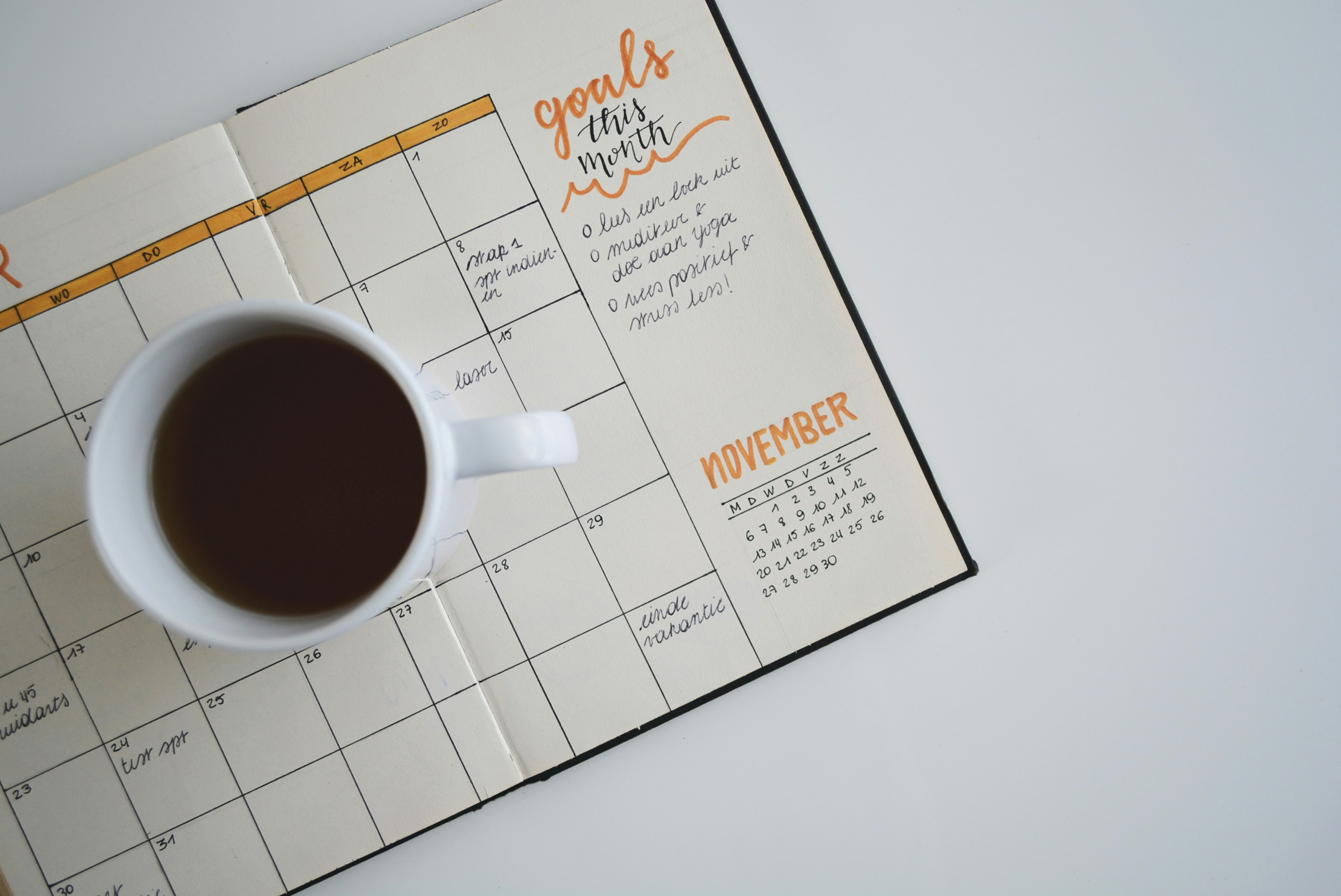
Photo by Estée Janssens on Unsplash
#3. Why Journaling Might Change Your Life (a little)
I won’t lie, journaling won’t solve all your problems.
But some days, it feels like the only thing that gets me is this empty page and my half-dried gel pen.
Here’s why it matters more than it seems:
- You get to know yourself. Not the version you post, not the version you perform, the real one. When you write without filters, you start noticing your patterns, thoughts, fears, and dreams. You read back and you become self-aware.
- It gives your emotions a place to land. Instead of bottling everything or trauma-dumping on a friend at 2 AM, you write it down. You let it out. And weirdly, it helps.
- It’s your proof. That you felt deeply. That you survived something. That you kept going. Reading old entries will sometimes make you cringe… and sometimes make you proud.
- It slows down your brain. On chaotic days, journaling can feel like breathing, like telling your mind, “Okay, let’s sit down and figure this out.”
- It turns into a memory box. Tiny moments you forgot? They’re all there. Your first heartbreak, your late-night realizations, your 17th breakdown of the week. It’s a time machine.
- It builds clarity. Even if you don’t get answers, you start asking better questions. And honestly? The biggest flex is looking back and seeing growth. Not the “glow-up” kind, but the “I understand myself better now” kind.
So yeah, if you’ve been overthinking where to start, start here. No pressure to be poetic. No rule to write every day.
Just… open a page. Let it be messy. Let it be real. You might not figure your life out overnight. But you’ll feel a little lighter. And that’s honestly enough.
Happy journaling, from one overthinking, late-night-writing person to another. ✨