






Okay, let’s be honest. How many of you have used AI to do your homework? Or solved your doubts about that one equation that’s been getting on your nerves?
Or even, maybe used it as your personal therapist—or ranted to it like your own friend?! I’m sure the answers to many of these questions would be yes, because who wouldn’t use this facility when it could make your life easier? When it could do days worth of research in seconds? When you don’t want to trauma-dump your group chat?

Image Credit: Solen Feyissa from Unsplash
One such AI which everyone knows about is ChatGPT, a large language model developed by OpenAI, which generates human like conversational texts and assists in many tasks. But, like every coin has two sides, ChatGPT also has its pros and cons—comprised of environmental harms—which often go unnoticed.
In this article, we’ll be diving into how ChatGPT actually affects the environment, why it even matters to us, and some other cool facts.
Let us slide into your dms 🥰
Get notified of top trending articles like this one every week! (we won't spam you)So, How Does ChatGPT even work?
Yeah, ChatGPT may feel like a genie that does what you order like magic, but in reality, before ChatGPT can even answer your questions—it has to be trained on massive datasets and texts from books, websites and the internet after which, when you ask a question, your message goes to a data center [i.e. a giant room filled with many powerful computers]. The model then works to generate a response by guessing the next best word over and over again — until it finishes your answer. These computers do all of that heavy thinking and send you a reply in just a matter of a few seconds. This process does happen in the blink of an eye, but the amount of energy it consumes…that needs awareness.

Take the Quiz: What Candle Scent Matches Your Overall Aesthetic?
Halloween is just around the corner. It's time to light that candle. Take this quiz and find out what candle scent suits you best.
The Problem With All of This—Innovation Comes With A Price

Image Credit: Igor Omilaev from Unsplash
Even though all this AI and tech may feel futuristic, simple, neat, and clean, the servers behind the curtains are in the case of many, powered by fossil fuels (which are non-renewable sources of energy, by the way), creating pollution and producing harmful emissions. So, the lesser known fact is: the same innovation that’s been helping us solve our own problems, is creating more of its own.
So, let’s zoom into exactly how it’s been rupturing the environmental system.
Training Phase
So, like I mentioned before, ChatGPT is trained from various datasets; and this requires thousands of GPUs running constantly for days or weeks. And as is obvious, this uses loads of kilowatt-hours of electricity and energy, contributing to all the carbon emissions and greenhouse gases; that raise the average temperature of the planet.
Inference Phase
Each time you ask ChatGPT a query, a transformer model or server will process your input, and generate the suitable output. And though this process consumes less energy than the training phase, people from around the world, just like you and I, are asking questions and talking to the AI millions of times a day. This continuous use also takes up a whole lot of energy, and definitely impacts the environment.
In addition, the overall environmental footprint includes not just electricity but also manufacturing hardware and even cooling equipment and systems.
Why Should We Even Care?
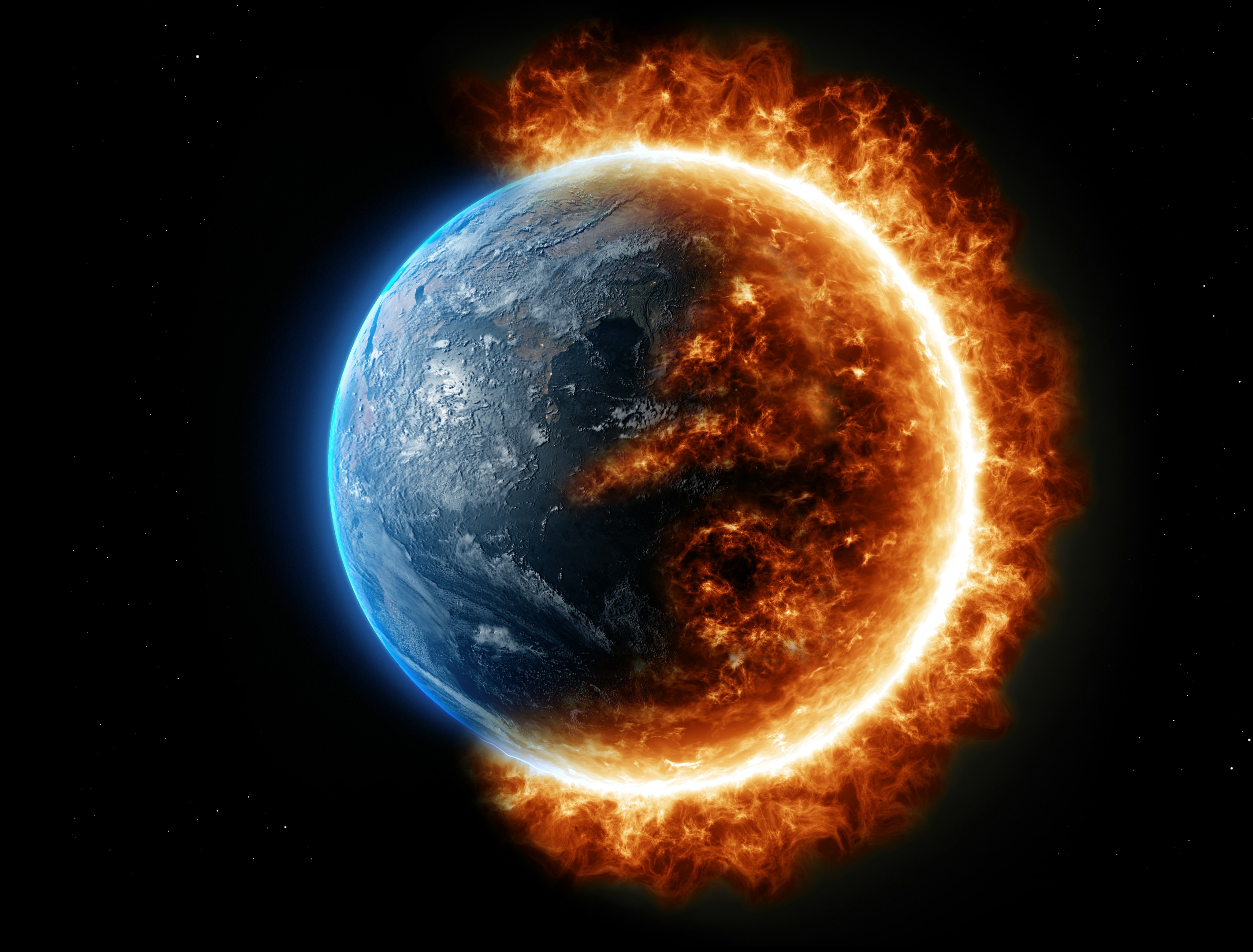
Image Credit: Javier Miranda from Unsplash
I know you’ve probably heard about climate change and global warming and “blah blah” all the time—and it feels so distant with the ‘melting glaciers, endangered species, and rising sea levels.’ These are all things you probably don’t see every day, right?
But it is a real thing. They aren’t future problems. They’re literally happening right now; in your country, your city, and your life—you might have experienced many of them; 40°C heatwaves, more frequent storms, diseases spreading faster due to climate shifts.
And you, my friend, have the power. No, you do not need to be some scientist, tech mogul, or environmentalist to make a difference. Just being aware of how you’re using your technology and affecting the planet with your digital life helps make an impact. Because AI is a rapidly developing technology, and they’re all here to stay. Because in the end, what’s the point of smart AI… if there’s no livable planet to use it on?
A Ray Of Hope: Green AI

Image Credit: Andrew Neel from Unsplash
Earlier in this article, we learned some things are quite messy with AI — it sucks up power and water, leaves a trail of carbon, etcetera. But, there’s actually a movement to upgrade AI to be more cleaner and greener—aka Green AI.
This means data centers will switch to more greener forms of energy — such as solar, wind, and hydro power — and researchers have begun creating more lightweight versions, like some new ‘mini versions’ of GPT-like models. Even AI itself aids in combating the growing climate change; for example, it spots unusual patterns in weather, climate anomalies, and wildfires through advanced data analytics.
Final Thoughts
Sure, AI is a genius, but since nothing in this world ever comes free… and all that power comes with a price. Behind every chatbot generative response, however innocent it may seem, is a huge system which guzzles water, devours electricity, and leaves footprints — which are definitely not carbon free. And eventually all the things we don’t see, we’ll start to feel. So next time you refresh and hammer ChatGPT for nothing, think twice.