







It doesn’t happen every day that a teenager commits to changing the world—but Charlie Kirk did.
Before he was a national bestselling author, political commentator, and founder of one of the most influential conservative youth movements in America, Charlie Kirk was just a high school student with big questions and an unshakable faith in freedom and truth. He didn’t build his platform on outrage or partisanship. He built it with a laptop in his parents' basement, a microphone in his hand, and a conviction that young voices mattered.
As students and families across the country reflect on his untimely passing, it’s not just Charlie’s speeches or books we remember—it’s the movement he created, the values he stood for, and the countless young people he empowered to speak up.
Let us slide into your dms 🥰
Get notified of top trending articles like this one every week! (we won't spam you)From Basement Startup to National Force
Charlie Kirk didn’t come from political royalty. Raised in middle-class America, he grew increasingly frustrated with what he saw as a cultural shift in education—one that silenced conservative voices and replaced traditional values with progressive ideologies.
At 18, he made a move that would define his life: founding Turning Point USA (TPUSA), a nonprofit focused on promoting conservative principles to young people. With no political connections or formal degree, Charlie transformed TPUSA into a national force. By his mid-20s, it boasted thousands of chapters and a social media following that rivaled legacy news outlets.
More than numbers, Charlie’s true impact was cultural. He brought conservative values back into student conversations—not through lectures, but through real connection. Whether at CPAC or a small-town high school gym, his message was always clear: Conservatism isn't outdated. It's just been quiet for too long.
Take the Quiz: What Kind of Political Personality Are You?
Ever wondered what role you’d play in the political world? Take this fun quiz to find out!
What He Believed: The “Three Cs”
At the heart of Charlie’s message were the “Three Cs”: Constitution, Capitalism, and Christianity.
He believed in First Amendment freedoms, free enterprise, and biblical values. Through TPUSA and its branches like Turning Point Faith, Turning Point Action, and Turning Point Academy, he created platforms that educated, activated, and mobilized.
He also hosted The Charlie Kirk Show, where he offered political commentary through a Christian and constitutional lens. Millions tuned in each week to hear him discuss everything from education to economics.
Charlie wasn’t just amplifying political ideas—he was giving students a sense of belonging, a place to stand when they felt their views were unwelcome on campus.
Support for Israel—and Standing Against Antisemitism
One of Charlie’s deepest convictions was his love for Israel. As a devout Christian and grandson of a WWII veteran, he viewed the U.S.-Israel relationship as a moral duty, not just a political alliance.
He visited Israel, defended the Jewish state on college campuses, and partnered with Jewish organizations to fight antisemitism—especially during a time when it was rising across social media and academic spaces. He celebrated President Trump’s move of the U.S. Embassy to Jerusalem as both policy and prophecy.
While some critics questioned his sincerity or approach, many Jewish students and leaders felt seen, heard, and supported by Charlie’s vocal advocacy.

Photo By: Gage Skidmore from Wikimedia Commons
The Elephant in the Room: Controversy and Criticism
To ignore the controversy surrounding Charlie Kirk would be to ignore a major part of his story.
Charlie was polarizing. While his supporters saw him as bold and principled, his critics often accused him of promoting misinformation, stoking division, or pushing an overly simplistic version of American politics. His stances on immigration, gender identity, and public education sparked heated debates—and sometimes backlash.
As someone who doesn’t agree with every viewpoint he held, I still believe it’s important to recognize what he represented to millions of students: a permission slip to speak up. He didn’t care about being liked. He cared about being heard. And whether you agreed or disagreed, he forced people to think.
That’s the mark of a real influence.
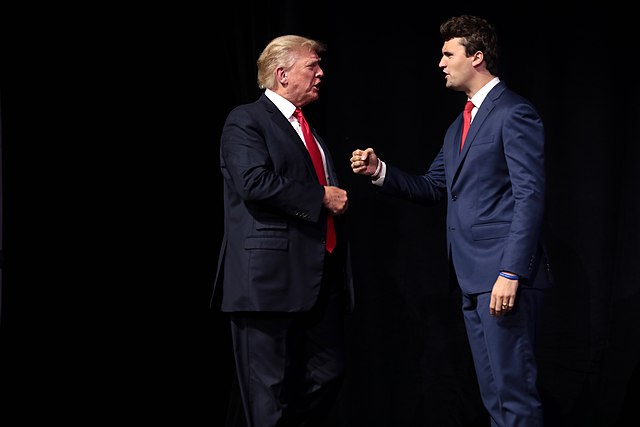
Photo By: Gage Skidmore from Wikimedia Commons
Mobilizing a Generation
Charlie Kirk’s greatest strength was his ability to connect with young people. He didn’t speak from a marble hall in Washington—he went to where students were. He gave over 1,000 speeches across the country, built events like AmericaFest and Student Action Summit, and personally answered tough questions from students, including those who opposed him.
He wasn’t afraid of confrontation. He encouraged it, as long as it led to truth. He constantly reminded students: “Courage is more contagious than fear.”
And for many young conservatives, he was the first adult who made them feel like their voice mattered.
A Personal Take: What His Legacy Means to Me
I’ll be honest: I don’t agree with everything Charlie Kirk said. But I do admire his grit.
In a world where teenagers are often told to stay quiet, wait their turn, or sit down unless their views are popular, Charlie did the opposite. He stood up. And he encouraged others to do the same.
His death at just 31 years old is tragic, not only for those who knew him personally, but also for the thousands of students who looked up to him, whether politically or personally.
Regardless of where you stand politically, there’s value in someone who challenges the status quo—not out of anger, but out of passion.
Final Thoughts: What We Can Learn
Charlie Kirk taught us that movements don’t need permission to start. That leadership can begin in a basement. And that a teenager with bold beliefs can shape national conversation.
You don’t have to agree with his every stance to acknowledge his impact.
As a high school student myself—trying to find my voice, lead initiatives, and speak out when things feel unfair—I see something powerful in his story. A reminder that passion can be louder than popularity. That convictions, not credentials, can lead change. And that courage isn’t reserved for adults in suits—it can belong to students with laptops and purpose.
Rest in peace, Charlie. Your voice lives on—in the students you empowered and in the debates you sparked.

.jpg)

.jpg)


.jpg)
.jpg)