




.jpg)

On Sep 10th at Utah Valley University, Charlie Kirk was shot and killed while engaging with an audience about mass shootings in the United States. The event was part of the “American Comeback Tour”, a nationwide debate series created by Turning Point USA, the conservative group Kirk co-founded.
This shocked many people. For many of my classmates and me who were born after 9/11, it felt like the first time American politics turned violent. The American reality is that political violence has been the “culture” of our country since its inception, and Kirk’s death reminds us that peaceful discussions can be an alternate solution to disagreements. What we need now is to turn the violence into peaceful discussions.
Let us slide into your dms 🥰
Get notified of top trending articles like this one every week! (we won't spam you)Political Violence Is Not New
During the American Revolutionary War, the colonists fought violently against the British Monarchy, resulting in more than 25,000 deaths. This country’s foundation was built through violent struggle against those with opposing views. Almost one hundred years later, at the end of the Civil War, President Lincoln became the first American president to be assassinated, and the criminal John Wilkes Booth did so over a political disagreement about the civil rights of Black people.
Booth’s action reflected the Confederates’ rage at defeat and foreshadowed their later resistance to Reconstruction, fighting to block equality for freed people. In the last century, the deaths of Martin Luther King Jr. and Malcolm X were more powerful examples of how political disagreements can cost lives. These figures were leading a part of society to fight for Black dignity and freedom in an era where the majority of society disagrees with them.
As high schoolers, we believe America to be a democratic country, where everyone has the right to speak freely; however, history shows that conflicts have been an integral part of its development. Yet despite centuries of political violence, something about this moment in history feels different.
 Image Credit: Eugène Lami, Emanuel Leutze, and Richard Paton from Wikimedia Commons
Take the Quiz: What Kind of Political Personality Are You?
Ever wondered what role you’d play in the political world? Take this fun quiz to find out!
Modern Examples of Political Violence
Most recently, the frequency of political attacks is increasing: the January 6th assault on the country’s Capital, the April arson attack on Josh Shapiro, the Governor of Pennsylvania, and the murder of Melissa Hortman in June, a Minnesota State Representative. The shooting of Charlie Kirk this month is a continuation of a recent disturbing trend of extreme political violence. It also symbolizes the entrenched division in political parties in the current United States.
According to the Pew Research Center, Democrats and Republicans today are more divided than at any other time in the past 50 years. Ever since the re-election of President Trump, political beliefs have become more private information. As an answer, people are afraid of being targeted by the “violent” culture of America. These days, even with friends or anyone else in my life, political talk comes up less and less, as if people are deliberately avoiding sharing opinions or taking a stance.
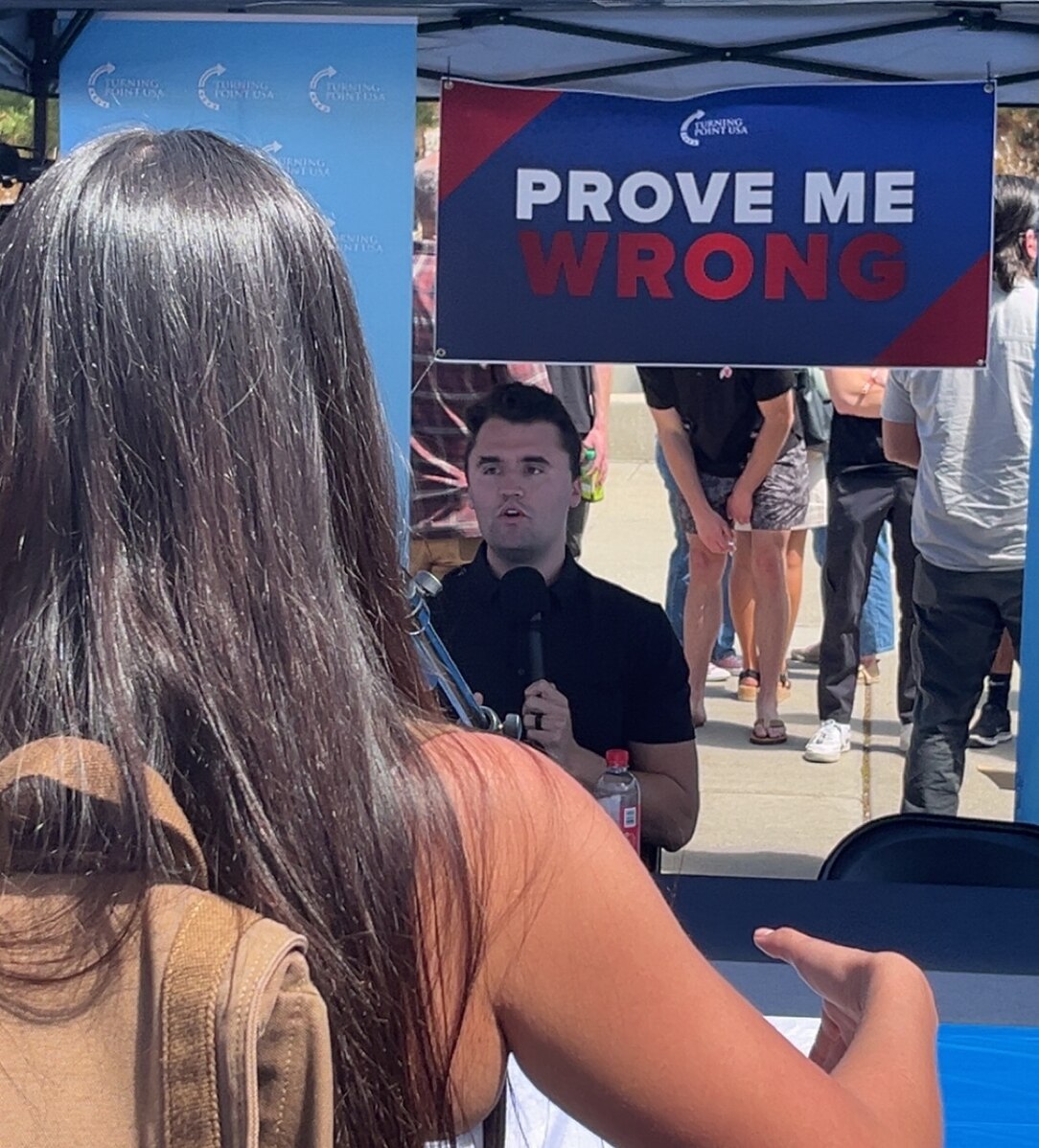 Image Credit: Shoot for the Stars from Wikimedia Commons
Why This Feels Different for Our Generation
Political violence today may feel extreme to our generation because of social media, growing economic inequality, and a lack of trust in institutions. Unlike decades ago, hundreds of thousands of people now witness events live, unfiltered, and commentaries can spread instantly to the other side of the world. As the number of social media platforms grows daily, the massive amount of online discussion about a single event floods our phones and can be a significant source of stress.
Regarding the economy, the wealthiest 1% 's income share in America has increased from 16.3% in 2003 to 20.7% in 2023. This drastic difference in wealth among American citizens sparks diverse opinions on nearly every aspect of life, including taxes, welfare, and minimum wage. For example, the wealthiest 1% would prefer the minimum wage to be lower so they have to pay less in wages, while most of society, who are earning wages, hope the minimum wage to be higher. It is these kinds of everyday differences that lead to an ever-growing chasm in American political beliefs and stances.
Today, news outlets, tech companies, and even branches of government seem to have picked “sides”, leaving citizens to do the same. I have learned that CNN is more democratic and Fox News is more republican. People now only trust facts from sources on their side and see the people who aren’t part of their group as enemies. All of these factors make it more important than ever to recognize the history, the current trend, and not normalize the violence.
 Image Credit: Expect Best from Pexels
The Call for Peaceful Conversation
We know that political violence has been part of America, but it doesn’t have to define its future. Even though we are built upon different opinions, we can live peacefully with each other. In English, nearly every character was guessed to be the sacrifice as each of us had a different idea, but through 30 minutes of discussion, we worked our way to a shared conclusion. In a world too complex for perfect monotony to ever form, what we can build instead is honest dialogue, free expression, and restraint from turning differences into attacks.
Conclusion
The criminal, Tyler James Robinson, was arrested 33 hours after Kirk’s death, but his full motivation isn’t clear. While assigning blame is tempting, we must be careful not to incite more violence on the Internet. The way forward is not to repeat the deadly results.
People paid their lives to teach us the lesson: to stay calm, understanding, and acknowledge that conflict is where we came from. Disagreement is natural. Whether it’s about literature interpretation or politics, it’s never an excuse for wounds. Our generation has the chance to demand accountability, support fact-based social media, and prove that debate can build, not break.


.jpg)


.jpg)
