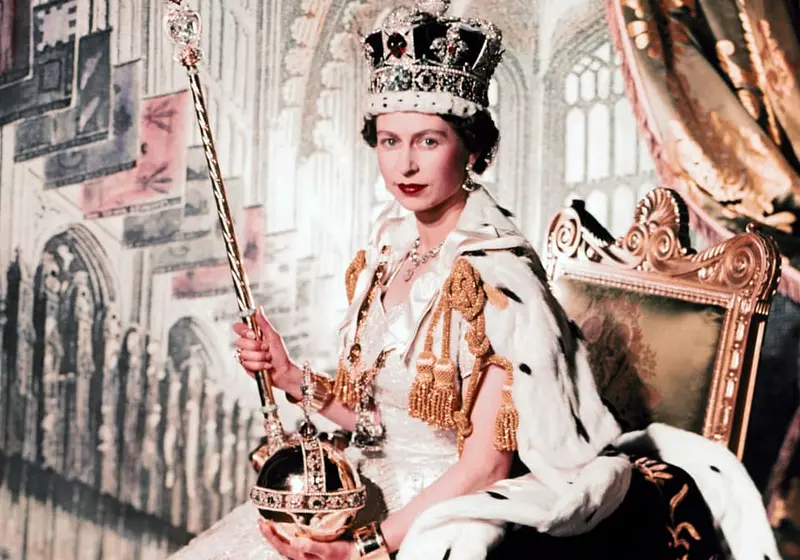





The concept of a royal family to some of us sounds merely like something you’d take out of a children’s book—made up and vaguely irrelevant to our reality—but it’s not; far from it. There are still many royal families across Earth today—from the UK to Japan, Spain, Monaco, Saudi Arabia, Sweden, the Netherlands, Thailand, etc.—and this comes with its advantages and its disadvantages.

Image Credit: Annie Spratt from Unsplash
Let us slide into your dms 🥰
Get notified of top trending articles like this one every week! (we won't spam you)Advantages & Reasons Why Royal Families Still Exist:
Why do they still exist?
In many countries where these families remain, royals embody a vast cultural and national significance. For countries like Japan and the UK, monarchy permeates their very national fabric: the royal families there are emblematic of centuries' worth of history, with Japan's being the world's oldest hereditary monarchy, its lineage tracing back over 1,500 years. Royal families are often seen as a living link to a nation's history and heritage, symbolizing the continuity of tradition.
This continuity provides an important sense of generational memory, within which each generation gets its own continuation of this royal family legacy and a way of grounding their present with their nation's past. In this way and others, royals are a symbol of unity—a unifying figure that, unlike politicians who can be polarizing, is generally neutral and showcases national solidarity. In times of crisis such as political upheaval or otherwise, the royal family can serve to provide a sense of stability—i.e., the royal family of the UK became a symbol of resilience during World War 2 and managed to both boost morale and bring more of their people together.
Visiting back to the point about how royal families try to remain neutral, monarchs don't generally have much political power anymore with their roles being largely ceremonial—but this causes the positive effect of allowing them to be perceived as non-partisan figureheads who can appeal to a broad spectrum of the population, and crucially help ameliorate the nation's reputation. Monarchs today often play a role in diplomacy, with the goal of strengthening their relationships between countries.
They serve as figures of international recognition that facilitate peaceful exchanges and foster goodwill. They also frequently work to help improve their nation's global standing and visibility by engaging in charitable work or representing their country in some other way that could potentially boost the country's soft power, or ability to influence.
In a slightly different vein, royal families also bring in substantial revenue from the millions of tourists who are drawn to palaces, events, and royal history—such as Buckingham Palace, or Windsor Castle. Royal weddings, anniversaries, and public appearances are also often majorly celebrated and draw in significant revenue whether that be from media, merchandise, or celebrations.

Take the Quiz: Religion, Schools, and Equality
Religion in Schools: Teaching Respect, Not Bias.
Disadvantages of Royal Families
While royal families have their advantages, they also have significant drawbacks—many of which have received their fair share of criticism over the many years.

Image Credit: Karl Hedin from Unsplash
A critical disadvantage is the financial burden of maintaining a royal family. The upkeep of palaces. Security, staff salaries, and costs associated with the many royal events—these all amount to millions of dollars or pounds each year.
In countries with constitutional monarchs, taxpayers are the ones who fund these expenses, with the criticism being directed at what can be viewed as the vast waste of public money. Especially when you juxtapose the glamorous, perhaps redundant use of all those pounds with the citizens who are facing economic challenges. And this wouldn't be so much of a problem if royal families were more transparent with their funding. Sometimes their financial resources are shrouded in secrecy, leading to public discontent and accusations of inefficiency or misuse of funds.
In addition, there are always complaints about the absence of democratic legitimacy when it comes to these royal families because their positions are unelected, just born into. In modern societies wherein democracy is highly valued, this concept of hereditary power is difficult to support or accept for some people, who view the passing-on of power by bloodline as outdated, undemocratic, and elitist.
Similarly, some find the idea of royalty deeply unfair: it leaves them with a bad taste in their mouth that a small family lives such a ludicrously unimaginable, unequally lavish lifestyle simply because they were born into the right palace, while many of their people face hardships. The existence of a monarchy can sometimes further exaggerate class divisions, making it harder to achieve a sense of equality in society, and the royal family's position and luxury are essentially the definition of entrenched privilege.
Another one of the key criticisms of modern royal families is how outdated constitutional monarchies are in the 21st century. While historically monarchs were once the political leaders of their nations, wielding substantial power over laws, military decisions, and national governance, nowadays their power has diminished to the point where today most royal families have only ceremonial roles. This means that their roles are more symbolic than anything—some may serve as the head of state, but the actual governance is left up to elected officials such as a prime minister of parliament—because royals are not allowed to make any actual decisions.
They are politically irrelevant, and monarchy has become a brand rather than a political entity. This understanding has left some people wondering, then: why do we still have royal families in 2025?
So, Do We Still Need Royal Families?
This is a complex question, no doubt, and the answer truly does depend on your perspective, values, and the specific context of each country. There isn't truly an objective yes or no, though there are clear drawbacks and clear advantages to both sides.
For some people, monarchs are so deeply essential to the cultural identity of their nation that it means something to them that royals still exist today. The connection that they provide to the past is sufficient for some citizens to rally for the continued existence of royalty. And that makes sense.
For others, it may be something else that draws them to the monarchy: the tourism revenue that royals rake in, or their diplomatic relations, or traditional, legacy, heritage, etc. Again, this is all valid. I personally think that the amount of money spent on royal families is a little ridiculous, but I am also not British, or Japanese, or Thai, etc. so I do not experience what seems to be the most important factor for continued monarchy—national pride. Plus, whatever people think or not, in constitutional monarchies such as the UK, Sweden, or the Netherlands, monarchs have primarily ceremonial roles and, again, do not hold political power, so the likelihood of monarchy being abolished in their countries any time soon is quite low.

Image Credit: Annie Spratt from Unsplash
However, in absolute monarchies such as Saudi Arabia or Brunei, where the monarch holds significant political power, the likelihood of abortion could be higher if there is political reform or a popular uprising of some form. I personally think that, at the very least, some reforms—such as the Vision 2030 plan that may affect social and economic authority—would benefit absolute monarchies.
A monarchy controlling all religious and political power in the 21st century seems like it must leave space for potential abuse, suppression of individual rights, and a lack of accountability. History has demonstrated that absolute monarchies lead to oppression and limited freedom, and ultimately instability or even revolution, time and time again.
So, while constitutional monarchies have their clear drawbacks and arguments for continuation, I think that absolute monarchies should be amended to account for a more balanced system of authority.