






From September 23-29, the United Nations General Assembly (UNGA) will gather at its headquarters in New York. This will be the body's 80th anniversary. The UNGA is an international summit of Heads of State and governments. 195 delegations will arrive; 193 countries and two observer states.
A big topic for this year's summit will be the future of Gaza and Palestine as a whole. But what exactly are they discussing, and will it actually have any impact on the future?
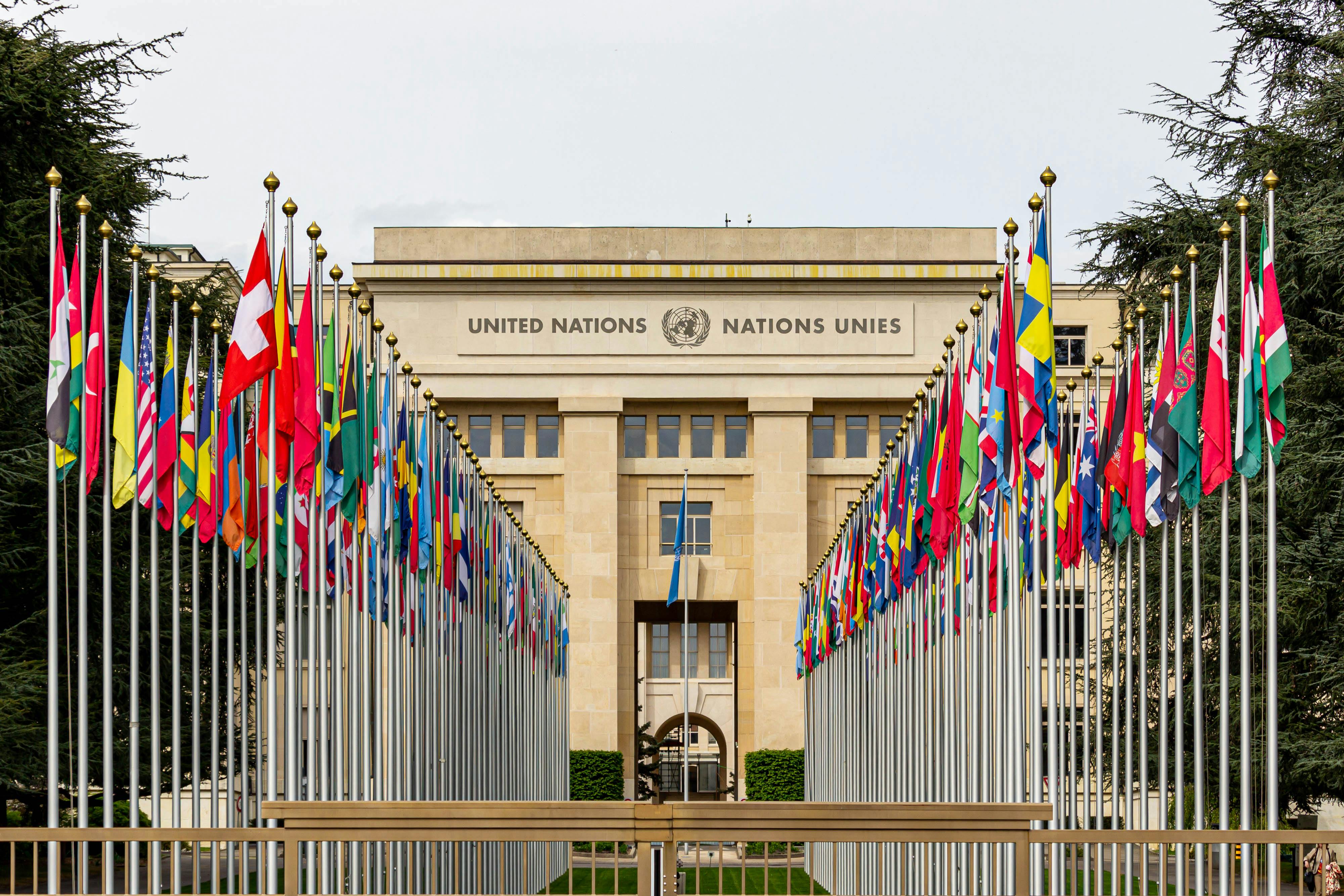
Photo credits: Magalhaes from Pexels
Let us slide into your dms 🥰
Get notified of top trending articles like this one every week! (we won't spam you)The Two-State Solution
On September 12, the UNGA endorsed the "New York Declaration," a plan for a peaceful settlement between Israel and Palestine, calling for "just and lasting peace grounded in international law and based on the two-state solution,” according to UN News. It outlines a peace plan that would result in an independent and sovereign state of Palestine coexisting with Israel.
It also calls for a ceasefire, a release of Israeli hostages, and an end to Hamas' governing role in Gaza. It additionally calls for the Palestinian Authority to govern all of Palestine and the disarmament of Hamas.
This endorsement came after an international conference co-chaired by France and Saudi Arabia. The vote was overwhelmingly in support, with members voting 142-10 in favor.
The actual UNGA summit from the week of the 23-29th will likely build on this momentum. According to UN News, this could mean that "the summit’s impact could inject new momentum into efforts to establish a UN roadmap towards two states."

Photo credit: Element5 Digital from Pexels.
Take the Quiz: What Kind of Political Personality Are You?
Ever wondered what role you’d play in the political world? Take this fun quiz to find out!
Formal Recognition of Palestine
On Sunday, September 21, the U.K., Canada, Portugal, and Australia announced that they formally recognized the state of Palestine. This is potentially huge because it could push others to do so as well, with "with several other European nations and U.S. allies set to follow suit," according to NBC News.
This is significant as this is a shift in foreign policy and a move away from their ally, the U.S.'s, views. An ever-expanding list of countries, many of which are traditionally allies of Israel, have said they recognize a Palestinian state. Additionally, this wave of recognition adds international pressure "on Israel as it doubles down on its campaign in Gaza despite international outrage," according to CNN.
France and Saudi Arabia co-chaired another summit, at the UNGA this time, on Monday, September 22, on the issue of Palestinian statehood. France announced its official recognition of Palestine as a state, and is credited with "spearheading Western efforts to revive a two-state solution," said CNN.
At this Monday summit, Saudi Arabia called on other Western countries to recognise the Palestinian state.
Will Palestine actually gain statehood?
It's hard to say. Especially because Israel's prime minister, Benjamin Netanyahu, said "there will be no Palestinian state" after the announcement of Western recognition of the Palestinian state over the weekend.
Right now, the situation in Palestine makes it hard to imagine a peaceful coexistence between them and Israel.
According to CNN, "many analysts and activists say this is the result of decades of Israeli policy aimed at sabotaging the two-state solution by building Jewish settlements on Palestinian land and undermining the Palestinian Authority (PA), which governs parts of the territory."
The UN considers Palestinian territory to be East Jerusalem, the West Bank, and Gaza. But these lands, which would make up the would-be state, are disjointed, destroyed, and controlled by Israeli military forces. Gaza has also been under heavy bombardment, having been reduced to a little more than rubble.
Additionally, CNN says that "some 700,000 Israeli settlers, most of whom are Jewish, now live in the occupied West Bank and East Jerusalem, in settlements considered illegal under international law."
It seems as though, right now, based on the situation on the ground, a functioning Palestinian state will be hard to create, even with a large push from Western countries.
"Their policy change likely won’t yield a meaningful difference for Palestinians on the ground," according to the Council on Foreign Relations.
However, that doesn't mean it's impossible. Things can change in the future, and the international community may be able to find a way to stop the war. The UNGA will be quite dedicated to the issue of the Israel-Palestine Conflict, and there is some hope that something can come out of the intense discussions and debates that will commence.
photo credits: Jeromin from Pexels

.jpeg)

.jpg)
