




You might not be into stuffed toys or blind box culture of any sort, but you probably have, on more than one occasion, heard of the name "Labubu". At first, like I did, you might just have found the name to be funny and cute, but then you might realize the name seems to be in everyone's mouth, held at the center of discussion whenever someone brings up "pricy things" or "bag charms". And yet its scale of impact doesn't seem to be limited to the people around you: its influence is global.
It has been backed by a number of celebrity advocates: Rihanna, Dua Lipa, Kim Kardashian, Blackpink's Lisa and many, many more. From Shanghai to London, the doll has ignited frenzied queues outside stores and fetched astronomical prices at auctions. Recently, a rare, mint-green version of it with a height of 131 centimeters was sold for 1.08 million yuan ($150,325) in Beijing.
Honestly, I am not the biggest fan of this little half-human, half-rabbit creature with a demon-adjacent smile and the teeth of a great white shark. However, it is undeniable that Labubu has become a cultural juggernaut. Coming in a range of sizes as figurines and plushies, a pink version of it has even appeared as a worn costume at a Pride parade and a protest against immigration raids in Los Angeles. And the question is: why does it deserve such big influence? What is the secret behind it's international worship?
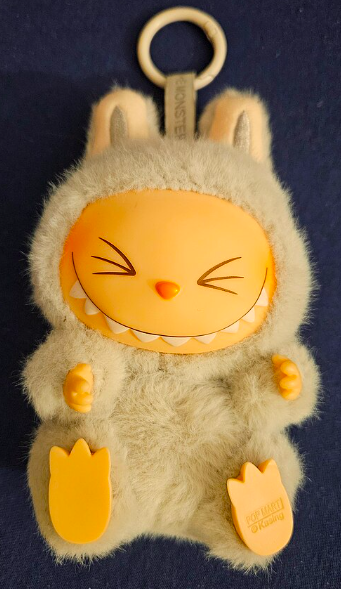
Image Credit: Gurumark from Wikimedia Commons
Let us slide into your dms 🥰
Get notified of top trending articles like this one every week! (we won't spam you)What is Labubu? The Backstory
The Labubu is not of simple background. It originated on the desks of Hong Kong artist Kasing Lung. Raised in the Netherlands, Lung was influenced by the tales in Nordic folklore and drew inspiration from its elves and mythical creatures.
Labubus made their debut appearance in his illustrated children’s book series, The Monsters. In the illustration book, Labubus were portrayed as creatures of kind and mischievous character, and especially unique for their furry features and creepy nine-toothed grin.
In 2019, Lung's collaboration with Pop Mart, a Beijing retailer specializing in collectible toys, truly ascended Labubus to a global appearance, having transformed its illustrations into key chains, plush toys, and vinyl figurines. It became even more viral in 2023 after leveraging Pop Mart’s “blind box” sales models that attracted millions of collectors globally.

Take the Quiz: Which Fall Activity Should You Try Next?
Fall is full of exciting activities to match your vibe! This quiz will help you discover the perfect way to enjoy the season.
Why Do We Love Them So Much?
After understanding its backstory, you might still wonder why they have captivated the hearts of so many! I might not be the most professional psychologist, but after frequent observations and interviews with a lot of Labubu lovers, here are some possible reasons why:
The Object Relations Theory
Humans always love having something of their own. The idea of having an exclusive romantic relationship or close-knit friendship is not unfamiliar. The same applies for relationships with objects.
People often name their Labubu's, dress them up until it is not only a trendy doll but rather, a personalized living thing. They are like stuffed toys. We grow emotional attachment to them and call them ours. These objects are often called transitional objects, where one would feel emotionally secure and safe with them around and tailored to oneself. With a wide range and diversity of Labubus, they could also become another form of self-expression without having to say it out loud: whether it's executed by purchasing a different color, version, or accessories of (and for) them.
Scarcity and Collecting
I feel like Popmart is very smart for combining the two creative ideas together. Labubu is often sold in “blind boxes,” so you don’t know which version you’ll get. This kind of forces a dopamine cycle where we want to own things more when they seem exclusive and rare.
Childhood for Adults!
Labubu is targeted not only toward children. In fact, it probably has become more popular among young adults at this point. This may reflect, to some extent, the kidult culture, where adults can feel nostalgia through owning cute and “childish” objects.
Collecting Labubu and similar playful objects can provide structure, self-regulation, identity exploration, and a sense of joy with no age limits required. To me, this kind of marketing also resembles the mechanism Jellycat adopted.
FOMO (Fear of Missing Out)
This might be fairly simple. You might not have liked it at first. At least I found it to be slightly average.
But when the people around you all get it, it is hard not to. Labubus might have become a type of social currency, where through the purchase or showcasing of it, one is showing that they are tuned into the cultural moment. The idea of community and social belonging is crucial. When this has become a social trend and a symbol of fashion or an icon of pop culture, owning one might turn into a must-do instead of an option.

Image Credit: Aethonatic from Wikimedia Commons
Conclusion
Labubu is obviously adorable, and I totally get the hype of collecting it. But one tip here would be to not force yourself into getting something (especially when it is not the most friendly-priced) just because other people have it. At the end of the day, it is still important to look at what you like and find interest in. If you love Labubus to the core, please go straight for it!


