




.jpg)

You don’t need a PhD in metaphysics or a triple espresso to get through T.S. Eliot—just a little curiosity and this article.
Who Was T.S. Eliot, and Why Should You Care?
T.S. Eliot (1880-1965) was basically the king of Modernist poetry. That means he wrote when the world was falling apart (World War I, crumbling traditions, existential dread), and his poems reflect exactly that: chaos, confusion, and the occasional quote in Latin.
He wrote The Waste Land, The Love Song of J. Alfred Prufrock, and Four Quartets—and somehow, he managed to sound like a genius and a mess all at once.
He was born in the US but decided England was cooler and became a Brit. He dealt with some serious mood swings (hello, classic poet struggles) and was married twice. Later in life, he found faith in the Anglican Church.
He was the type of guy to write you poetry but leave you on read for hours while he did that.
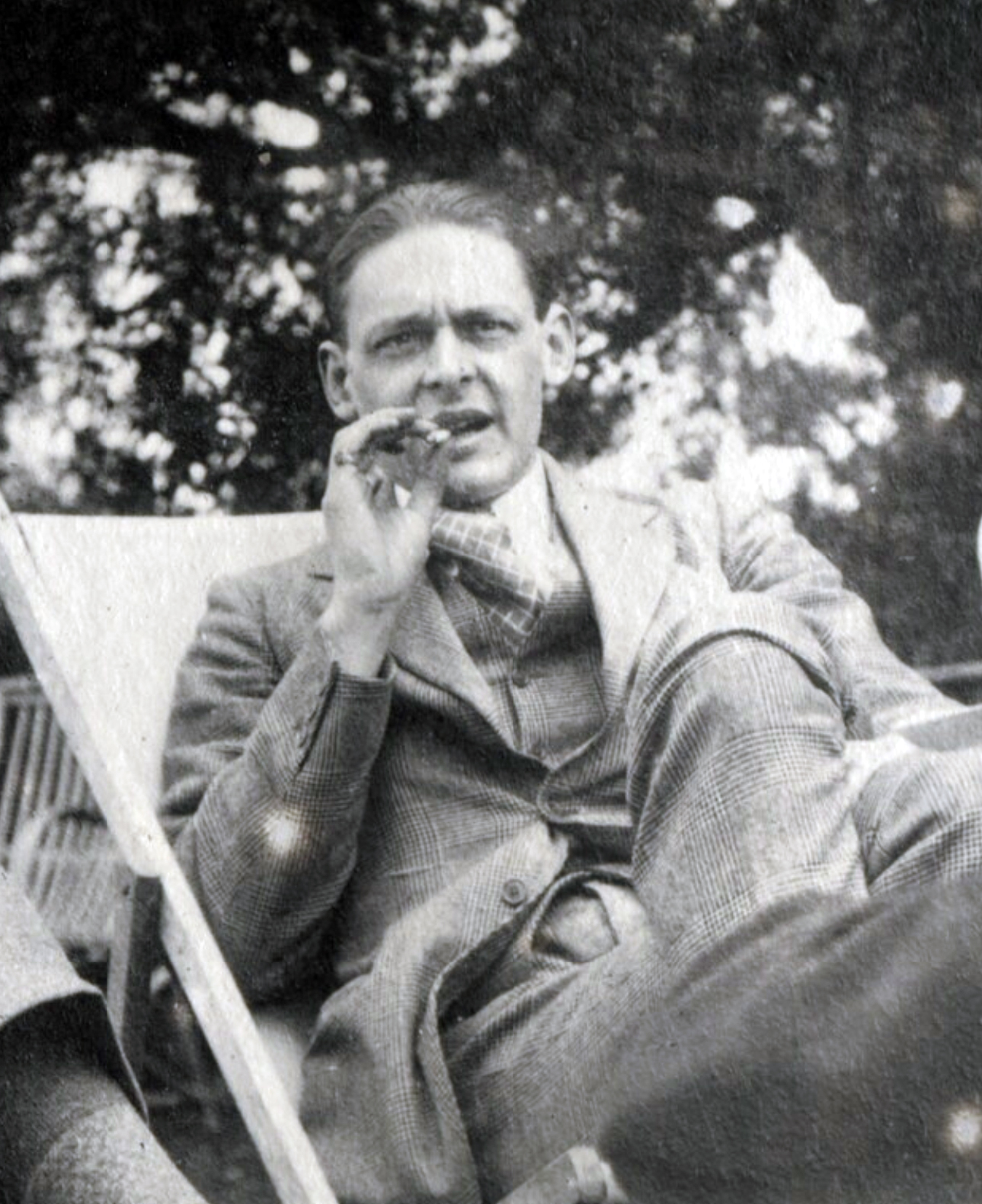
Image Credit: Lady Ottoline Morrell, Public domain, via Wikimedia Commons
"The Love Song of J. Alfred Prufrock" – AKA, The Original Overthinker
This poem reads like a diary entry from someone spiraling at 2 a.m. Prufrock is anxious, indecisive, and deeply insecure—he literally asks, “Do I dare disturb the universe?” before panicking about his thinning hair and social awkwardness. Same, Prufrock. Same. (Not the thinning hair part. I promise.)
“I have measured out my life with coffee spoons.”
Translation: I feel stuck in a routine and mildly dead inside.
This poem is a long, dramatic internal monologue. It's told from the point of view of J. Alfred Prufrock, a painfully self-conscious, neurotic, aging man. He’s thinking about asking someone an important question—presumably a romantic one—but spirals into doubt and anxiety instead.
It’s modernist because it breaks all the old poetic rules. There’s no clear rhyme scheme or structure. It jumps between random images, memories, and metaphors. I personally love it because of how it uses stream of conciousness, like you're inside Prufrock's brain as he spirals.
This poem is perfect for anyone who’s ever overanalyzed a text message or talked themselves out of speaking up in class.
The Waste Land – A Poem. A Puzzle. A Panic Attack.
Eliot’s most famous work is basically a collage of broken voices, myths, and references that would’ve made your English teacher cry tears of joy. I wanted to cry tears of frustration when reading it two years ago, but look at how the tables have turned.
It opens with “April is the cruellest month,” and from there, it gets more surreal. There are scenes of war trauma, ghost cities, tarot cards, and people speaking in multiple languages.
Reading it feels like trying to eavesdrop on five different conversations in five different centuries. But here’s the trick: you don’t have to get everything. Just let the images and emotions hit you. Think of it like a dream—you’re not sure what happened, but it still made you feel something.
Four Quartets – That One Poem You Read at Midnight
This one is Eliot older, wiser, and maybe a little less chaotic. Four Quartets is more reflective, less fragmented. It talks about memory, time, and the idea of returning to the beginning to understand the end. It’s quieter, deeper, and reads like the kind of thing you’d want to whisper to yourself during a rainy night with lo-fi music playing.
If The Waste Land is a panic attack, Four Quartets is a slow exhale.
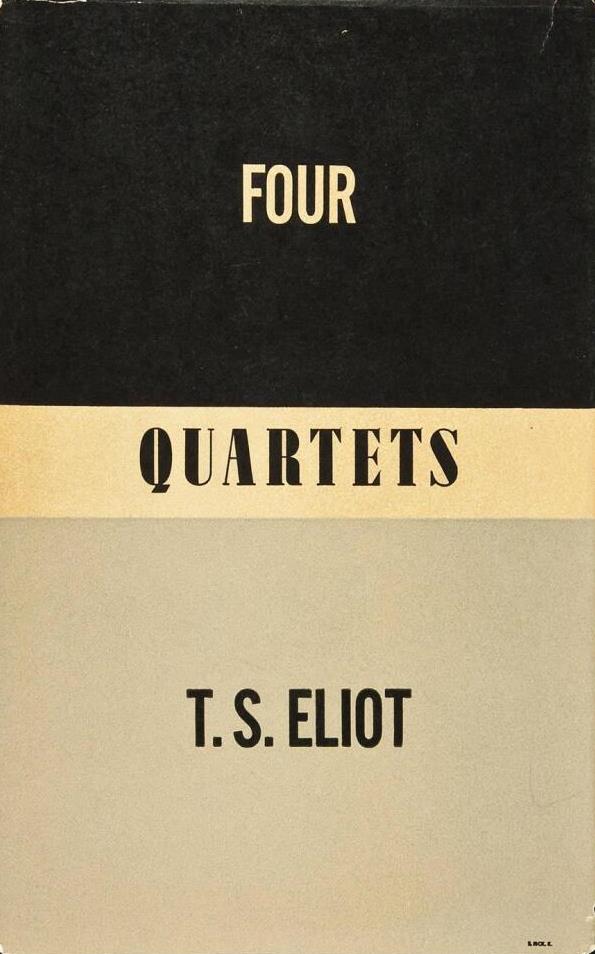
Image Credit: Harcourt / T. S. Eliot, Public domain, via Wikimedia Commons
Why Is He So Hard to Read?
Because he wasn’t writing for quick consumption, unlike most of the literary world at the moment. Eliot’s poetry is packed with references, layered meanings, and languages that assume you’ve already read, like, every book ever written. But here’s the thing: you can still enjoy it without knowing every reference.
Let yourself skip the footnotes. Read for vibes. You’ll be surprised how much still lands.
Tips for Reading Eliot Without Crying
Read it out loud. His poetry has rhythm and music—don’t miss that by skimming silently.
Don’t panic about the parts you don’t get. Some of it doesn't have to “mean” anything in a traditional way.
Google one or two things per poem. Not everything. Just the bits that genuinely confuse or intrigue you.
Accept the chaos. Eliot’s poetry mirrors a world that doesn’t make sense. You’re not supposed to walk away with a clean answer.
Final Thought: Eliot Was a Vibe, Not a Worksheet
You don’t need to solve T.S. Eliot like a math problem. You just need to sit with his words and let them stir something. Confusion is part of the experience, not a failure.

.jpg)