






With the spring semester starting out, students around the world are studying like crazy to get the grades they want. Maybe it's chemistry you're worried about, or French, or geometry, English, economics—whatever it may be—studying is definitely on your agenda in the coming weeks.
But, like many students, you may be unsure where to start. Aimlessly rereading your notes isn't going to do you any good; you need an effective method that's sure to make the information stick in your brain without sacrificing hours upon hours of your time.
That's where active recall comes in. Instead of mindlessly reading, you need to recall the information, and that can be done through a myriad of techniques. Here are the top 5 ways you can utilize this study cheat code.

Image Credit: George Dolgikh on Pexels
Let us slide into your dms 🥰
Get notified of top trending articles like this one every week! (we won't spam you)#1: The Feynman Method
Starting us off strong, the Feynman is when you teach other people what you're studying to better your own understanding. You can use a friend, sibling, or classmate as your "student," or just practice teaching in the mirror. (Though I personally like using my dog.) The key to the Feynman is simplicity—make sure your student actually comprehends the material.
Encouraging your student to ask questions is also a great way to test yourself. You might never have considered a very basic aspect of the material, but after thinking about it you might come to realize how little you actually know.
As a bonus to the Feynman, you can write a test using the material to create questions. Not only is writing test questions good review, but it makes you think like a teacher. What do you think will be on the test? Alternatively, you could have your student make a test for you after the lesson to get a fresh set of eyes on the material and possible test questions.
Take the Quiz: Which Extracurricular Activity Fits Your Personality?
Want to take up an extracurricular activity but not sure which one fits your personality? Then this is the quiz for you!
#2: Blurt
The most chaotic on this list by far, the Blurt technique is one of my absolute favorites. To successfully blurt, read through all your material without taking notes. Then, once finished, try and and "blurt" all this information by writing everything you remember by hand on a sheet of paper.
When you finish that, go through your probably disorganized mess side by side with your material and look for gaps. Then study those gaps and repeat the process. Once you can confidently blurt all the information, you'll find that you're pretty prepared.
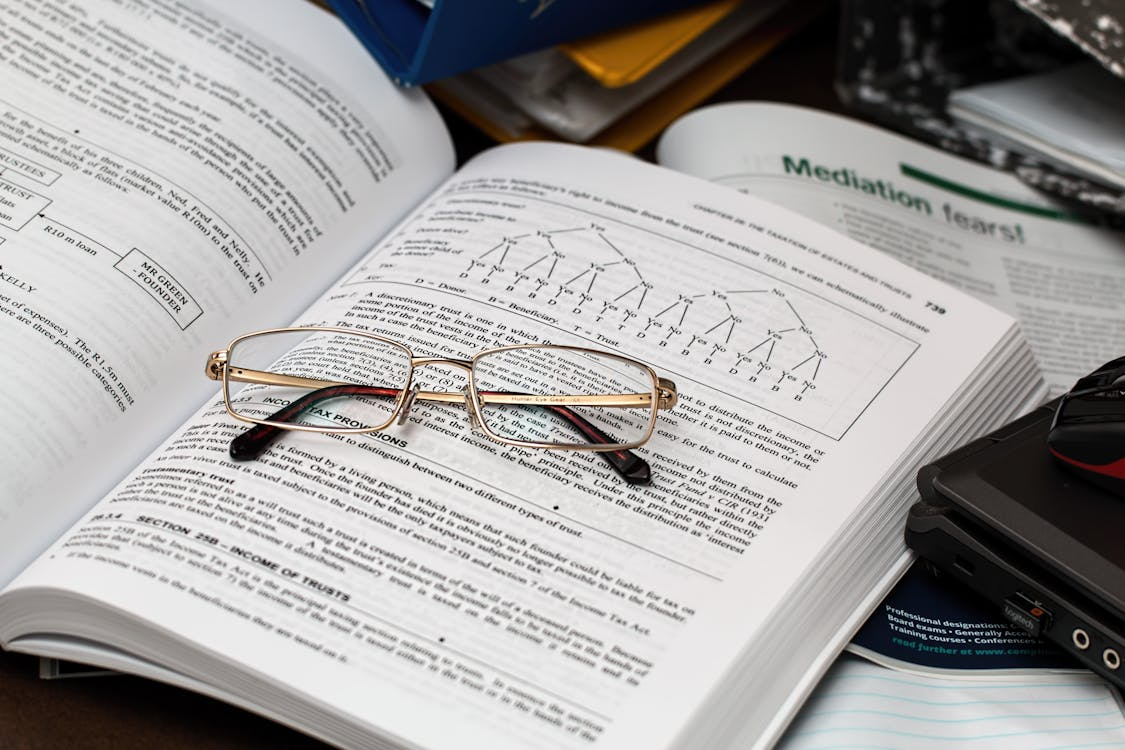
Image Credit: Pixabay on Pexels
#3: Flashcards
An oldy, but a goody. Flashcards are frequently done ineffectively, but once you know how to do them, they're one of the most successful methods. When using flashcards, make sure that you aren't just reading them mindlessly and are instead really committing them to memory. I've also found that the act of making the flashcards is also really helpful for sinking the information into your psyche.
If you're a visual or creative learner, flashcards are great because you can decorate them with helpful doodles to better synthesize the information. Visual learning brings us to our next method:
#4: Draw a Diagram
Complicated ideas always seem less complicated if you're able to draw them. Diagrams are great in any subject, but I especially love them for science. My environmental science final focused a lot on different cycles—such as the water, phosphorous, air pollution, and nitrogen cycles—so drawing out charts to help test myself on what I needed to study more came in major clutch.
Diagrams can also be helpful in other subjects. For example, you could draw a visual timeline for history, a conjugation chart for foreign language, or make a graphic organizer for vocabulary in English.
#5: Use Your Strengths for Your Weaknesses
I know, I know—what does that even mean? But trust me, it's incredibly helpful.
My biggest strength academically is English, and my biggest weakness is science. So, I English my way through science. That means analyzing my textbook like I would a novel, and really focusing on vocab.
If you're a math person who can't understand French for the life of them, treat French grammar like an equation by memorizing the rules. For me, this is also a mental trick. If I have to write a lab report for science, I treat it like an essay and pretend it's for English. This makes me way more inclined to be passionate about it.
Conclusion
These tips will get you pretty far, but the best advice I can give you is to find your own methods. These are what work for me, but it took me a while to find them. You may try them and discover that you love one and hate the rest—and that's great.
Every method you try gets you closer to one that sticks for your brain. Believe in yourself and you'll succeed.
Happy studying!
