







The book publishing market has seen steady growth in recent years, and this is reflected by the increasing number of book deals made annually and the growing popularity of both traditional and indie publishing. BookTok has become the starting point for many young writers who aspire to follow in the footsteps of their favorite authors.
This topic is very familiar to me, as I’ve been writing novels since before BookTok even existed. I’ve also worked as an editor for other novelists, which has given me valuable insights from both perspectives. While I’m not an accredited editor or writer, I’ve been active in the writing community long enough to confidently share advice and experience in an article like this.
In this article, I want to focus on what I believe to be the most overlooked—and yet most essential—part of writing a story: the Point of a Story (or POS).

Image Credit: Art Lasovsky from Unsplash
The Point of a Story
"So, are you writing a story? What is your story about?"
"Thank you for asking! Well, my main character is a nurse at this really hard-to-get-into hospital, and one day she meets this very mysterious man who's a patient... They both know they have to keep it professional, but they ultimately fall in love... I’m thinking it may be forced proximity, or something like that."
"Okay, sounds like a nice premise—but what is your story about? What message are you trying to convey through your characters and plot?"
"Message? Isn’t writing about having a good plot, great characters, and strong worldbuilding?"
Myth: The plot is what the story is about.
Reality: The story is about how the plot forces the protagonist to overcome a specific internal struggle or flaw while pursuing an external goal.
In other words, the plot is actually a covert and sophisticated transformation machine—its purpose is to push your protagonist through their arc.

Image Credit: SpaceX from Unsplash
Every Novel Needs a Point
Your novel needs a Point—and this isn’t a “nice-to-have” bonus. It’s a must-have.
Think of the Point as the moral of your story, the lesson, or the unique lens through which you want readers to see the world. Many writers overlook this concept, but it’s one of the most important things in storytelling. In fact, it’s the key to writing a novel that agents want to represent, publishers want to publish, and readers want to remember.
Why?
Because your story is not your plot. Your story is how your plot changes your protagonist and leads them to discover the Point.
The POS Is Your Compass
Your Point of Story (POS) acts like a compass. It helps you:
- Understand your main character
- Shape their backstory
- Build a coherent plot
- Create logical emotional and narrative connections
It also simplifies editing. When you're revising, you can ask: Does this scene support the Point? If it doesn’t, maybe it doesn’t belong.

Image Credit: Jordan Madrid from Unsplash
How to find the Point of your novel
There are four simple ways to identify the Point of your novel.
- You just know what the Point of the novel is. Yep, for some people it’s just that simple. Maybe you started off knowing exactly what message you wanted to convey with your novel, or maybe you had an “aha” moment. Either way, it’s there! It’s solid. And now you can build the rest of the novel on that foundation. Hazzah!
- You think about what messages and themes resonate most deeply with you. This method works really well if you’re one of those writers who have very strong ideals and beliefs that you keep returning to over and over again in your thoughts and through the novels that you read. The odds are, you are actually writing about one of these deeply held beliefs, and you just need to recognize it. For example, if you are someone who dreams of travelling and finding their place in the world, your MC could be someone whose journey starts when they move to another city to begin a new life. Make sure your Point feels universal and represents something that truly matters to you, and the story will feel more natural for you to write.

Image Credit: Aaron Burden from Unsplash
- You figure out how your protagonist changes from the beginning of the novel to the end of the novel, and then work backwards to your Point. This method works very well if you are one of those writers who has a clear understanding of your protagonist, their backstory, and their motivations. If you do know your protagonist will, the chances are you know how they grow and change throughout the novel. Remember, the Point of your novel is really just a reflection of whatever they learned that allowed them to change. So if you know how they change, you know the Point.
- You think about your plot from beginning to end and figure out what kind of lesson that plot might teach your protagonist. This method works very well if you’ve focused a lot on plotting and you have a pretty good idea of the major events of the novel, especially the ending. Ask yourself: what would this plot naturally teach the protagonist?
What’s Your Point?
- What important themes are present in your novel?
- What is the biggest theme in your novel? The one that relates most to the inner journey of your protagonist?
- What is the Point of your novel? Remember, the Point is the theme with a firm stance that relates to what the protagonist and the reader will come to understand after reading your novel.
Tips for Writing Your Point
- Make sure your Point is only 1-2 sentences.
- Make sure your Point feels universal and represents something that truly matters to you.
- It’s okay if it’s cheesy!
- The Point is NOT PROSE. It’s a simple guiding statement just for YOU so don’t get hung up on whether it sounds perfect just so long as it means what you want it to mean.
- Remember, the Point of your novel comes in iterations, and it may grow and change over time. This is just a “first try” so don’t think too hard about it.
The Difference Between a Theme and a Point
A Point takes a stand for or against something!
- Theme: Governmental racism and oppression
- Point: To fight back against systemic racism and oppression, you must stop believing the lies the government tells you about yourself and your people.
Now, I am the type of person who cannot understand things without examples. So I will give you some examples to make my Point clear.
Examples of Points From Popular Novels
- Fahrenheit 451 by Ray Bradbury: You must reject censorship, embrace uncomfortable information, and think for yourself to live in a safe and healthy society.
- The Hunger Games by Suzanne Collins: Oppressive systems begin to crumble when people choose empathy and defiance over fear and obedience.
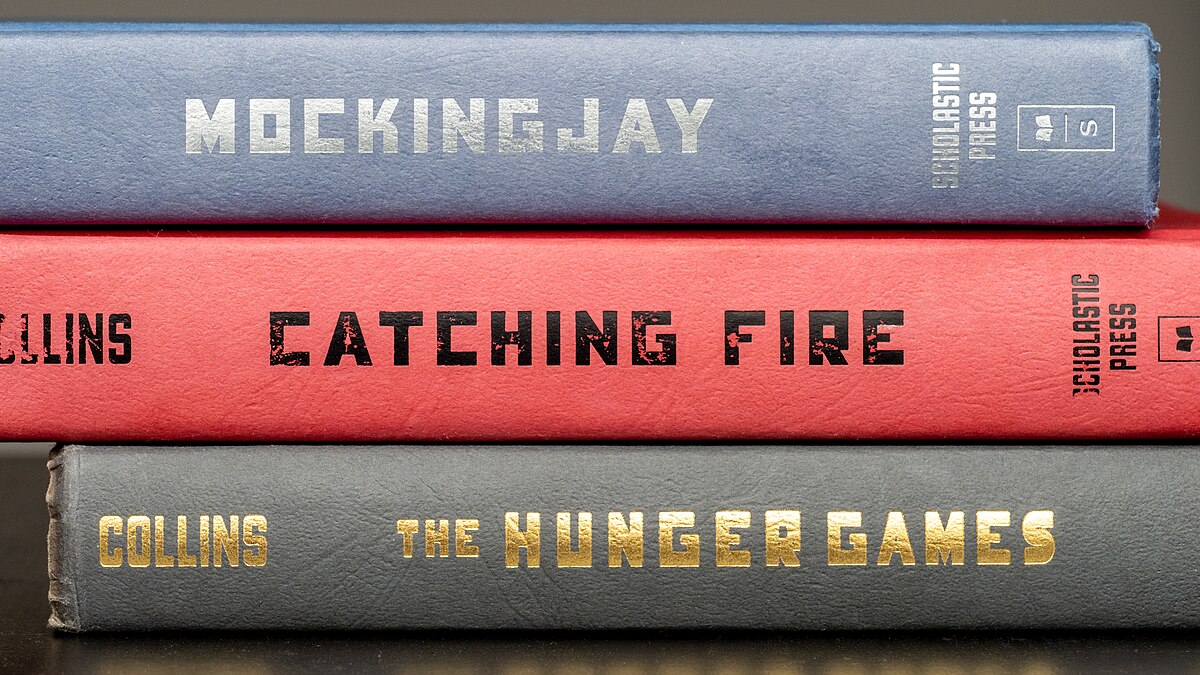
Image Credit: Hunger Games Book Collection by Wikimedia.Commons
- Babel by R.F. Kuang: Comfort within an oppressive system comes at the cost of complicity—and true justice requires tearing that system down.
Observe how these POS examples are specific and don’t fit within a certain genre. They could work in a fantasy story, a romantic one, even a thriller.
Other examples:
Let’s say your POS is: “Capitalism in art kills both the artists and the consumers.” The main character can be someone directly influenced by the industry—maybe an actress or a producer—to highlight how she’s both a product of and a participant in the system.
The plot could explore how the MC falls into the trap of sacrificing originality (in which case her character arc would be negative, and the book would leave a cautionary message), or she could fight to change the industry for the better (resulting in a positive arc and an inspiring message: that there is still hope if we take action now).

Image Credit: Marius Masalar from Unsplash
How not to write one: overly long and unclear: Healing comes from trusting and reconnecting with yourself. We cannot heal until we reintegrate that which we have cut ourselves off from—body, land, ancestors, history. History is within us and around us, and every piece of it is important, no matter the culture. At the same time, we must be wary of the mistakes of the past and never repeat them.
-> Too long, too complex, and ultimately more misleading than helpful. It doesn’t guide the writer clearly.
An example of a cheesy POS: You cannot mend a soul with medicine, but with love.
-> Yes, it’s a universal statement, and yes, it does its job! As long as you can create a compelling world and characters that can reflect this idea effectively, go for it!

Image Credit: Annie Spratt from Unsplash
An example of a very lyrical POS (how not to write it): What if we live in a beautiful story written by the wrong author?
-> ...what does it mean? Too vague and metaphorical. Again, this can be more misleading than guiding.
A better example of a POS that directly references your MC, the world, or the plot: When a doctor forgets his empathy, what will the patients do?
-> This could evolve into something like: The lack of empathy in an empathic field can be deadly for both the practitioner and the patient.
Conclusion
So, to conclude: the POS is essential for a good story. If you’ve already started writing a novel, novella, or even short stories, take a moment to ask yourself—do you have something meaningful to communicate to your readers, or are you just placing your characters in different situations without a deeper purpose?
I really hope this article and the examples helped you understand more about the basics of story structure. I’d love to hear your own POS ideas in the comments!
Also, do you have any preferences for what my next article should be? I was thinking about diving into how to write realistic characters—that’ll probably be a multi-part series as well.
Thank you for reading!