



If you have been on any social media in the past two weeks, you’ve heard of the controversy around the new Margot Robbie exclusive movie, Wuthering Heights. You’ve probably seen a mix of love and hate surrounding the movie, some people loving the modern spin and sensual retelling, or book lovers hating the movie and its disregard for the source material. The controversy is rooted in book fans feeling as though the movie is not an adaptation at all.
Let us slide into your dms 🥰
Get notified of top trending articles like this one every week! (we won't spam you)Take the Quiz: Which Sweet Home Character Are You The Most Like?
Find out which Sweet Home character you resonate with!
Who is the writer behind 'Wuthering Heights' ?
Wuthering Heights is a movie written by Emerald Fennell, known for films like the jarring Saltburn, whose aesthetic caught viewers’ attention in 2023, and Promising Young Woman, another Academy Award–winning film that dealt with themes of sexuality and abuse.
Adaptation Done Right?

This movie has sparked deep controversy over whether it is truly an adaptation of Wuthering Heights. Many fans argue that Fennell ignored the book’s material and used the name Wuthering Heights for fame and attraction. The book and the adaptation feel like two entirely different stories, one focusing on love, loss, and discrimination in a dark time in history, and one focusing on the aesthetic of history while modernly and sensually creating an entirely different version.
With 59% on Rotten Tomatoes, one can’t help but wonder if this movie missed the mark. But why?
When artists go into making an “adaptation,” it should stick to the original themes and motivations of the story. However they do it is up to them, but at the heart of the movie, it should remain the same. A great example of this is Frankenstein.
Frankenstein was a movie released in 2025 by Guillermo del Toro, which was his adaptation of the book. Plot-wise, the adaptation was very different from the novel. As someone who read the original text, many plot lines and storylines were taken out. (Did you know that Elizabeth died at the hands of the monster in the book?) However, the adaptation still kept the root of the novel and was able to translate that. The book and the adaptation answered the same question and carried the same themes and characters: What happens when man tries to play God? Overall, it felt like a Frankenstein adaptation, with aesthetic, timeline, characters, and dialogue that aligned with the heart of the story. Wuthering Heights, as Fennell said, seems to be a fantasy with just the name of the book and characters used.
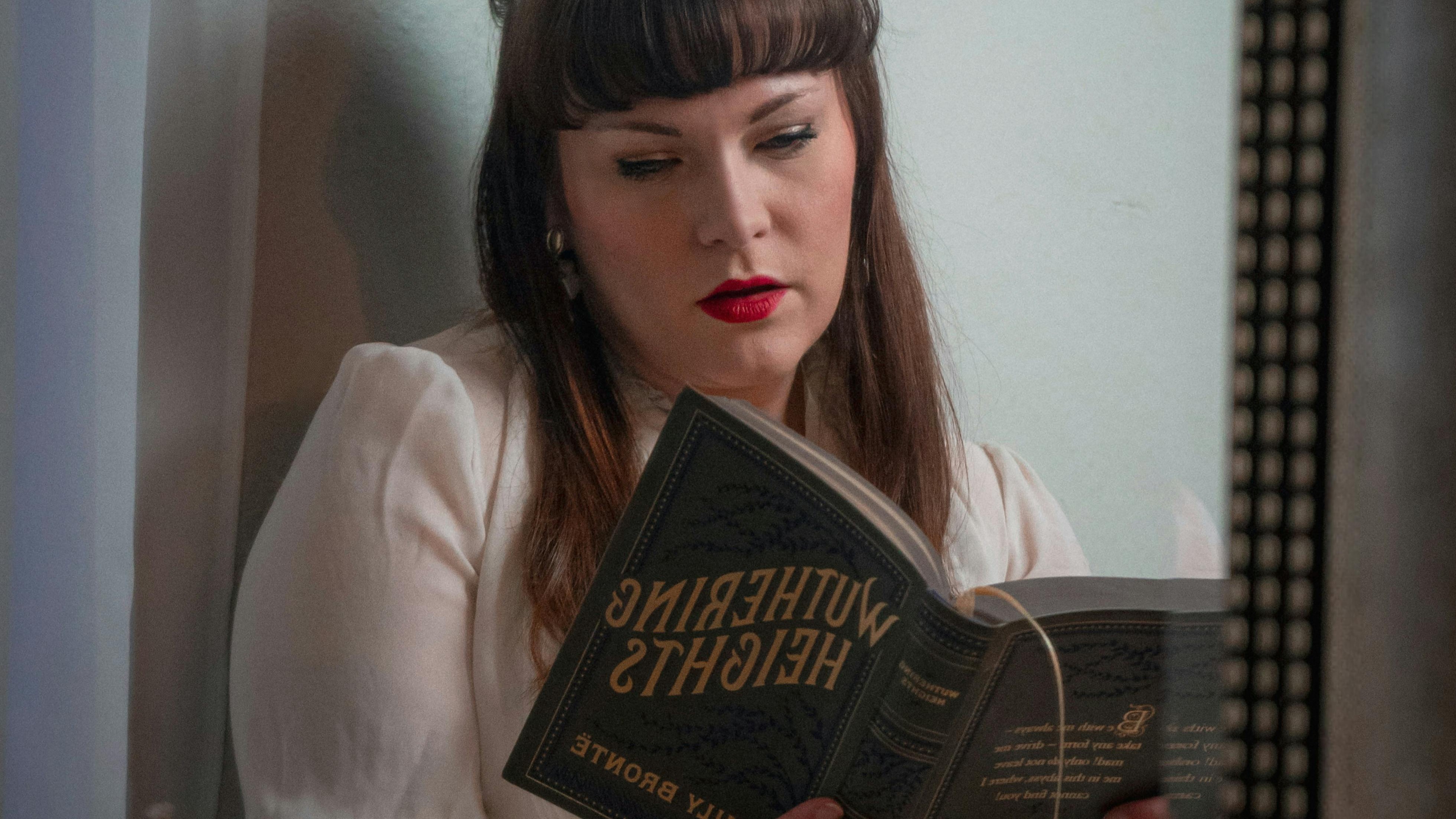
Image Credit: Rachel Brooks on Pexels
Where Did Fennell Go Wrong?
I think that Fennell’s movie could have been better received if it wasn’t called Wuthering Heights. When you name the movie after the book, you are held to the expectation that this is a true adaptation. Readers are going to look for certain scenes, themes, and story beats, and it is right that they should. But is it truly an adaptation if it ignores many of the story’s plots to the point where it is unrecognizable?
Fennell could have saved herself some backlash by naming the movie something entirely different and saying that she was “inspired by” Wuthering Heights. That would have fueled fans to go see the movie and perhaps even deem it an “original idea.” With the name change, it would have been easier to explain away the modern outfits, aesthetic, dialogue, and tones of sensuality in the film. However, I think she later realized this, as reflected in this quote:
“I can’t say I’m making Wuthering Heights,” says Fennell. “What I can say is that I’m making a version of it. There’s a version I remembered reading, it isn’t quite real and there's a version where I wanted stuff to happen and never happened and so it is Wuthering Heights and it isn’t.”
In the title of the movie, two quotation marks cover the title “Wuthering Heights,” which emphasizes the idea of someone quoting something. Many fans argue this is problematic in itself. This brings up not only a question about this movie, but about other adaptations of old novels as well. Should an adaptation be a tight-knit, close-to-the-book film representation, or should it be loosely based on the ideology?
The definition of a film adaptation is: Film adaptation is the process of transforming a source material, such as a novel, play, video game, or true story, into a feature film or television show. It involves reinterpreting the original narrative, characters, and themes to suit the visual and auditory medium of cinema, balancing faithfulness to the original with the requirements of the new format.
Big Controversy
The controversy around this film is layered, but one of the defining issues many have is the casting of Jacob Elordi and Margot Robbie in the main roles of Heathcliff and Catherine Earnshaw.
Wuthering Heights by Emily Brontë tells the story of Heathcliff, an orphan adopted into the Earnshaw family and raised at the isolated estate of Wuthering Heights. Heathcliff forms a deep and intense bond with Catherine Earnshaw, but social class and ambition complicate their relationship. When Catherine chooses to marry the wealthy Edgar Linton instead of Heathcliff, she sets off a chain of events driven by heartbreak and revenge.
The novel has a dual timeline spanning two generations and explores themes of obsessive love, social status, cruelty, and redemption.

In the book, Heathcliff is described as a “dark-skinned gypsy.” He is also described as being found by Mr. Earnshaw starving in Liverpool, a major 18th–19th century port city tied to global trade and the transatlantic slave trade. Heathcliff has long been interpreted as a person of color, which contributes greatly to the story and to why his and Catherine’s relationship could never work.
This aspect is a great deal and central to his story in the book, but it was ignored with the casting of Australian white actor Jacob Elordi. Many fans requested actors such as Dev Patel, known for Monkey Man (2024) or Skins (2007), to play Heathcliff.
Many fans also do not like the film for it's use of modernization and disregarding the 1800's timepeice that it is. The movie is bright, with outfits that look runway ready, and a sensuslaity that was not in the novel. Many fans beleive that the outfits were to gain Tiktok and Instagram fame, not truly for the sake of the adaptation.
Another controversial topic surrounding the film is the poster itself. The 2026 Wuthering Heights poster clearly mirrors the iconic 1939 Gone with the Wind artwork. While some may see it as a cinematic tribute, others see a problem.
Gone with the Wind has long been criticized for romanticizing the 1930s vision of the American South and softening the realities of slavery. The film presents enslaved people as impressionable and loyal blindly, glosses over the the horrible truth of plantation life, and leans into harmful Reconstruction-era stereotypes, including portraying Black characters as dangerous. For many viewers, referencing that imagery does not feel naturual.
The Future of Book to Film Adaptations
As a film fan, I think adaptations should focus on the truth of the story while creatively making decisions that are their own, but still truly centering what the original work is about. With many fans continuing to criticize this film, the true judgment ultimately lies in the hands of book lovers everywhere. Because when you adapt something that has lasted centuries, you are not just retelling a story, you are stepping into a legacy.