







Every year, the NFL season kicks off in September, and for fans like you and me it's exciting predicting what teams are going to win it all. But every offseason, there seems to be an ongoing issue: Franchises are hesitant to pay their Superstars.
Unlike the NBA, MLB, and PGA, NFL contracts are not fully guaranteed. When a franchise considers paying a player like Micah Parsons $30 million per year, they're not looking at his performance; they're planning for the next 5–8 years.
The root cause is two things: A devastating season-ending injury or a sudden performance decline. If a player is released early, due to injury or a decrease in performance, the team will face backlash. Most teams do not want to not take that risk. It's quite simple.
Let us slide into your dms 🥰
Get notified of top trending articles like this one every week! (we won't spam you)The Biggest Risk: Sudden Injury Or Decline:
It's no surprise that football is home to one of the most athletically gifted athletes in the world. But one awkward landing or one bad hit, and your career trajectory changes. For the next 5 or 6 months you will be focused on recovery, and that is the sole reason most franchises are hesitant to hand out long-term extensions.


Take the Quiz: Are You a Good Cook?
Think you're a good cook? Well, take this quiz and find out...
2 Things Franchises Fear most:
- A Season-Ending Injury
-Sudden Performance Drop
If a player receives a massive contract extension in the offseason, but his play style regresses or get hurt, the owner faces backlash from different media and fans. This can take a toll on the salary cap of a franchise, which is why avoiding risk is better than betting on one and a team's entire future.
My Take: It's smart to be hesitant about extending a player or letting them walk in free agency, but at the same time, if a franchise wants to aim for Super Bowls, you have to take those risks. It's what made the other teams in the past great!
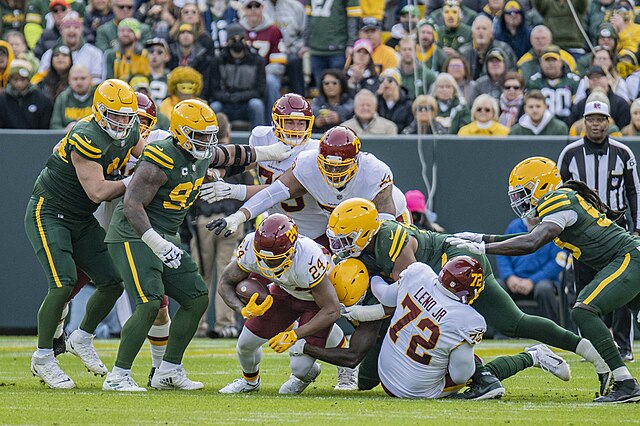
Photo Credit: All-Pro Reels From Wikimedia Commons
The Brandon Aiyuk Saga:
In the 2024 NFL Off-Season, it Seemed Like San Francisco was contemplating extending Brandon Aiyuk long- term. These contract talks went on for months and months, with fans and reports waiting eagerly to see what would happen.
Fast forward to August of 2024, and they agreed on a 4-year contract extension worth up to $120 million. At the time, this move made the 49ers instant Super Bowl Contenders.
Now, as of 2025, Brandon Aiyuk has yet to step foot on turf this year, and is now set to be released after the conclusion of the 2024–2025 season. This move blatantly shows how a contract extension can come with regret for a franchise.
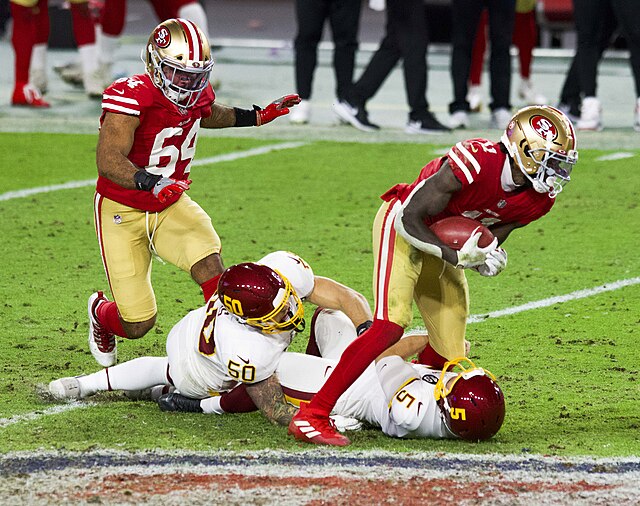
Photo Credit: All-Pro Reels/ Wikimedia Commons
Micah Parsons and the Jerry Jones Dispute:
The Dallas Cowboys are another team added to this topic. In the 2025 NFL Off- Season, Micah Parsons was eligible for a new contract extension after his rookie deal.
At that moment in time, he proved himself to be one of the best upcoming defensive lineman in the NFL. Despite this, the Cowboys feared what would happen to Micah Parsons if he committed long-term. Although in the previous offseason, they paid others like Dak Prescott, C.D.
Lamb, Jake Ferguson, and Trevon Diggs (now set to be released). They feared a devastating injury that would cause the team to go in a downward spiral.
Now, as of late, Micah Parsons is a Top 5 Pass Rusher in the League, and has recently been traded to the Green Bay Packers in August. Sadly, on December 14th, 2025, Parson tore his ACL and is potentially going to miss the remainder of the 2025 season.
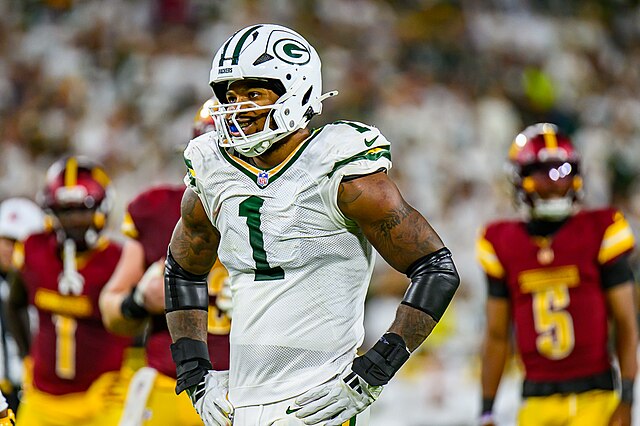
Photo taken by All-Pro Reels/Wikimedia Commons
Should Fear Really Control Future Contract Extensions?
Injuries happen, and contracts can go horribly wrong. But, this should not prevent Franchises from achieving.
Great Teams are built entirely on trusting elite talent, not hesitating on extending players. Athletes sacrifice their time and bodies in order to be great during the season. So asking one to prove themselves repeatedly without long- term intentions feels unfair.
My Opinion: If a Franchise wants long-term success and has championship aspirations, they must be willing to take risks for great players.
At the end of the day, the NFL is built on betting and building a foundation to win, not playing it safe.

.png)