






"Every time a bell rings, an angel gets its wings"
There are few movies as synonymous with Christmastime as Frank Capra’s “It’s a Wonderful Life.” Starring Jimmy Stewart and Donna Reed, it depicts the tumultuous story of George Bailey, who attempts to end his life after a series of financial struggles.
Despite its current status in pop culture as a Christmas classic, the movie was initially considered a box office failure, failing to even break even on production costs. For decades, it was largely forgotten as a relic of old Hollywood, only emerging in the last century to get the recognition it long deserved. From the screen and beyond, It's a Wonderful Life is a redemptive story about finding hope in unconventional places.
Let us slide into your dms 🥰
Get notified of top trending articles like this one every week! (we won't spam you)The Greatest Gift
It’s a Wonderful Life is loosely based on “The Greatest Gift,” a 1943 short story by Philip Van Doren Stern, which is loosely based on Charles Dickens’s “A Christmas Carol.” In early drafts for the movie, George Bailey was an idealistic politician who grew increasingly cynical before considering ending his life over a lost election.
This kind of story was right up Frank Capra's alley. At the time, he was already a well-known director, having made Mr. Smith Goes to Washington seven years prior.
His filmography emphasizes the American dream and stories of everyday people who can make a difference against corruption. Along with five other writers, It's a Wonderful Life became a story about one man who sacrifices his own ambitions to help others.
The leading role went to Jimmy Stewart, famous for often portraying the "everyman" in movies (and the star of Mr. Smith Goes to Washington). He eagerly agreed to appear in the movie without even hearing the plot.
Stewart hadn't acted in five years, having served in World War 2 and developing what would be known today as PTSD (Post-Traumatic Stress Disorder). In a scene where George prays in a bar, he begins to cry. This part wasn't scripted; it was the result of Stewart feeling overwhelmed with emotion. In a 1987 interview, he recalled,
"As I said those words, I felt the loneliness, the hopelessness of people who had nowhere to turn, and my eyes filled with tears. I broke down sobbing."
With his own inner turmoil, he was able to bring an authentic pain to George Bailey, which stands out amidst old Hollywood acting. Despite the film's initial failure, it revitalized Stewart's career and opened him up to more nuanced roles.


Take the Quiz: Which Studio Ghibli Character Are You?
Are you a brave warrior, a free-spirited dreamer, or a gentle guardian?
Initial Failure
Upon release, the film was a commercial flop, failing to turn a profit on heavy production costs. The same year as its release, two informants would report the film to FBI Director J. Edgar Hoover.
They reported that the film contained subtle anti-Americanism that verged on pro-communist values with its depiction of a corrupt banker. Amidst the Red Scare, the media was heavily monitored and censored to suppress themes that could be portrayed as Communist. Despite these warrants, the FBI didn’t pursue action against Frank Capra or the film, but it remains a part of the movie’s lore.
Regardless, It's a Wonderful Life was met with a lukewarm response, and its failure can be attributed to one factor: timing. Released in January, it failed to capture any Holiday hype. But beyond seasonal timing, it was released in a cultural climate that preferred escapist stories, none of financial and personal turmoil.
It's a Wonderful Life represented a generation of men who returned from war as changed individuals, and the heavy themes depicted served as an unfriendly reminder to many of their current struggles. With its modest attention, the movie faded into the past of old Hollywood.
Return to Relevancy
1974 marked the turning point for It's a Wonderful Life. Nearly 30 years after its release, the movie's copyright had expired, and with it being in the public domain, it was heavily on cable TV. This massive exposure brought the movie a greater audience and a newfound appreciation.
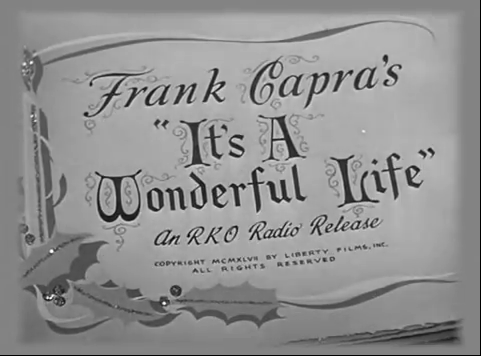
Image Credit: National Telefilm Associates from Wikimedia Commons
In the years that followed, It's a Wonderful Life would become synonymous with Christmas. In 1995, it was listed in the Vatican Church's Alcuni film importanti (Some Important Films). The film has been praised by many notable directors, namely, Steven Spielberg, David Lynch, and Guillermo del Toro, among others. More recently, Pope Leo XIV named it as one of his four favorite films.
Today, It's a Wonderful Life stands out as a movie that connects with the human spirit beyond the holiday season. It is one of the few old Hollywood films to address depression and suicide, with a realistic optimism that never borders on saccharine. It is a reminder to viewers of the unseen impacts we have on others and the inherent value in each person's life. While It's a Wonderful Life might've been met with a lukewarm response, it has stood the test of time as one of old Hollywood's greatest works.
"Strange, isn't it? Each man's life touches so many other lives. When he isn't around, It'she leaves an awful hole, doesn't he?"

