





Let’s be honest, in high school, we learn more about how our cells function than we do about how to pay our credit card bill on time. It’s no surprise that 80% of Gen Z have consulted AI for financial issues. And why shouldn’t we? It's private, it doesn't judge us for our $7 bank balance, and it's available 24/7.

Image Credit: Yan Krukau from Pexels
Gen Z is the official “AI-first” generation. We’re using it for money management, too: over 67% of Gen Z use AI to manage their personal finances. But while AI can be a lifesaver, more than half of those who followed AI-generated financial advice realized they've made at least one bad financial decision. This could mean buying the wrong stock or withdrawing money from the stock market at the worst possible time.
So why does a generation that grew up online keep making financial missteps offline?
Let us slide into your dms 🥰
Get notified of top trending articles like this one every week! (we won't spam you)The Overconfidence Gap
One major reason people make poor financial decisions is the “overconfidence gap,” the mismatch between how confident we feel and what we actually know.
In 2025, a study by the TIAA Institute found that Gen Z has the lowest financial literacy of any generation, answering only 38% of questions correctly on its financial literacy survey. Yet many Gen Z’ers report high confidence in their financial decision-making.
This confidence is supported by a heavy reliance on AI. Because Gen Z is highly comfortable online, many trust financial advice generated by AI, even when they lack the background knowledge to judge whether it is accurate or risky.

Image Credit: RDNE Stock project from Pexels
If you want to know where you stand, economists Annamaria Lusardi and Olivia Mitchell developed three simple questions to reliably predict your financial literacy. Answer these questions and see where you stand:
- If you put $100 in an account earning 2 percent interest per year, how much will you have after five years? (A) More than $102, (B) Exactly $102, (C) Less than $102.
- If your savings account earns 1 percent but inflation is 2 percent, will you be able to buy more, the same, or less after one year? (A) More, (B) Same, (C) Less.
- True or False: Buying a single company’s stock is safer than buying a stock mutual fund.
(Answers: 1. A, 2. C, 3. False)
If these questions felt harder than expected, your reaction reflects an overconfidence gap. In 2021, fewer than 30 percent of Americans answered all three questions correctly, yet many still felt equipped to make complex financial choices with AI support.

Image Credit: Kampus Production from Pexels


Take the Quiz: Religion, Schools, and Equality
Religion in Schools: Teaching Respect, Not Bias.
Don’t Feed the Bot Your Private Data
If you decide to use AI, it may ask for personal details. If it does, you have lots of reasons to feel wary. What information should you actually give, and what puts you at risk?
AI definitely does not need your Social Security number, bank account numbers, or passwords. If a platform ever asks you for that, then that’s a major red flag. Instead, only provide anonymous information.
For instance, you could tell the AI your monthly take-home pay, rent, and recurring bills. This gives AI a way to organize your salary and expenses. Then it can help explain concepts like the 50/30/20 percentage rule (needs/wants/savings) without exposing your identity.
AI is a Librarian, Not an Oracle
You might have seen stories about AI predicting company earnings better than humans do. One 2025 Stanford study even showed that an "AI analyst" outperformed human stock portfolio fund managers by 600 percent over a thirty-year simulation.
But the reality is that those are professional-grade tools used by experts with massive volumes of data. For the rest of us, using a basic chatbot to help us pick stocks for our 401(k) is attempting to make a Michelin-starred meal just because we have a stove and some utensils. Remember, AI works best as a librarian. It’s best to use it to explain what a Roth IRA is, rather than as a fortune-teller predicting what stocks to buy.
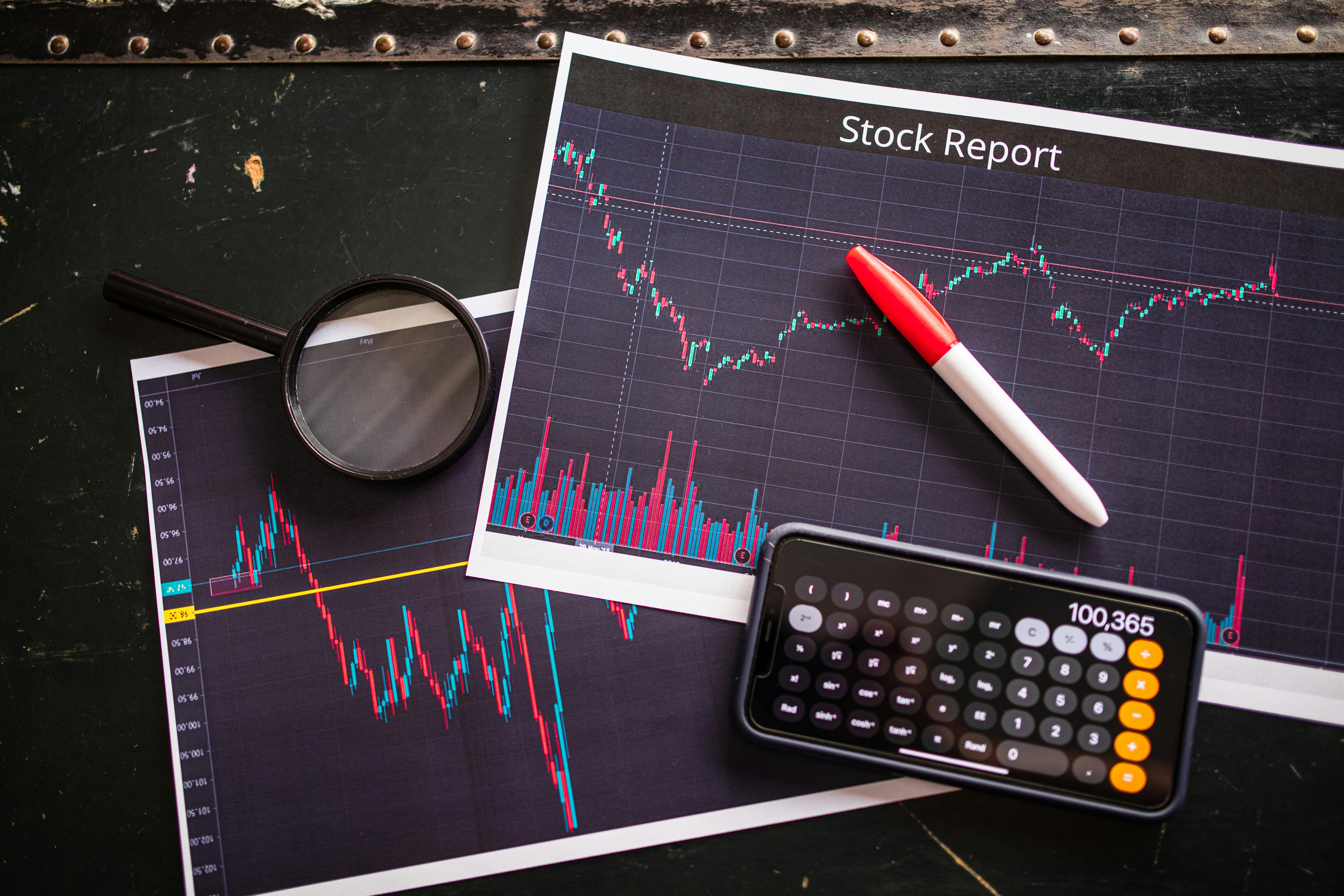
Image Credit: RDNE Stock project from Pexels
What Actually Works
Most people who successfully use AI in their financial lives use something called a robo-advisor. These are algorithm-driven services that have been around since 2008. Robo-advisors first ask you about your goals and tolerance for risky investments, and then, based on your answers, they will invest your money in different ETF’s (Exchange-Traded Funds).
ETFs bundle investments together, so instead of betting on one company or one bond, you own small pieces of hundreds or even thousands of different companies. This spreads out your risk and minimizes the pain of any single bad bet.
Research shows that people using robo-advisors tend to stay diversified and pay significantly lower fees (around 0.25 percent compared to 1 percent for traditional financial planners). Over the decades, that difference in fees can add up to thousands of dollars that stay in your pocket.
Learn To Play The Game
Today, the problem is that so many of us are asking AI our financial questions because American schools do a poor job of teaching practical money skills. We’ve badmouthed the topic of money so much or made it taboo that Gen Z is too intimidated to ask questions about it. In fact, three-quarters of those seeking advice from AI say they do so because they are too embarrassed to ask another human.
But it’s important to learn. That’s the only way to really accumulate wealth: understand how money works. If you don’t know the rules, then it’s extremely hard to play the game.

Image Credit: Karola Grabowska from Pexels
Final Word
So, if you don’t know what to do, just remember that AI isn't magic. Yes, it can be used to make suggestions on saving, spending, and explaining financial terms. But unless you're a trained professional with access to lots of data, using AI to place market bets is a lost cause.
The bottom line is to use AI to explain the rules but know that it won't win the game for you.
