






In the past two years, I took four Advanced Placement (AP) tests: AP Calculus AB, AP Calculus BC, AP Biology, and AP Statistics, and scored a five on all of them. I wasn’t ready for them until two days before each test. The pressure was real, and the content was intense, but the moment I walked out of the testing classroom, the feeling of accomplishment filled me. Each exam challenged me and taught me something beyond the test itself.
So, here's what my experience was like with each AP test.
Let us slide into your dms 🥰
Get notified of top trending articles like this one every week! (we won't spam you)AP Calculus AB
It was the first AP test I took, and it was the hardest class I have ever faced. I had just turned 15, and the content was completely different from the algebra and geometry I had learned over the past ten years.
Only toward the second semester did I start to connect everything and realize that the idea of the antiderivative telling you the total area under a curve suddenly felt… kind of beautiful.
The Calculus AB test does not cover a large amount of material. The most challenging part was grasping the new concepts of derivatives and integrals. Besides going over practice problems from past years, memorizing the common derivatives and integrals is all that’s essential for this test.
Take the Quiz: What Type of Notes Should I Take?
Discover the best note-taking method for your learning style!
AP Calculus BC
Since I took the AB test, studying for this test the next year didn’t take a long time. But the part that gave me trouble is applying them to solve problems and avoid making mistakes.
For the 2025 AP Calculus BC test, free response question number 2, which focuses on polar area, “served to differentiate among BC students, who are qualifying for AP 4s and 5s,” said head of AP program Trevor Packer on Instagram.
I felt the exact same when I was looking at question number two. Therefore, even though it seemed like I could understand every formula in the textbook, spending more time practicing could benefit me even more. This test can prepare me for college math.
Calculus is a critical component of advanced mathematics. I was surprised to learn that 60% accuracy is enough to achieve a 5, but then I quickly realized that if I were to continue math in college, I would have to learn more than that.

Image Credit: Monstera Production from Pexels
AP Biology
I studied an honors introduction to biology in school, which covered approximately 70% of the material covered in AP Bio. Before the test, I self-studied the additional materials and reviewed past multiple-choice questions and free-response questions. Cell communication and gene expression were hard for me because I had to memorize the pathways and molecules in each step.
Therefore, if you are taking the test, you should definitely get an early start on familiarizing yourself with the terms and review concepts periodically. Putting the materials in and using AI to generate practice questions was also useful.
In the multiple-choice questions, I was most surprised by the way the questions were asked. The test does not ask direct concepts (What’s the function of a mitochondria?); instead, it creates a real-life scenario to test your application (If a certain gene that codes for mitochondria is mutated, what will happen to the cell?).
For the free-response questions, the most important advice I received was to answer the question directly. The good thing about the question is that the “task words” are bolded: justify, describe, explain, or define, and so on. You can find a list of them here, along with their matching requests to obtain credits. Spending only the time necessary to answer the required parts can save you a significant amount of time.
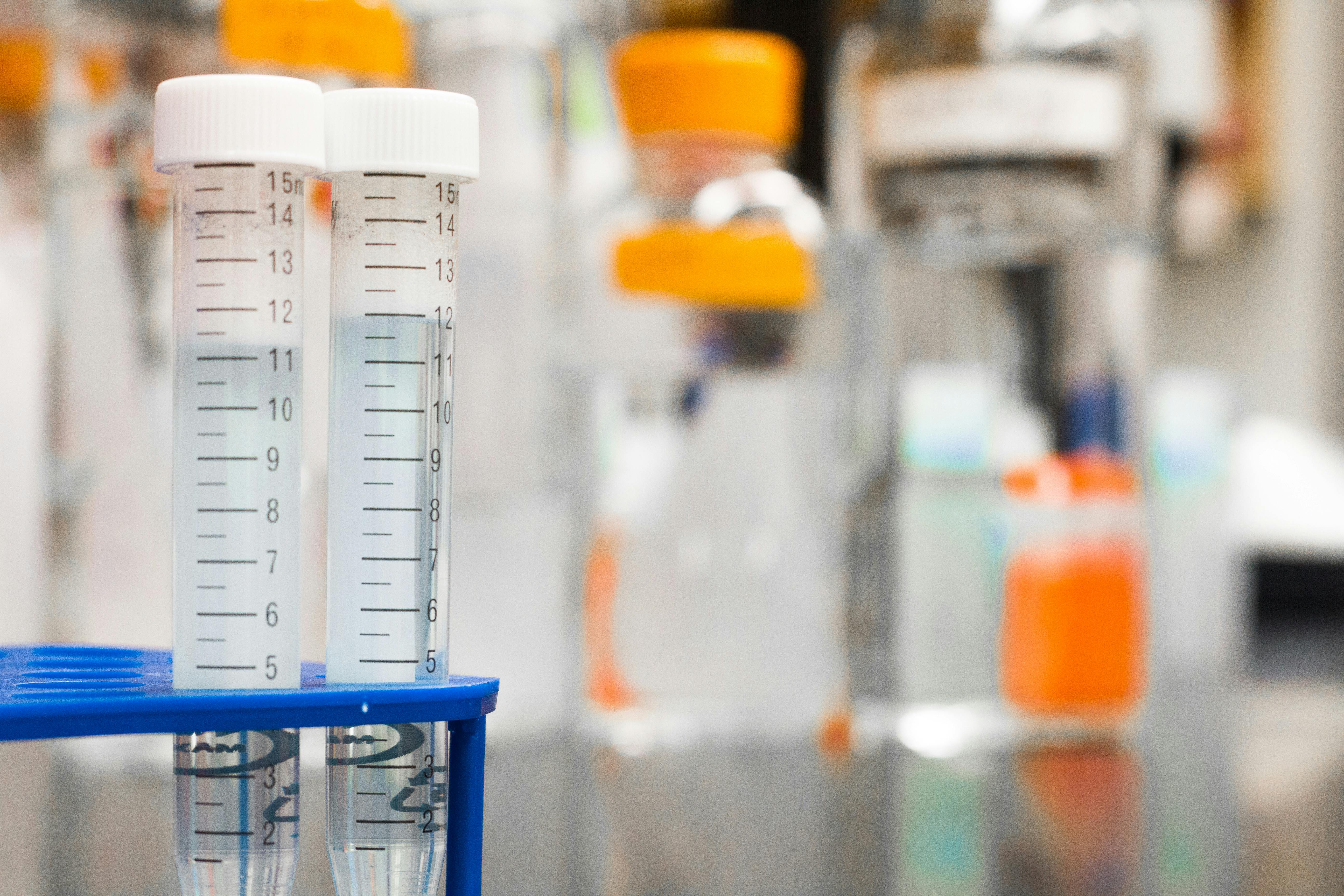
Image Credit: Martin Lopez from Pexels
AP Statistics
Statistics is different from calculus; the test felt even more practical. I can now calculate and model most of the decision-making scenarios in my life. For example, I can improve my tennis game by analyzing the statistics of my past matches to determine which shots are worth going for. Of course, most of the time I just go with my feelings—who wants to do math at any time?
The good thing about AP Statistics is that the graphing calculator is allowed for the whole test, which gives you the advantage of avoiding calculations by hand and making small mistakes. However, make sure to become very familiar with your calculator through YouTube or your teacher to avoid wasting time looking for functions.
When I was taking the test, I spent 5 minutes doing a two-by-four chi-square test by hand, entering eight fractions with brackets and squares one by one. Just like AP Bio, I struggled when I was preparing to answer the free-response questions. Almost always, I failed to meet all the requirements to receive full credit according to the scoring guideline. According to the sample answers, you have to answer in context. For example, instead of simply saying:
“We reject the null hypothesis.”
At the end of your calculation, you have to say:
“Since the p-value is smaller than the critical value of 0.05, we reject the null hypothesis. We can conclude that the study does provide convincing evidence that the population proportion of exercise center members from 20 to 50 years of age who would be interested in taking online fitness classes is different from the population proportion of adults aged 50 years and older who would be interested in taking online fitness classes.”

Image Credit: Lukas from Pexels
In conclusion, stepping into a college preparatory course in high school made me anxious. However, using external tools like flashcards, AI, and even a clock to remind myself to review made me more confident for the test. Across all tests, I learned that consistent practice, applying what I know, and getting familiar with testing tools were the keys to success. Good luck on your AP tests!


.jpg)

