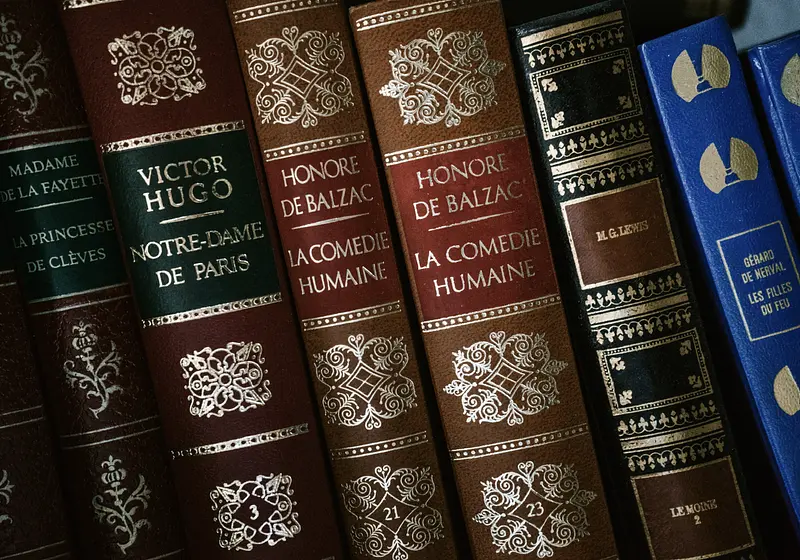





Classics have garnered a reputation for being the sort of thing you read because you have to, because they’re on every literature specification, because someone somewhere decided they mattered. The only things you can expect to take from them are some intellectual superiority points and the occasional archaic word. By being made an obligation, all the joy is taken out of them and their relevance is left uncertain. But surely if a text survives the relentlessly changing tides of time, there is something of value in it?
In a world increasingly plagued with anti-intellectualism, where post-feminism seems to have peaked at reductive phrases like “girl maths” and “I’m just a girl”, I do believe there is a quiet rebellion in wanting to learn more, wanting to be more. You can find a great kinship in the classics, where you know intimately that people many years ago felt the same things as you and humans really have not changed that much at all. I hope this encourages you to give classics a chance and, in doing so, give yourself a chance to experience true literary magic.
For my three classics, I tried to pick texts that exuded subversion. A not completely unfounded criticism of the literary canon is that it has historically been comprised of straight, white men - and only those wealthy enough to indulge in creative pursuits. But in these three classics, I hope you will find the vibrant, sometimes unexpected, voices that converted me to Team Classics.
Let us slide into your dms 🥰
Get notified of top trending articles like this one every week! (we won't spam you)1. Giovanni’s Room
People can't, unhappily, invent their mooring posts, their lovers and their friends, anymore than they can invent their parents. Life gives these and also takes them away and the great difficulty is to say Yes to life.
James Baldwin’s queer masterpiece is every bit as revolutionary now as it was in 1956. Set in 50s Paris, we immediately find ourselves thrust into chaos, in all its vibrant, irresistible glory. When David – a young American who prides himself on repressing (or reducing to degrading mechanics) his most carnal desires – discovers Giovanni, a charismatic Italian life-incarnate, the clock has already begun to tick for them.

Image credit: Couleur from Pixabay
We surely must commend the novel for how boldly it deals with questions of masculinity, inherited shame and moral conflict, but it is in the details that the true magic lies, in plain sight. Baldwin is a diligent student of the human condition and he paints his characters lovingly, with such patience for their various idiosyncrasies. Beyond the glowing pillars of David and Giovanni, one cannot help but enjoy the beautiful microcosm of humanity seen in characters like Jacques and Guillaume who are allowed to be eccentric, but also so much more.
Moreover, the settings Baldwin crafts have their own immortality, especially the liminal space of the gay bar. It persists in my mind as a quasi-real spaceship existing on its own cosmic plane. It is infinite.

Take the Quiz: What Candle Scent Matches Your Overall Aesthetic?
Halloween is just around the corner. It's time to light that candle. Take this quiz and find out what candle scent suits you best.
2. The Yellow Wallpaper
John laughs at me, of course, but one expects that in marriage.
This short story by Charlotte Perkins Gilman is one of the greatest contributions to the feminist literary canon and, at only about 30 pages, is also one of the most unintimidating starter texts. If you’re a tad wary of getting straight into Wollstonecraft and Beauvoir, ‘The Yellow Wallpaper’ is the perfect read for a rainy afternoon (naturally with some Bikini Kill blaring to set the mood).
The general premise is this: a woman is essentially diagnosed with vague hysteric tendencies by her physician husband (and confirmed by her doctor brother, in case the theme of gendered medical oppression was not glaringly obvious) following the birth of her child. Nowadays, we might inspect this text through the lens of post-partum depression but the men of this book unanimously decide the best course of action is shifting location to a nice country house and keeping her from writing.
Through the woman’s secret journal, we observe her ever-intensifying fixation with the titular wallpaper up until it reaches its horrific crescendo.
Image credit: Moshe Harosh from Pixabay
Fiction is perhaps better than anything else at making you care. ‘The Yellow Wallpaper’ will make Friedan's ‘The Feminine Mystique’ suddenly so much more potent because Gilman portrays that nebulous existential dissatisfaction that is so central to the female experience with glacial accuracy.
3. Richard II
Landlord of England art thou and not king.

Image credit: NoName_13 from Pixabay
It would feel wrong to discuss classics and ignore the Shakespeare-shaped elephant in the room. The Bard arguably gets the worst of the vitriol towards classics; his work is mandatory in most English Literature courses and the language alienates lots of readers immediately.
Hopefully this might sway you to think more kindly of him – I’ve picked one of his lesser known works, the first of his Henriad history plays, that has found itself in the public eye since its run at the Bridge Theatre with Jonathan Bailey as King Richard. As someone who was fortunate enough to see it, I was reminded of why I love Shakespeare so much.
In the midst of all the action on stage, I could not avoid the delicate loveliness of his poetry and, in particular, the famous Gaunt speech on England stuck in my head resolutely until I finally got down to read the play. And it was worth it.
‘Richard II’ is hilarious in exactly the best way. The King himself is petulant, entitled, grandiose, but so pure in his conviction in divine right that we are compelled to feeling real, non-begrudging, sympathy at his fall from grace. The noble usurper, Henry Bolingbroke, is a foil both comic and tragic, and the play opens up debate not only about kingliness but also identity. In unkinging himself, Richard is left a dubious vacuum of a person.
Final Thoughts
With this article, I hope you might feel inspired to pick up one of these texts and find in them an accessible passage-way to the brilliant world of classics. I had a great deal of fun reading them all and was deeply gratified to have my preconceptions defied. It can be easy to turn classics into performative intellectual labour but that does them a disservice, for it is within these books that I found a perspective that makes life more special. And now, perhaps, I've lent that to you.