



Over the past decade, racial violence and hate crimes against Indians have increased at an alarming rate, the hate even spreading to all South Asian cultures. Racial violence refers to violent acts and other actions intended to cause psychological, emotional, and physical harm to a specific racial group of individuals due to hatred or an agenda against that specific group of individuals. This same ideology has been applied for the past few years, spiraling into major hate crime acts against Indians across several oceans.
As of August 2025, a 6-year-old girl was attacked by a group of youths in Waterford, Ireland, a location where racial attacks have been on the rise. According to recent news reports, Nia Naveen was playing outside of her house when a group of teens from around 12-14 ganged up on her, shouting “go back to India”, while calling her “dirty”. Anupa Achuthan, Nia Naveen’s mother, had informed the Irish Mirror that the group of teens had twisted her hair, punched her in the neck, hit her in the private parts with a bicycle, and punched her in the face.
According to NDTV News, Ms. Achuttan was a nurse who had been living in Ireland for around 8 years, recently gaining her Irish citizenship, with her children being natives, born in Ireland. During the day of the incident, she stated that she had gone inside for a few minutes to feed her son, who was crying, but Nia followed her inside a minute later, distraught.
Frightened, in tears, and unable to speak, Nia was horrified, while her mother went to go and ask her friends who had informed her of the incident that had taken place. After going outside, Ms. Achuttan saw the children standing outside and laughing at her. She later stated that she didn’t want the children to be published, but to receive counseling for their heinous acts.
This was not the first attack against Indians in Ireland, as day by day, several stories have been making headlines for horrendous acts against South Asians. One of the main reasons for the hate crimes against Indians has been the rising unemployment rates in Ireland, as well as many Indians gaining access to higher-paying occupations compared to Irish individuals. However, it begs to differ on the question of how attacks on Indians are meant to solve employment conflicts.
It has been said that many poorer families in Dublin have needed a reason for their outrage against lower salaries. The rising housing situation and the impacts of the economy throughout Ireland have also been major contributors to this mass amount of hate towards Indians, as the prejudice against foreign individuals gaining more societal benefits has grown.
In Canada, hateful graffiti messages against Indians, calling them “rats,” were found spray-painted near a park in Mississauga, Ontario (a heavily Indian populated city). This hate crime was later taken to the media and local officials, where advocates protested for stronger measures to combat xenophobia and racism, as well as justice. This event sparked outrage throughout the Indian community, but also reignited national conversations about the rising wave of hate crimes targeting South Asians across Canada.
Recent cases in the United Kingdom have seen multiple disturbing incidents, such as the horrific rape of a Sikh woman in her early 20s, who was brutally abused. The crime occurred near Birmingham by two white individuals who racially violated her and her identity, stating slurs such as “go back to where you came from”. This event has shaken the entire Sikh community throughout the United Kingdom. Additionally, this same backlash in the diaspora has also developed in the United States, where Chandra Mouli Nagamallaiah, an Indian man from Karnataka in Dallas, Texas, was brutally beheaded. Reportedly, Yordanis Cobos-Martinez used a machete to chase and commit this heinous crime right in front of Mouli Nagamallaiah’s teenage son and wife. After Cobos-Martinez’s arrest, this further sparked political debate about immigration in the U.S.
Image Credit: Antony Jon from Unsplash
Some political leaders reflect on whether these incidents stem from failures in recent immigration policy or flaws within various multicultural societies. These crimes are reflections of festering racial hatred that has been built through several years' worth of prejudices and the success of Indians.
As the highest paying minority group in the United States, the economic condition of the world has driven this hatred towards Indians, as those in support of Anti-Immigration view this race as “job-stealers” due to their competitiveness in various fields, such as tech and medicine. Many far-right-wing individuals amplify this racial hate as well after political elections, spreading Anti-immigrant views.
Various geopolitical conflicts have strained international relations, inflaming nationalist digital rhetoric. This can be exemplified through the recent US-India tariff war in August 2025. In the U.S., political situations have amplified the anti-Indian sentiment, where others twist these conflicts into justifications for discrimination against entire communities.
Diaspora communities continue to be further disrupted by anti-Hindu and Anti-Sikh ideologies, where religious prejudice deepens hate against South Asians in general. Furthermore, this presents the lack of progress regarding cultural literacy. In particular, after 9/11, Sikhs began to face major discrimination and were not targeted again in the wake of revived anti-Muslim sentiments. The prejudice is only further highlighted by the vandalism of Hindu temples, presenting themes such as dehumanization, revealing the fragility of so-called “multicultural tolerance”.
At the core of this conflict lies the various stereotypes, such as the “model minority” myth and the “invasion” narrative. Regardless of which one, both accomplish the mission of devaluing humanity in different ways. One turns Indian immigrants into trophies, glorifying them through their “perseverance” of conditional acceptance, while the other paints them as threats to the Western world and identity.
Combined, they create a form of resentment, developing a false hierarchy of belonging where Indians are either “too foreign” or “too successful”. Such ideologies dismiss the realities of those who contribute significantly to their adopted societies while holding onto their cultural roots. Assimilation should never be a prerequisite for dignity.
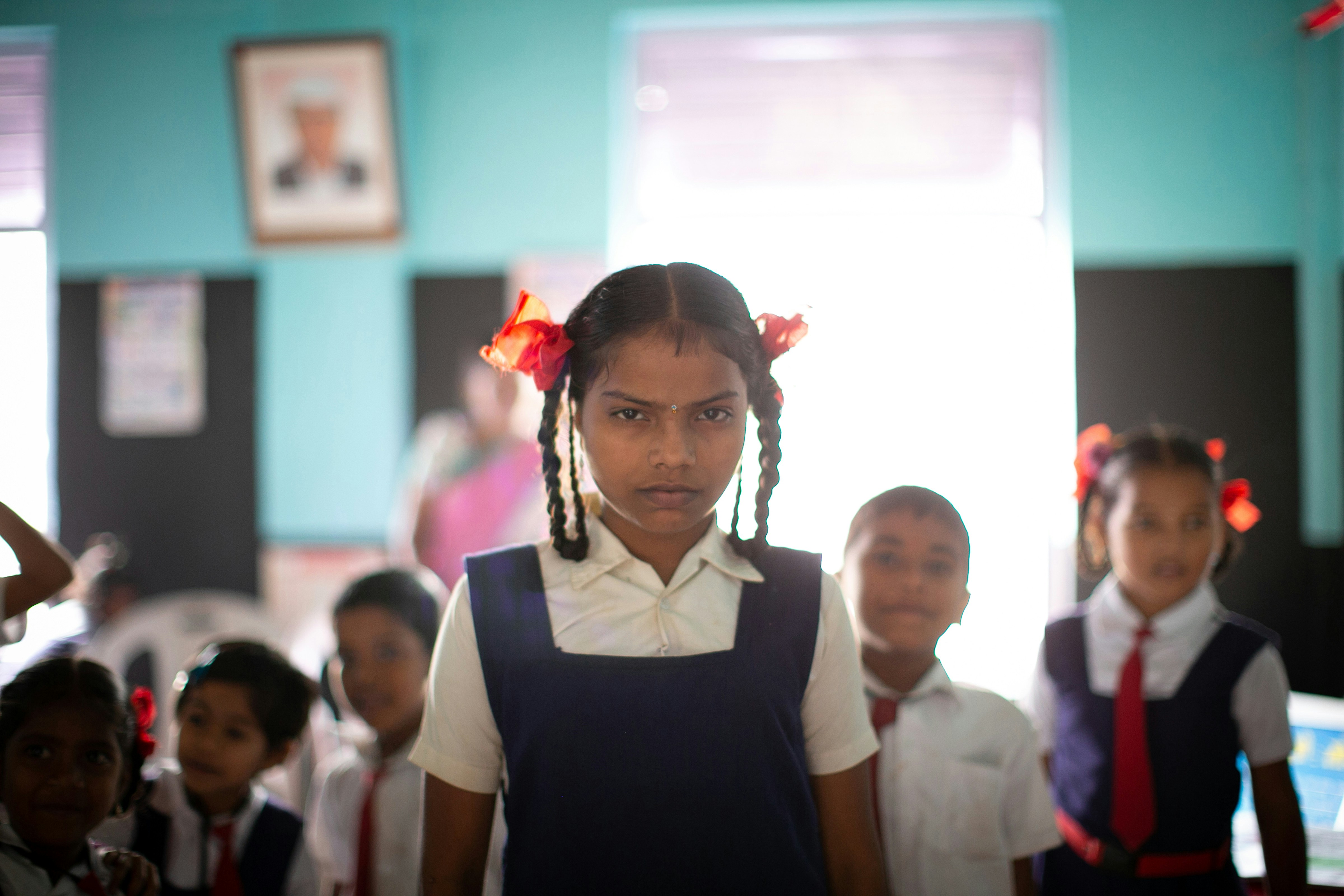
Image Credit: Raj Rana from Unsplash
However, the most insidious methodology is the use of media platforms such as X, which have provided a major platform for the spread of amplified hate speech and disinformation. This allows prejudice to metastasize unchecked. Various events, such as truck crashes involving Sikh drivers, are morphed into propaganda to vilify entire communities. Additionally, what can begin as trending hashtags can eventually evolve into hate speech.
From my perspective, I view the escalation of hate against Indians to be the result of complicity and silence. Governments should be responsible and take accountability for how online platforms and foreign policy shape domestic racism. However, what society is truly in need of is empathy, viewing shared humanity.
Despite the various crimes that have continually taken place against Indians abroad, there has been a recent uproar from citizens internationally, creating efforts to put an end to this form of racism. This can be exemplified through the organization STOP AAIP HATE, which has done several projects regarding Anti-Asian and Pacific Islander hate, conducting various research projects, advocacy work, and community care.
All Indians from around the world have been majorly affected by the racism and growth of the anti-Indian sentiment both within the West and among the Indian-origin. Many Indians have reported psychological distress linked to racism, such as depression and anxiety, with studies presenting a positive correlation between reported discrimination and higher levels of depressive symptoms. Experiences of discrimination have further made it difficult to cope with psychological effects.
Out of fear of confirming negative stereotypes, many Indian individuals might have a fear of asking for support and reaching out. Many individuals are also prevented from seeking out help because of the cultural stigma around mental health in the South Asian community.
Racial violence against Indians across the globe is deeply rooted in the lingering effects of postcolonialism and systemic oppression. Colonial rule not only exploited India economically but also imposed racial hierarchies that defined Indians as inferior—a perception that continues to echo in modern societies. These postcolonial residues manifest through colorism, cultural stereotyping, and discrimination against Indian immigrants and diasporic communities.
In Western nations, Indians often face hate crimes fueled by xenophobia and religious prejudice, while in other regions, they are subjected to labor exploitation and social marginalization. The persistence of these injustices reflects how colonial ideologies of racial superiority have evolved rather than disappeared, shaping global perceptions of Indian identity and perpetuating cycles of inequality and violence.
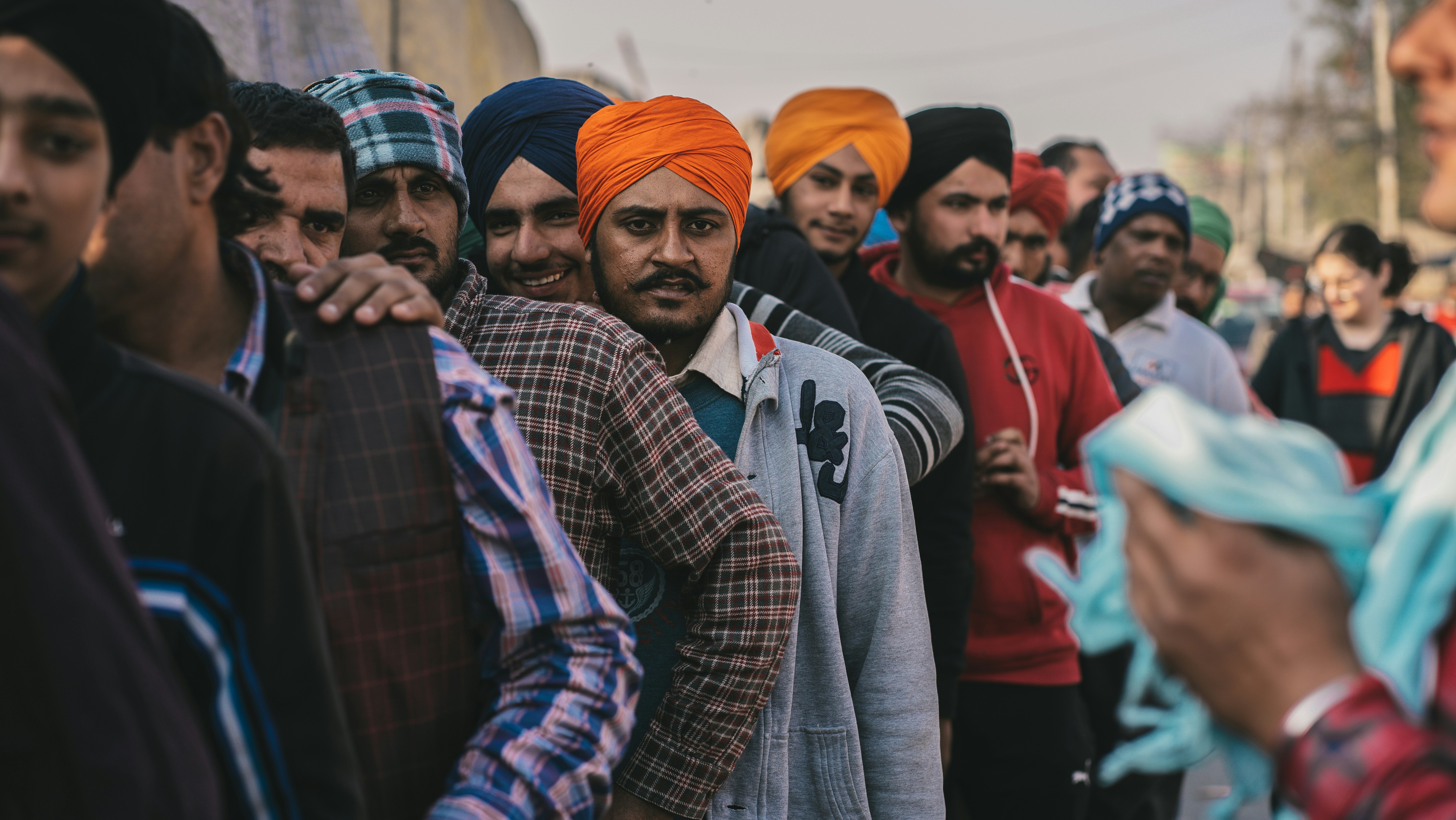
Image Credit: Rupinder Singh from Unsplash
Centuries ago, colonialism fueled oppression that continues to fuel Indian-hate till this day. The racial and social hierarchies oppressed South Asians, dehumanizing their legacy through stereotypes, xenophobia, and various forms of discrimination rooted in religious and national identities. This foundation was built on European powers during colonialism, which justified racism and discrimination against Indians, using it as a tool to gain power, resources, and domination of India.
They labeled Indians as unhygienic and barbaric, primitive, to position themselves as superior. Various groups used by the British groups, such as muslins and Sikhs, were also labeled as “martial races”, which eventually served for military interests, but eventually developed stereotypes against South Asians in places such as the United Kingdom. Many of the Colonial-era justifications later cast out various South Asians, but also Asian-Americans, further labeling them as “foreign forever”.
Centuries later, many of the justifications made continue to be present through racial violence and prejudices. The same exact structures that once exploited, divided, and dehumanized South Asians changed form, developing into disinformation through media, hate crimes, and economic scapegoats. True progress requires active interpretations from history that acknowledge how colonial hierarchies have morphed global consciousness.
The world must begin to see Indians, and all South Asians, as individuals with equal humanity and belonging. Only through accountability and empathy can we destroy that empires that continue to influence our perceptions, creating a future where no child is told to “go back” home.